

France imposes partial curfew after unrest as interior minister admits police lost control
French authorities have imposed local curfews in several areas after violent protests and looting, with the interior minister admitting police lost control in some cities.
Key Takeaways
AI
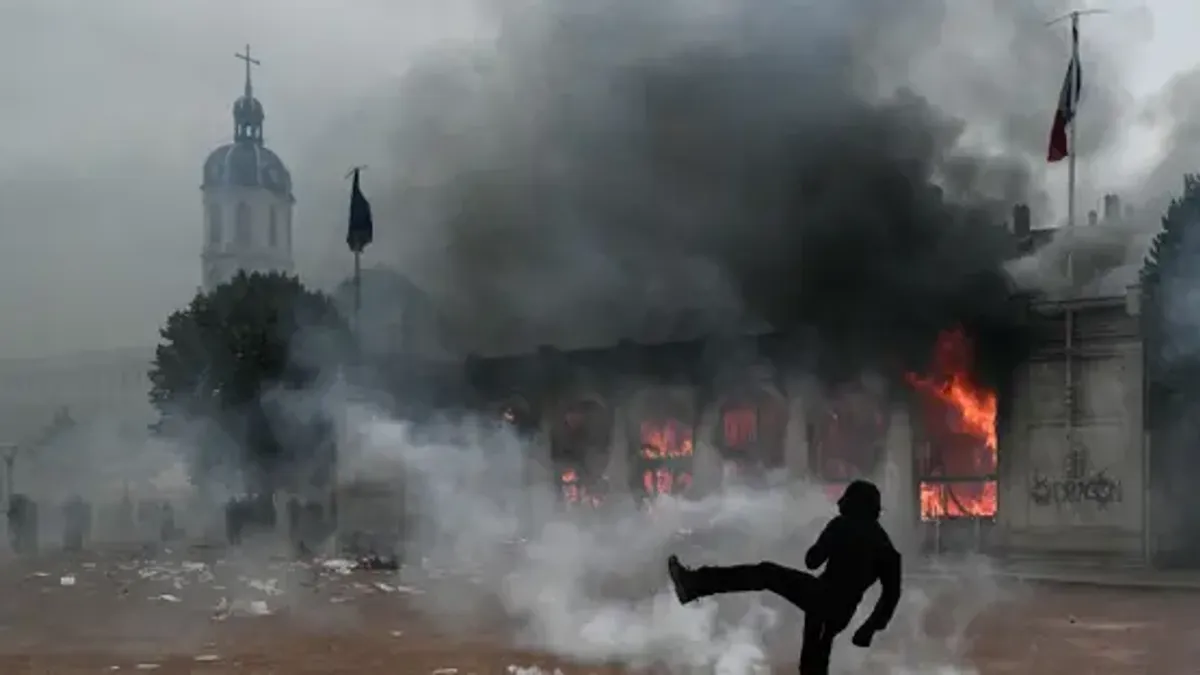
French authorities have imposed local restrictions, including curfews in several areas, following a wave of violence and looting in multiple cities during weekend protests. Interior Minister Laurent Nuñez admitted that police had "lost control" in some cities, despite the deployment of around 60,000 police and gendarmes across the country on Saturday.
Prime Minister Sébastien Lecornu's office stated that the curfews in affected areas would be enforced from 8 p.m. to 6 a.m. local time.
A correspondent for Al Arabiya/Al Hadath reported that restrictions were imposed on movement in Place de la République and the central commercial district of Paris starting at 10 p.m., while the city of Nice announced a curfew for minors beginning at 9 p.m.
Lecornu had instructed regional governors to impose curfews on Monday evening in the affected areas, clarifying that the measures would be partial and limited in scope, focusing on protecting shops and property. The prime minister did not rule out declaring a state of emergency if necessary, but said that a curfew was the most appropriate option at this stage.
The security measures come after four weeks of escalating protests, which began with high school students demanding better conditions in educational institutions before expanding to include opposition to the sharp rise in living costs. On Monday, Paris saw a protest that closed the entrance to the Louvre Museum, with students from the museum's affiliated school joining to support the high school movement and denounce what they described as police repression.
Nuñez acknowledged on Monday that police forces were unable to control the situation in some cities during the violence that accompanied the weekend protests, noting the scale of the security deployment on Saturday, which involved around 60,000 police and gendarmes.
The French government is seeking to contain the unrest and protect shops and property through geographically and temporally limited security measures, while keeping the option of declaring a state of emergency open should developments require it.