

Arab League urges immediate international action to protect Palestinians
Arab foreign ministers call for urgent international intervention to protect Palestinians from Israeli actions and support Gaza reconstruction efforts.
Key Takeaways
AIThe Council of the Arab League at the level of foreign ministers has called on the international community—including the United Nations, the Security Council, and the High Contracting Parties to the Fourth Geneva Convention—to intervene immediately to protect the Palestinian people from Israeli crimes, aggression, and settler terrorism, in accordance with international law, relevant UN resolutions, and international and regional treaties.
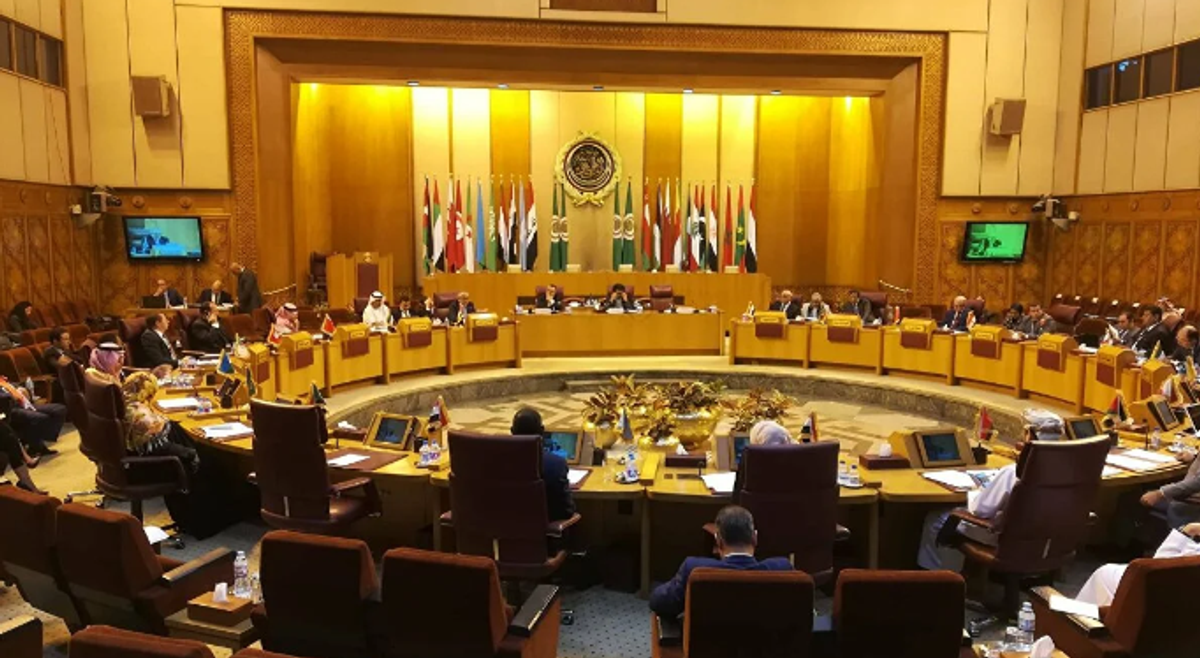
In resolutions adopted at the conclusion of its 166th regular session held today at the Arab League headquarters in Cairo under Tunisia's chairmanship, the council urged all countries to provide political, financial, and legal support for the Arab-Islamic plan for recovery and reconstruction in Gaza, to help Palestinians remain on their land. It welcomed the convening of an international conference in Cairo for this purpose as soon as possible, in coordination with the State of Palestine and the United Nations, and called on states and international and regional financial institutions to quickly provide the necessary funding to implement the plan.
The Arab foreign ministers condemned what they described as genocide, starvation, siege, aggression, war crimes, and crimes against humanity committed and continuing to be committed by Israel, the occupying power, against the Palestinian people in Gaza. They called for full implementation of the Gaza ceasefire agreement from the 2025 Sharm El-Sheikh Peace Summit and UN Security Council Resolution 2803 (2025), to ensure an end to Israeli aggression, reconstruction of Gaza, and enabling the Palestinian people to exercise their right to self-determination and statehood.
The council also condemned Israeli decisions and actions aimed at advancing plans and policies to annex occupied West Bank territories, including East Jerusalem, impose Israeli sovereignty, carry out forced displacement, demolish homes, seize private and public lands and convert them into so-called "state property," establish hundreds of additional military checkpoints, and divide the West Bank into isolated areas and cantons. It stressed that any Israeli annexation of parts of the Palestinian territories occupied in 1967 constitutes a war crime.
The council considered the ongoing Israeli aggression and occupation of the land and people of the State of Palestine a threat to Arab national security and a destabilization of international peace and security. It called for strengthening joint Arab action to protect the Palestinian people, including activating and developing joint Arab defense mechanisms, such as the Joint Defense and Economic Cooperation Treaty among Arab League states, to safeguard the interests, security, sovereignty, and territorial integrity of Arab countries in line with international law and the UN Charter.
The Council called on the Security Council to adopt a resolution under Chapter VII of the UN Charter to compel Israel, the occupying power, to comply with relevant Security Council resolutions on the Palestinian issue, end its aggression against the Palestinian people in all its forms, and implement the orders and opinions of the International Court of Justice.
It firmly rejected any form of displacement of the Palestinian people from their land or any alteration of their demographic composition, including what Israel, as the illegal occupying power, misleadingly promotes as "voluntary migration." The council considered the displacement of Palestinians a form of genocide and ethnic cleansing, and a grave violation of international law and UN resolutions.
The council also rejected all measures and plans aimed at fragmenting the geographic and demographic unity of the Palestinian people, including any attempt to separate Gaza from the occupied West Bank, impose different regimes in Gaza, or use terms such as "New Gaza" or "Gaza people." It affirmed that Palestinians are one people wherever they are, and that Gaza is an inseparable part of the State of Palestine.
The council condemned the Israeli authorities' demolition and seizure of the UNRWA headquarters in Sheikh Jarrah, its conversion into a museum and a so-called Israeli Ministry of Security office, and the closure of UNRWA offices, schools, and health centers in Jerusalem—including in Silwan, Wadi al-Joz, Sur Baher, and Shuafat refugee camp—replacing them with Israeli institutions. The council said these actions target generations of Palestinian refugees, depriving them of health, education, and other services, and represent an unacceptable attempt to erase the refugee issue, which is integral to final status negotiations.
The council welcomed the UN General Assembly's decision to renew the mandate of the United Nations Relief and Works Agency for Palestine Refugees (UNRWA) for three years (2026-2029), in accordance with its founding Resolution 302 (1949), adopted at the 80th session of the General Assembly.
It condemned Israeli attacks on UNRWA schools, facilities, and staff in Gaza, which have resulted in the deaths of more than 350 agency employees, injuries to hundreds more, and the destruction of around 315 UNRWA facilities, including those sheltering thousands of Palestinian civilians forcibly displaced by the Israeli army.
The Arab League Council also rejected and condemned what it described as systematic Israeli and US campaigns against UNRWA, including incitement, unsubstantiated accusations of terrorism against its staff, and the imposition of administrative and financial sanctions by Israel, which it said aim to undermine and terminate the agency's role.
The council urged member states to pay their assessed contributions amounting to 7.8% of UNRWA's general budget, in line with successive ministerial-level council resolutions since 1987, and encouraged exceptional contributions and the signing of multi-year bilateral support agreements with UNRWA.
The Arab League Council called on the Secretary-General of the Arab League to continue coordinating with the UNRWA Commissioner-General to mobilize financial support for the agency's budget, including through joint letters and visits for this purpose.
The Arab foreign ministers called on the international community to fulfill its responsibilities and maintain its commitment to supporting the building of Palestinian state institutions and implementing pledges for Palestinian development plans and programs.
The council also called on Arab states to continue supporting the Palestinian economy through bilateral arrangements with the State of Palestine, and to open their markets to Palestinian products by exempting them from customs duties, in line with previous decisions.
The council urged private sector institutions in Arab countries to actively invest in Palestine and support the Palestinian private sector.
The council affirmed its support for the relief, recovery, reconstruction, and development plan prepared by the State of Palestine to address the consequences of Israeli aggression against the State of Palestine and the crime of genocide committed by Israel, the occupying power, in the Gaza Strip. The council called on states, organizations, development agencies, and relevant national and international funds to contribute to financing and implementing this plan, in coordination with the State of Palestine.
The council also requested the General Secretariat to coordinate with international and national organizations to provide relief for tens of thousands of Palestinian children orphaned or maimed as a result of the Israeli assault on Gaza, including organizing events and fundraising for urgent assistance, and called for special attention to providing prosthetic limbs for children who have lost limbs as soon as possible.