

Yemeni leadership: Securing Red Sea, Bab Al-Mandab hinges on state authority
Yemeni Presidential Leadership Council member Abdullah Al-Alimi said lasting security in the Red Sea and Bab Al-Mandab depends on Yemen's ability to assert sovereignty.
Key Takeaways
AIYemeni Presidential Leadership Council member Abdullah Al-Alimi has directly linked sustainable security in the Red Sea and Bab Al-Mandab to the Yemeni state's ability to assert sovereignty over its territory, coasts, and territorial waters. He stressed that securing maritime corridors cannot rely solely on protecting ships while an armed group remains outside state control along Yemen's shores.
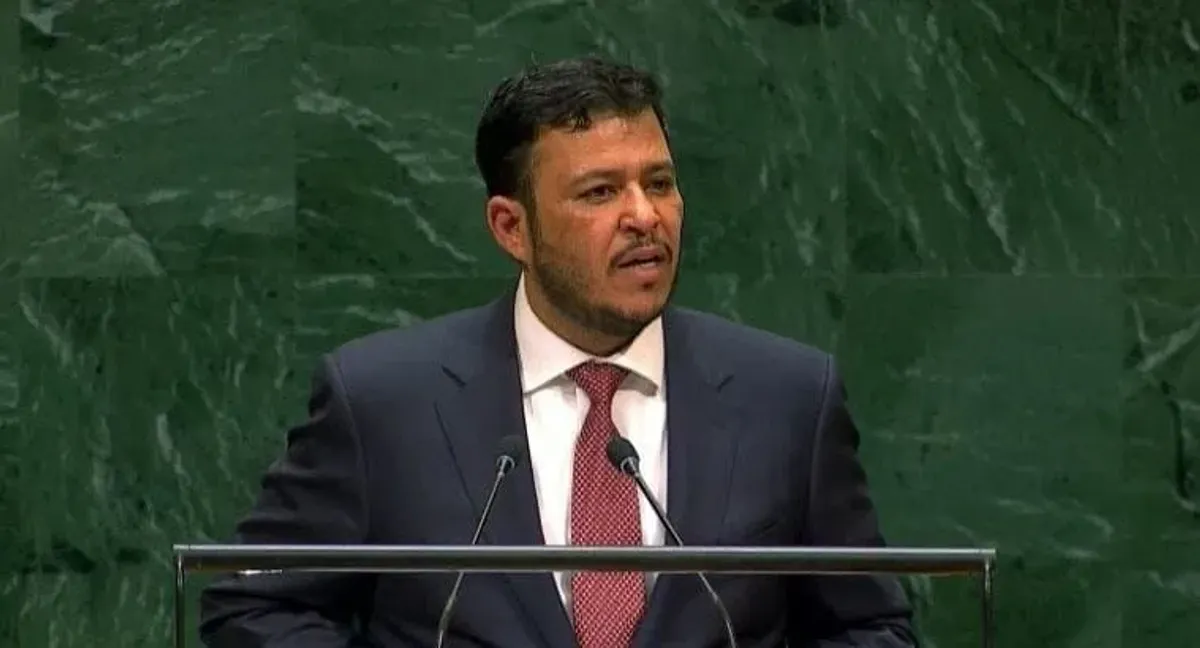
Speaking at the 81st session of the UN General Assembly in New York, Al-Alimi said restoring the Yemeni state and securing Bab Al-Mandab are "one issue, not two," and that supporting the government's economic, security, and military capacities is an investment in the safety of international shipping and supply chains.
He explained that "securing the sea begins with eliminating threats on land," warning that protecting ships alone does not address the root of the threat. He added that relying on temporary assurances not to target shipping does not provide a sustainable maritime security framework in the Red Sea, Bab Al-Mandab, and Gulf of Aden.
Al-Alimi called on the international community to move from a policy of "crisis management" to a strategic partnership with Yemen, emphasizing that Yemenis "do not ask the world to fight their battle for them," but want international resolutions implemented, the flow of weapons and technology to the Houthis halted, and support for Yemen's state institutions and economy.
He affirmed the Yemeni government's ability to end the Houthi threat and protect the country's ports and territorial waters, urging the international community to fulfill its responsibilities toward Yemen, the region, and global peace and security. He also stressed that international resolutions alone cannot bring peace without the will to implement them, stating that peace "is not merely a wish," but requires firm resolve and action to deter those who threaten the security and stability of states.
Al-Alimi criticized what he described as the lack of an effective and decisive international stance toward the Houthis, saying this has allowed the group to expand its influence and threat. He linked the ongoing crisis to Iranian support, which he said the Houthis receive in the form of weapons, expertise, and military technology.
He noted that Yemenis have endured 12 years of war, displacement, poverty, child recruitment, landmine planting, and the confiscation of rights, freedoms, and public resources. He stressed that the government has acted responsibly with international and regional initiatives and made concessions for peace, while accusing the Houthis of exploiting ceasefires to strengthen their military arsenal.
On the political process, Al-Alimi reaffirmed his government's commitment to peace but insisted that "peace requires actions from the Houthis, not words," rejecting the normalization of the armed coup. He said the Yemeni issue is not only about ending the war, but also about shaping the future of Yemen—a secure, stable, and prosperous state that rebuilds its economy, provides education, jobs, and security, and becomes a partner to its neighbors and a bridge for trade and cooperation between Arabia, the Horn of Africa, and the world.
Al-Alimi praised Saudi Arabia's initiative to establish a "multinational maritime defense alliance," describing it as a reflection of shared responsibility in protecting navigation, deterring threats, and combating smuggling. He also reiterated that supporting and strengthening Yemen's state institutions is key to ensuring the sustainable protection of international maritime corridors.
The Yemeni council member addressed residents in Houthi-controlled areas, stressing that the government's battle is not with citizens, regions, or sects, but with "an armed coup that has seized the state and its institutions." He emphasized that restoring the state is not a victory for one Yemeni faction over another, but a restoration of all Yemenis' right to their state and its institutions.