

Saudi Pro League outlines club allocation mechanism, sets 75% spending cap
The Saudi Pro League has detailed its club allocation system for the recruitment program and clarified financial oversight standards at a media workshop in Riyadh.
Key Takeaways
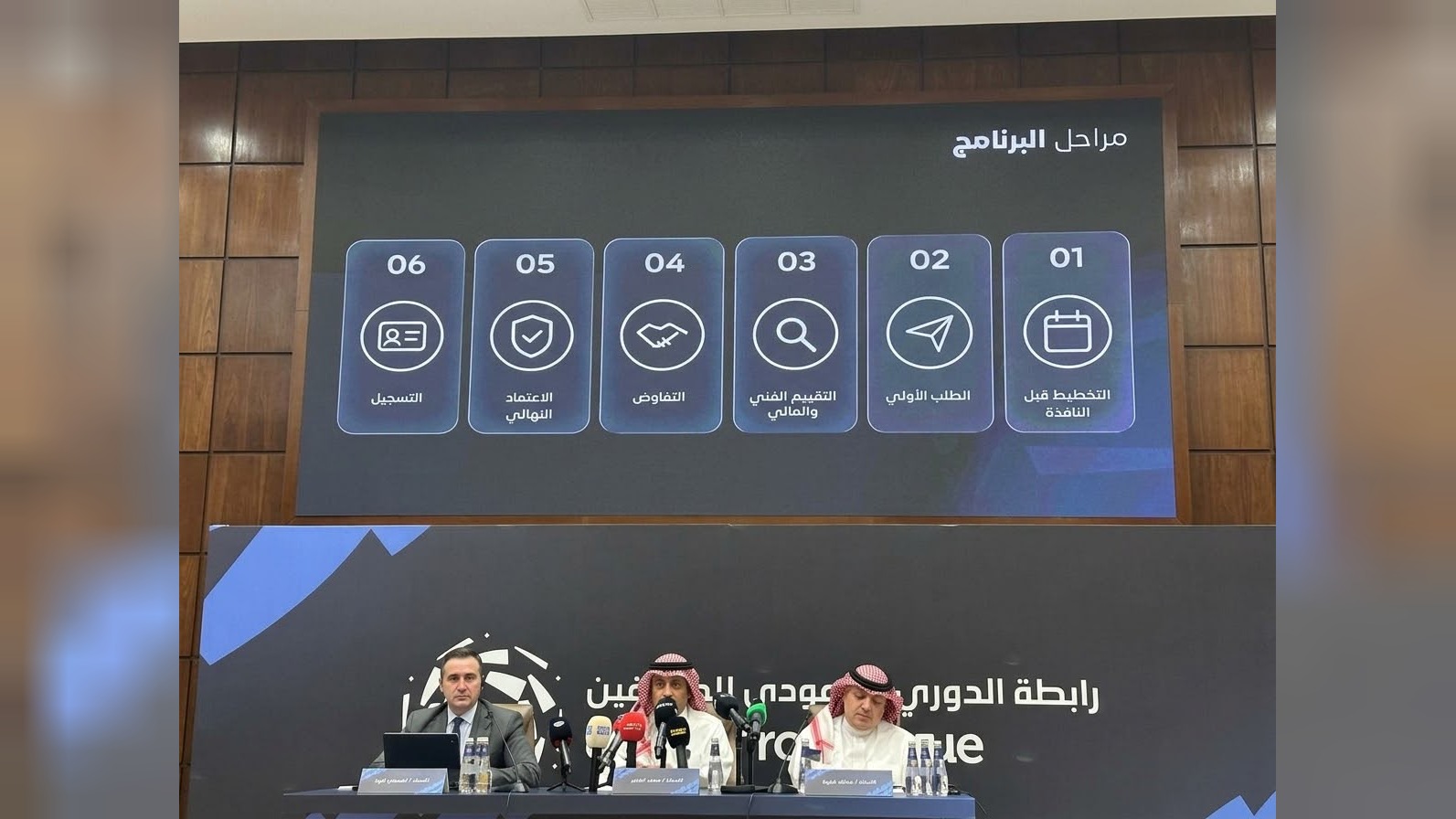
AIThe Saudi Pro League has unveiled the mechanism for distributing club allocations from the recruitment program and the financial oversight standards applied to clubs, during a media workshop held Thursday at the headquarters of the Saudi Olympic and Paralympic Committee in Riyadh, attended by senior officials from the league's club affairs sector.
The workshop addressed operational procedures and key issues related to clubs and financial oversight, as well as discussing several topics concerning the sector's work and its regulatory mechanisms.
The league explained that club allocations from the recruitment program are distributed according to four main criteria: 22% is allocated equally to each club, another 22% is based on sporting performance and team results in competitions, 28% is tied to commercial performance—including ticket sales, sponsorships, and merchandise—and 28% is based on television viewership in the Middle East and North Africa region.
Omar Baterjee, official spokesperson for the Saudi Pro League, emphasized that the league does not replicate any single model in applying its regulations, noting that financial oversight models differ from one league to another depending on the nature of the competitions and their current stage.
Baterjee said: “No league has implemented its regulations in a single phase, and we are not copying any particular experience. Our financial oversight model is different from the English Premier League’s Financial Fair Play; what we apply suits the nature of our league and its current stage.”
Abdullah Kaboha, chairman of the Financial Oversight Committee, explained that financial oversight is an ongoing process within a project that began in 2012 and has evolved through several phases and titles. He noted that the Saudi experience differs from European models, which began in the 1980s and developed further in the new millennium.
Kaboha stated that the financial oversight system relies on three main indicators: settling financial obligations, ensuring team expenditures do not exceed 75%, and monitoring losses.
He added that each club submits its financial data and results, remaining aware of its financial position upon submission. He pointed out that it is possible to exceed active oversight for a single period through measures such as increasing revenues or selling players.
Jesus Orio, CEO of the Club Affairs sector, stressed the importance of maintaining the confidentiality of club-related information, confirming that decisions regarding club strategies and budget allocations remain the responsibility of club management.
Orio said: “As I mentioned, we cannot disclose confidential information. It is important that clubs’ decisions about their strategies and budget allocations remain in their hands.”
Regarding player signings and the recruitment program’s role in funding them, Orio clarified that the league does not reject any player signings, but is responsible for safeguarding the program’s allocated budgets.
He added: “We do not reject any player signings, but we are entrusted with the budgets. We set a cap for the recruitment program’s contribution to a player, and if a club wishes to exceed it, the additional amount must come from its own budget, not from the program’s allocations.”