

GCC chief calls for stronger regional security framework
GCC Secretary-General Jasem Albudaiwi urged respect for international law, joint defense, and diplomacy to bolster regional security and stability.
Key Takeaways
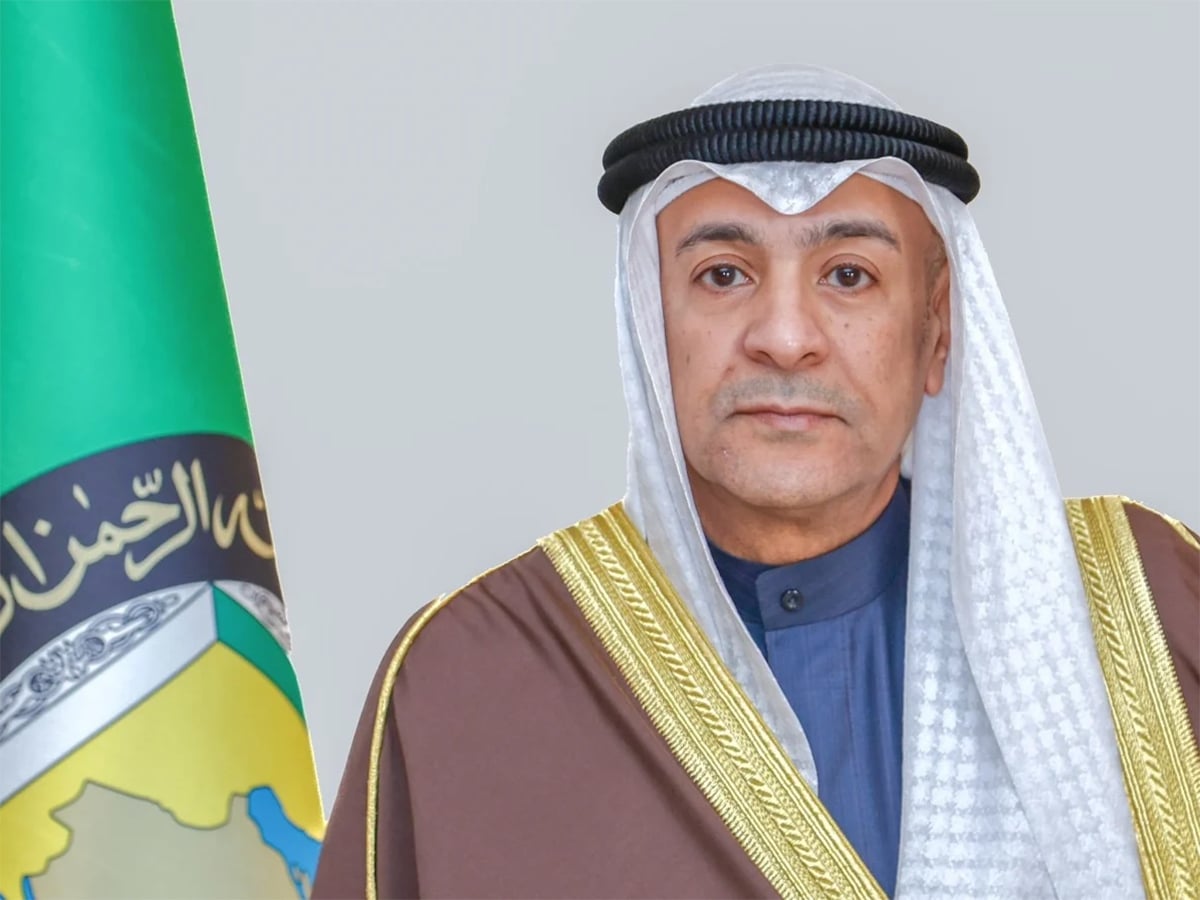
AIGulf Cooperation Council Secretary-General Jasem Mohammed Albudaiwi has emphasized that the security of GCC states is indivisible, calling for a stable and sustainable regional security framework based on respect for international law and state sovereignty.
Albudaiwi made his remarks during the third plenary session, titled "Pillars of Regional Security," at the 22nd Regional Security Summit, known as the Manama Dialogue 2026, held in the Bahraini capital, Manama.
He noted that developments in the region since February 28 have posed serious challenges to regional security, particularly following Iranian attacks targeting GCC states and their vital civilian infrastructure, despite their non-involvement in the conflict and diplomatic efforts to de-escalate tensions.
Albudaiwi pointed out that the repercussions of these attacks have extended to the global economy, disrupting navigation in the Strait of Hormuz and affecting energy prices, shipping costs, and supply chains.
He condemned the terrorist attacks launched by Houthi militias against Saudi Arabia since July, which have targeted Mecca and Medina, describing them as a violation of Islamic holy sites and a dangerous escalation threatening regional security.
Albudaiwi outlined five main pillars for building sustainable regional security, starting with respect for international law and state sovereignty, adherence to good neighborliness, and the peaceful settlement of disputes. He highlighted the importance of implementing UN Security Council Resolution 2817, adopted on March 11, 2026, which was submitted by Bahrain on behalf of the GCC and Jordan and supported by 136 countries.
He added that collective defense and enhanced Gulf military integration form the second pillar, praising the readiness of GCC armed forces and noting directives from GCC leaders at their Jeddah meeting to intensify military integration and complete the early warning system against ballistic missiles.
Albudaiwi stressed that diplomacy and peaceful dispute resolution constitute the third pillar, emphasizing the need for mutual will and responsible engagement from all parties, and reviewed the GCC's international and regional partnerships.
Regarding the fourth pillar, he underscored that maritime security and energy supply are a shared international responsibility, urging the global community to halt attacks in the Straits of Hormuz and Bab Al-Mandab, hold perpetrators accountable, and support the GCC's efforts to enhance energy supply resilience through regional projects.
He noted that the fifth pillar is achieving stability through development and international partnerships, pointing out that the GCC economies are valued at around $2.4 trillion, strengthening their ability to withstand crises and support stability.
Albudaiwi reaffirmed the GCC's ongoing support for Yemen's legitimate government, as well as security in Iraq, Syria, and Lebanon, stressing that lasting peace is linked to a just solution to the Palestinian issue based on the two-state solution, in addition to enhancing water and food security and addressing climate challenges.
He concluded by stating that regional security does not depend solely on the balance of power, but requires international rules respected by all parties and a security framework shaped by regional states. He reiterated the GCC's readiness to contribute to building this framework in line with the council's regional security vision launched in 2024.