

Rare chance to observe faint celestial objects in Rafha skies every 29.5 days
New moon nights offer ideal conditions for stargazing in Rafha, with the absence of moonlight revealing stars, galaxies, and nebulae, an astronomy expert says.
Key Takeaways
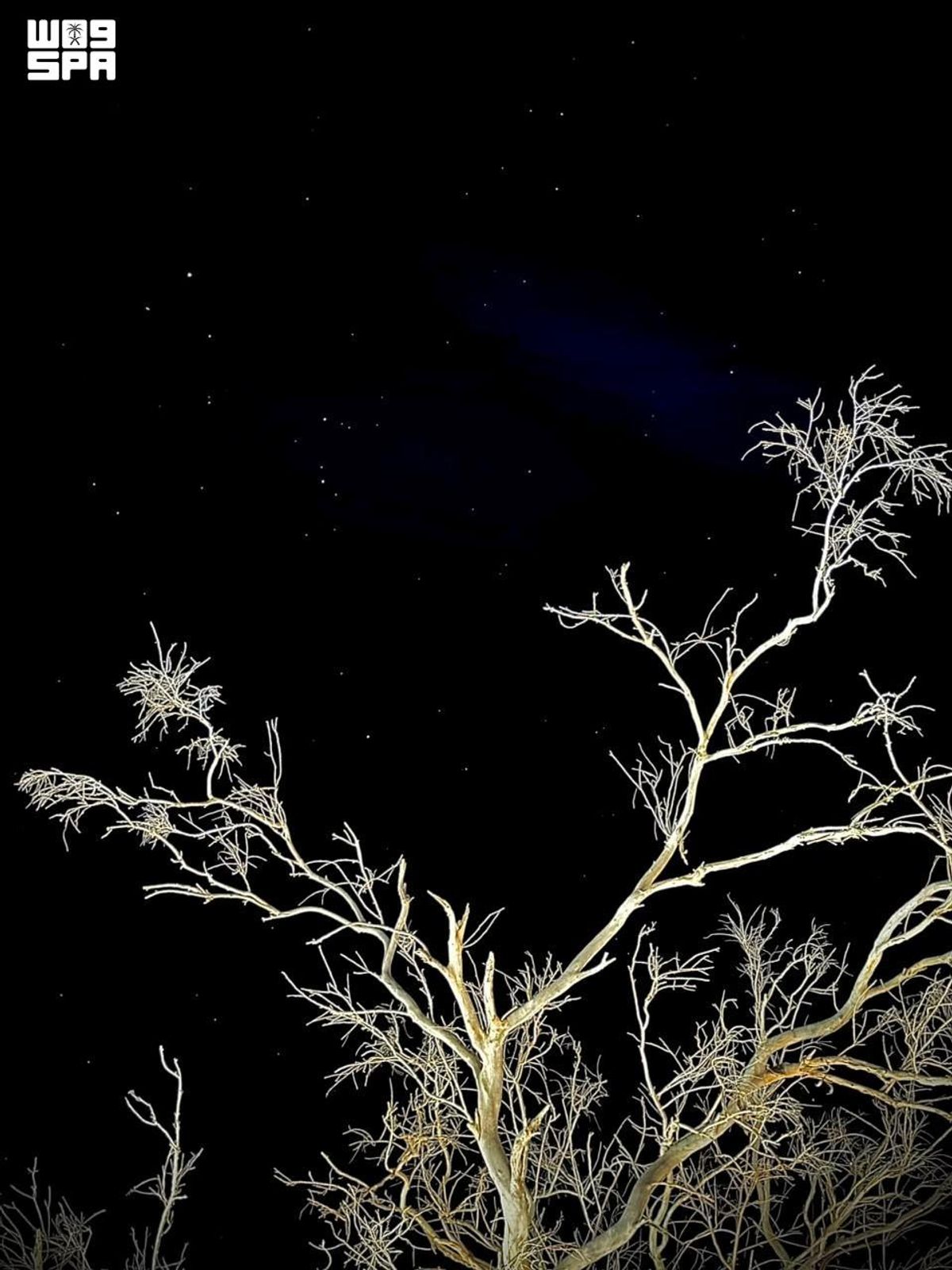
AIThe new moon night creates ideal conditions for observing faint celestial objects, as the moon's disk disappears and its light—which usually obscures details in the sky—fades, making stars, galaxies, and nebulae more prominent and increasing opportunities for astronomical observation, especially in areas far from light pollution.
Burgess Al-Falih, a member of the Afaq Astronomy Association, explained that the new moon is one of the best phases of the lunar cycle for viewing faint celestial bodies. With less reflected moonlight, a greater number of stars and distant objects become visible, particularly in locations with clear skies and minimal artificial lighting.
Al-Falih added that the advantage of observing during the new moon does not mean the moon is absent; rather, the side facing Earth is not directly illuminated by the sun, so its disk is not visible to the naked eye under normal conditions. In rare astronomical and atmospheric circumstances near the moment of the new moon, an extremely thin crescent may be seen.
The new moon phase occurs at the end of the lunar cycle and the start of a new one, when the moon is positioned almost between the Earth and the sun, leaving its Earth-facing side unlit. This makes it nearly impossible to see with the naked eye in most conditions, and the phase lasts for a short period around its astronomical moment.
Al-Falih noted that the reduction in moonlight during this phase improves the quality of the night sky, making it more suitable for observing objects affected by moonlight, such as galaxies, nebulae, and star clusters. He emphasized the importance of choosing dark locations and avoiding sources of light pollution to ensure the best observation results.
The new moon phase recurs in the lunar cycle roughly every 29.5 days, which is the length of the synodic month between two consecutive new moons. The darkness of the sky during this time allows for better observation of distant objects using telescopes and binoculars, provided the skies are clear and artificial lighting is absent.