

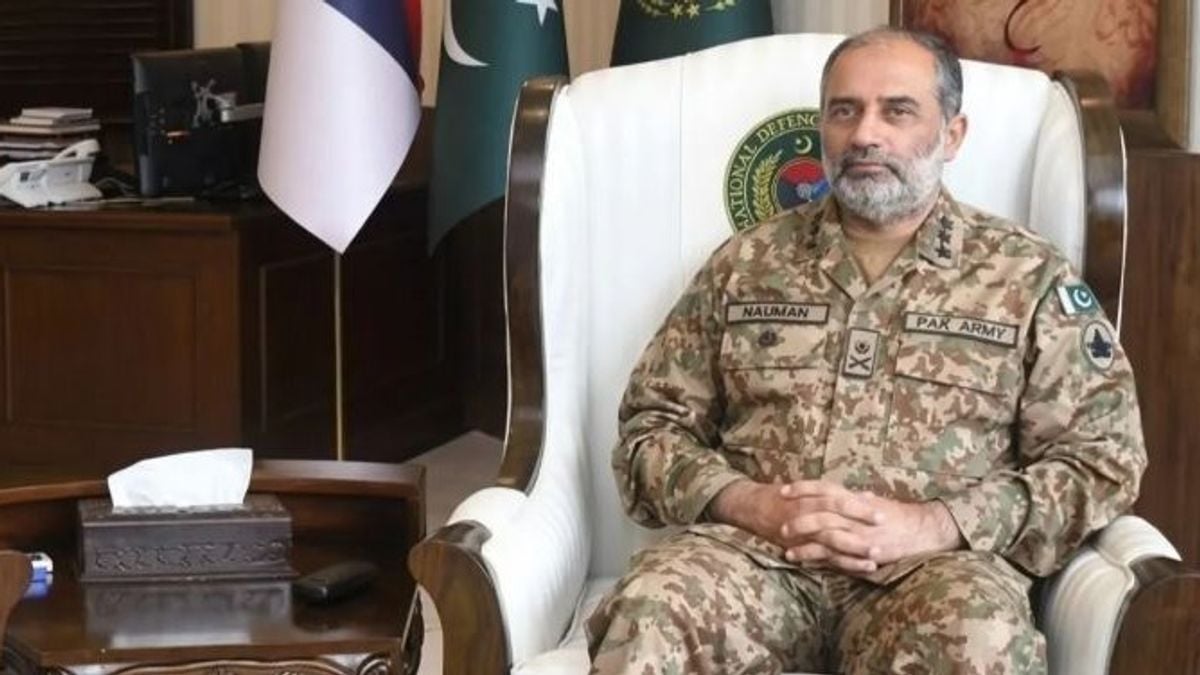
Retired Pakistani general Nauman Mahmood named first secretary-general of Makkah Pact
Saudi Arabia, Pakistan and Turkey have moved to implement joint defense commitments, appointing retired General Nauman Mahmood as the Makkah Pact’s first secretary-general.
Key Takeaways
AISaudi Arabia, Pakistan, and Turkey have agreed to immediately implement their joint defense commitments, taking steps to provide the agreed military forces and capabilities and accelerate their deployment in the Kingdom, according to a statement from the emergency meeting of the Makkah Defense Pact’s Political and Strategic Committee.
As part of this move, the Makkah Defense Pact has appointed retired Pakistani Lieutenant General Nauman Mahmood as its first secretary-general. Mahmood brings over three decades of experience in field command, intelligence, strategic planning, and military education, having played a key role during the formative years of the alliance, which includes Saudi Arabia, Pakistan, and Turkey.
Pakistan’s Dawn newspaper described Mahmood as a “guiding force” during the phase in which the alliance is building its institutional structure and turning political understandings into practical security arrangements.
Mahmood’s appointment coincides with the pact’s transition to the implementation phase of joint defense commitments and the provision of agreed military capabilities. At their inaugural meeting in Istanbul on August 31, the three countries agreed that a Pakistani national would head the secretariat for the first three years.
According to Dawn, Nauman Mahmood joined the Pakistan Army in September 1987 as an officer in the Baloch Regiment. His military career has spanned field operations, intelligence, training, and strategic planning.
Mahmood graduated from the Command and Staff College in Quetta, the Command and Staff College in Egypt, and the National Defence University in Islamabad, holding a master’s degree in war studies. He spent a significant part of his career at the Quetta Command and Staff College, serving in various training roles before becoming chief instructor, gaining expertise in officer training, military strategy, and operational planning.
He later moved into field command roles, and as a major general, led an infantry division in North Waziristan during a period of counterterrorism operations by the Pakistani military.
Mahmood then transitioned to intelligence, serving as director general of analysis at Pakistan’s Inter-Services Intelligence (ISI).
Dawn reports that his responsibilities included assessing external developments from a national security perspective, contributing to strategic decision-making and foreign policy, and liaising with foreign intelligence agencies.
This blend of field and intelligence experience is seen as directly relevant to his new role, which requires the secretariat to coordinate among three nations and turn joint political and military decisions into actionable mechanisms.
In April 2019, Mahmood was promoted to lieutenant general and appointed inspector general for communications and IT at Pakistan Army headquarters. About eight months later, in December 2019, he assumed one of his most prominent field roles as commander of XI Corps, also known as Peshawar Corps.
According to Dawn, his tenure coincided with a sensitive period on the Pakistan-Afghanistan border, as the US prepared to withdraw from Afghanistan and Pakistan continued to fence the border and address the security implications of rapid changes in Afghanistan.
In November 2021, Mahmood left corps command to become the 35th president of the National Defence University in Islamabad, a post he held until his retirement from the army in April 2023.
He was also among the officers considered for the post of Pakistan’s army chief during the 2022 leadership selection process, according to Dawn.
The first secretary-general of the Makkah Defense Pact has been awarded the Hilal-i-Imtiaz (Military), a distinction noted by Pakistan’s Foreign Ministry upon his appointment.
Mahmood’s diverse experience—from commanding military formations in former tribal areas and managing sensitive sectors along the Afghan border, to intelligence analysis, external liaison, and education in national security and strategy—now positions him for a new challenge in Riyadh: helping to build a multilateral military institution from the ground up.
Dawn notes that his immediate task is to help establish the “institutional mechanism” of the alliance, which remains in its early years and requires coordination among member states to translate political commitments into practical security arrangements.
This mission takes on added significance as the Makkah Pact moves from organizational development to activating joint defense mechanisms. At the secretariat’s founding, the three countries agreed to strengthen the institutional nature of their cooperation to enhance the credibility and effectiveness of collective deterrence and defense.
Thus, the first secretary-general of the Makkah Defense Pact begins his three-year term with experience in three key areas directly relevant to his new role: military leadership, intelligence analysis, and strategic planning. This time, however, his challenge shifts from leading a Pakistani military formation to helping shape the operational structure of a nascent defense alliance uniting Riyadh, Islamabad, and Ankara.