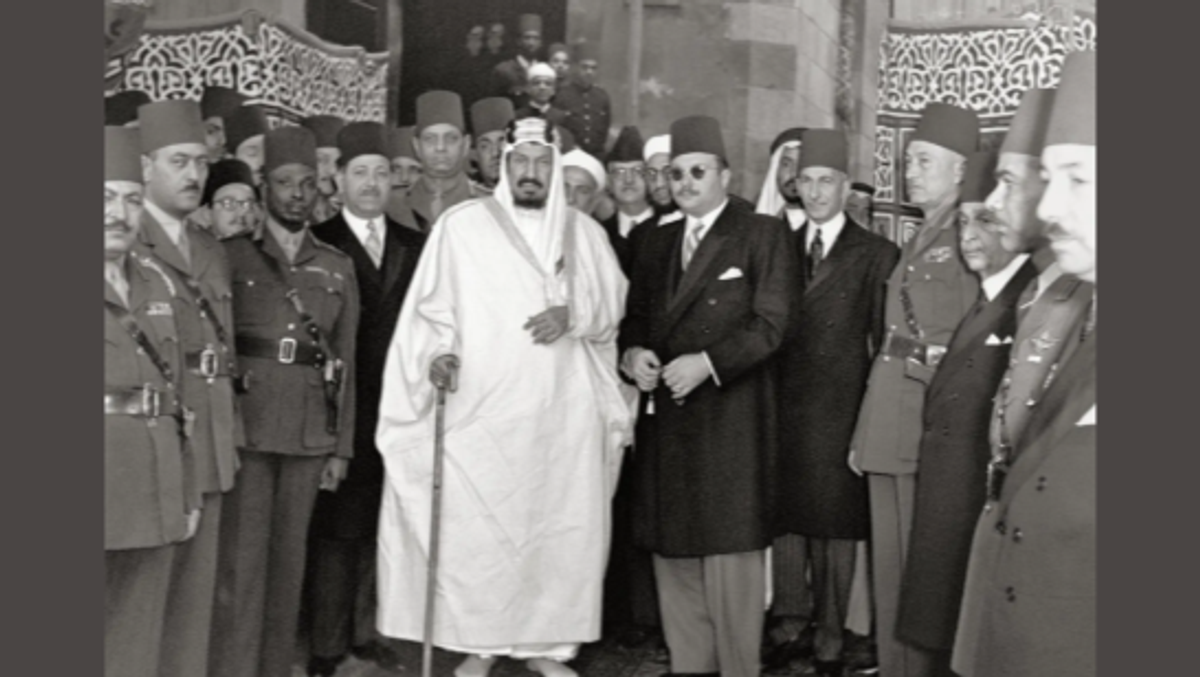

King Abdulaziz’s focus on scientific publishing and heritage laid foundation for Saudi state
King Abdulaziz made cultural development a core pillar of Saudi Arabia’s foundation, prioritizing education, knowledge and heritage from the nation’s unification in 1932.
Key Takeaways
AICultural development was a fundamental pillar in the building of Saudi Arabia under King Abdulaziz bin Abdulrahman Al Saud. From the announcement of the Kingdom’s unification on September 23, 1932, King Abdulaziz made it a priority to advance education and culture across the country. He focused on spreading knowledge throughout the Kingdom, which at the time was in urgent need of moving beyond traditional Quranic schools to a new era of comprehensive educational and cultural infrastructure, uniting the nation and shaping its identity and future ambitions for scientific, intellectual, and economic progress.
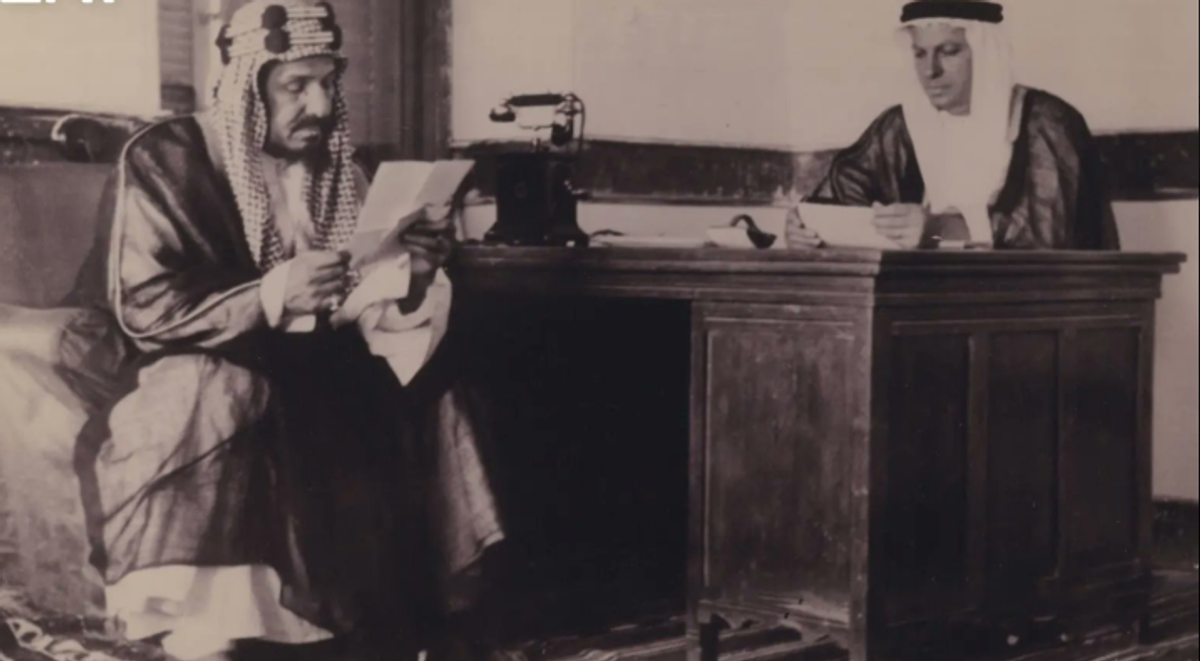
King Abdulaziz paid early and sustained attention to the development of printing and publishing. He personally funded the printing and distribution of hundreds of religious, heritage, and historical books both inside the Kingdom and abroad (in Egypt, India, and the Levant), and established the Umm Al-Qura Press to distribute these works to students and promote Islamic culture.
This intellectual awareness drove several goals behind the printing and publishing of books: spreading knowledge, promoting culture and learning among the people, and serving Arab and Islamic heritage. Many important heritage books were printed at King Abdulaziz’s expense in presses such as Al-Manar in Egypt and presses in India (including Ibn Ghannam’s history and Ibn Sahman’s poetry collection). The Umm Al-Qura newspaper was launched as the official state gazette, and several other media and cultural publications later emerged under the supervision of the Directorate of General Education, such as Al-Islah magazine.

During King Abdulaziz’s reign, the government press (Amiri Press) in Makkah was modernized, and the Saudi government purchased small private presses and merged them with the government press. Some staff were sent to Egypt for training in printing. Other presses appeared in Makkah, including the Majidiya Press and the Arab Press. In Madinah, a press imported from Egypt was established in 1936 (1355 AH). At that time, Jeddah had three presses: the Arab Company Press, the Eastern Press, and the Fath Press.
Two printing regulations were issued during King Abdulaziz’s era: the first in 1928 (1347 AH) and the second in 1939 (1358 AH). King Abdulaziz also ordered that imports of paper and printing equipment for presses in Makkah, Jeddah, and Madinah be exempted from customs duties.
The books King Abdulaziz ordered to be printed at his own expense covered religious, literary, and heritage works, including Quranic commentaries. These were printed at Umm Al-Qura Press and the Salafiyya Press in Makkah, as well as presses in India, Egypt, and the Levant, between 1917 (1335 AH) and 1954 (1373 AH). Over this period, more than 100 books were printed, with a total of 100,000 copies, some in languages other than Arabic, such as Hindi and Jawi, and some were scholarly editions.
Among these works were: Ibn Ghannam’s history (Rawdat Al-Afkar wal Afham), the poetry collection of Suleiman bin Sahman, and other works by Ibn Sahman such as Al-Sawa’iq Al-Mursala Al-Shihabiya. Other notable titles included Ibn Kathir’s history (Al-Bidaya wa’l-Nihaya, 14 volumes), Al-Mughni by Abdullah bin Qudama, Al-Sharh Al-Kabir by Abdulrahman bin Qudama, Ibn Kathir’s Quranic commentary, Rawdat Al-Muhibbin wa Nuzhat Al-Mushtaqin by Ibn Qayyim Al-Jawziyya, the Iraqi Scouts’ Memoir (Hajj 1935/1353 AH), Kitab Al-Tawhid wa Ithbat Sifat Al-Rabb by Ibn Khuzaymah (published 1935/1353 AH), Al-Shari’a by Abu Bakr Al-Ajuri (published 1950/1369 AH), and Majmu’at Al-Tawhid.
In his study published in Al-Darah magazine, titled “King Abdulaziz’s Care for Book Publishing,” Abdulaziz Al-Rifa’i notes that many books were printed in Egypt at King Abdulaziz’s expense, including the commentaries of Ibn Jarir and Al-Baghawi, Al-Mughni in jurisprudence, Al-Sharh Al-Kabir, and other works on hadith and monotheism, as well as Ibn Kathir’s commentary.
Al-Rifa’i adds: “King Abdulaziz’s efforts were not limited to printing books on science, literature, and history in India and Egypt alone. This attention extended to the Levant, where, for example, Rawdat Al-Muhibbin wa Nuzhat Al-Mushtaqin by Ibn Qayyim Al-Jawziyya was printed at Al-Taraqqi Press in Damascus.” In his study, Al-Rifa’i lists 108 heritage book titles printed at King Abdulaziz’s expense.
This major foundational initiative by King Abdulaziz shaped the cultural dimensions of the Kingdom at its inception and established a significant knowledge base that fueled a cultural renaissance, enabling Saudi Arabia to achieve a prominent position in Arab, Islamic, and global cultural and civilizational spheres.