

Saudi Cabinet approves unified GCC property rules, 14 new decisions
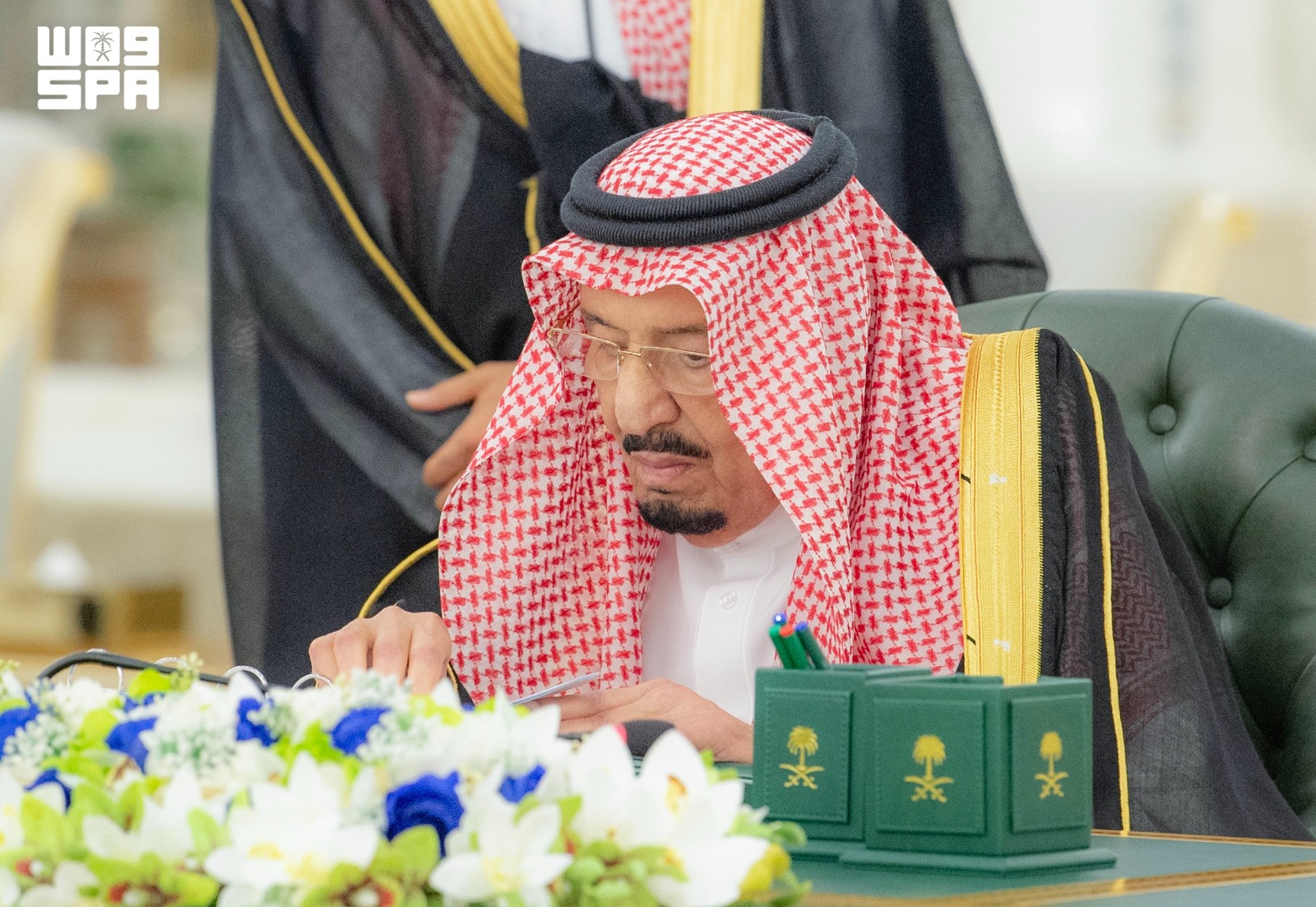
King Salman chaired the Cabinet in Jeddah, which addressed regional and economic updates and approved 14 new decisions, including unified GCC property rules.
Key Takeaways
AIKing Salman bin Abdulaziz chaired the Cabinet meeting held today in Jeddah.
At the start of the session, the Cabinet reviewed the contents of a phone call received by Crown Prince and Prime Minister Mohammed bin Salman from Joseph Aoun, Commander of the Lebanese Army, during which Saudi Arabia's supportive stance toward Lebanon and its efforts to promote regional stability and peace were appreciated.
The Cabinet followed developments on the regional scene and their impact on international security and peace, reiterating Saudi Arabia's full solidarity with Kuwait, Bahrain, and Jordan regarding measures taken in response to Iranian attacks, which violate international law and the principles of good neighborliness. The Cabinet stressed the importance of an immediate halt to all forms of military escalation to preserve the stability of regional countries and their peoples.
Acting Minister of Media Ahmed bin Suleiman Al-Rajhi stated after the session that the Cabinet discussed the outcomes of Saudi Arabia's active participation in international meetings and forums. He praised national efforts that contributed to the Kingdom's successful participation in the 2026 High-Level Political Forum at the United Nations, as reflected in the "Third Voluntary National Review" report, which highlighted ongoing progress in achieving sustainable development goals, particularly in water security, renewable energy expansion, improved healthcare access, digital government development, industrial growth, and inclusive economic growth.
The Cabinet also addressed the outcomes of the UN General Assembly's high-level meeting on the urban agenda, which showcased Saudi Arabia's achievements in building more sustainable cities and improving quality of life by increasing home ownership among Saudi families, expanding public spaces, developing transportation systems, and boosting community participation in development.
The Cabinet reviewed various reports, statistics, and indicators related to the national economy, noting the positive impact of the Kingdom's reforms and policies on growth rates, including the stabilization of annual inflation at 1.8% in the recent period, maintaining low levels compared to many advanced and emerging economies.
Al-Rajhi noted that the Cabinet highlighted Saudi Arabia's advancement to 13th place globally among the largest economies attracting foreign direct investment in 2025, according to the UN Conference on Trade and Development report. This achievement reflects the Kingdom's strengthened position as a global investment destination, the effectiveness of economic reforms, and growing investor confidence, supported by a 53% increase in net foreign direct investment inflows to $32.6 billion, and enhanced competitiveness in strategic sectors such as energy, infrastructure, technology, advanced industries, and logistics.
The Cabinet reviewed the role of Saudi ports in facilitating regional and international trade, including the launch and expansion of logistics centers at Jeddah Islamic Port to enhance the integration of supply chains through multimodal transport and economic and industrial zones, supporting the goals of the National Transport and Logistics Strategy and Saudi Vision 2030.
The Cabinet reviewed agenda items, including those studied in cooperation with the Shoura Council, and considered the conclusions of the Political and Security Affairs Council, the Economic and Development Affairs Council, the General Committee of the Cabinet, and the Bureau of Experts. The Cabinet issued the following decisions:
First:
Authorizing the Minister of Interior, or a delegate, to discuss and sign a draft memorandum of understanding with the Maldives Police Service on scientific, training, and research activities.
Second:
Authorizing the Minister of Foreign Affairs, or a delegate, to discuss and sign a draft memorandum of understanding on political consultations with the Australian Department of Foreign Affairs.
Third:
Authorizing the Minister of Culture and Chairman of the Museums Commission, or a delegate, to discuss and sign a draft memorandum of understanding for cooperation in museums with the Department of Antiquities in Jordan.
Fourth:
Authorizing the Minister of Commerce and Chairman of the Saudi Standards, Metrology and Quality Organization, or a delegate, to discuss and sign a draft memorandum of understanding on technical barriers to trade with the State Administration for Market Regulation in China.
Fifth:
Approving a memorandum of understanding between the General Department of Financial Investigation at the Presidency of State Security and the Financial Intelligence Service of Ethiopia for cooperation in exchanging information related to combating money laundering, related crimes, and terrorism financing.
Sixth:
Approving a memorandum of understanding for cooperation on the peaceful uses of outer space between the Saudi Space Agency and the United Nations.
Seventh:
Approving a memorandum of understanding between the National Center for Non-Profit Sector Development and the Charitable Activities Regulatory Authority in Qatar for cooperation in the non-profit sector.
Eighth:
Approving the unified rules for joint property owners in Gulf Cooperation Council countries.
Ninth:
Transferring the authority to issue import, export, and re-export permits for chemicals traded in local markets, as well as clearance permits under the Chemical Management System, from the Ministry of Commerce to the Ministry of Interior, the Supreme Authority for Industrial Security, the Ministry of Industry and Mineral Resources, and the Food and Drug Authority.
Tenth:
Approving the mechanism for role integration between the Nuclear and Radiological Regulatory Commission and the National Cancer Center at the Saudi Health Council to meet nuclear and radiological regulatory requirements.
Eleventh:
Appointing Dr. Abdullah bin Hussein Al-Qadi, Dr. Mohammed bin Hamdi Al-Jahdali, and Dr. Sultan bin Mansour Al-Sharif as members of the Board of Directors of the National Center for Wildlife Development.
Twelfth:
Approving the final accounts of the General Authority for Survey and Geospatial Information, the National Competitiveness Center (formerly), and the universities of Umm Al-Qura, King Abdulaziz, Imam Abdulrahman bin Faisal, Hafar Al-Batin, and Jeddah for previous fiscal years.
Thirteenth:
Issuing necessary directives regarding several items on the Cabinet's agenda, including annual reports for the Prince Mohammed bin Salman Park Foundation and the universities of Imam Abdulrahman bin Faisal, Qassim, Tabuk, and Saudi Electronic University.
Fourteenth:
Approving the promotion of Mohammed bin Hudaiban Al-Mukhlafi to Senior Business Advisor (Grade 15) at the Ministry of Human Resources and Social Development, and the promotion of Ali bin Murea bin Murea Ali to Investment Advisor (Grade 14) at the Asir Municipality.