

Saudi Arabia highlights leadership in dryland protection at Rome forestry conference
Saudi Arabia showcased its leadership in dryland conservation and forest sustainability during the UN Forestry Committee session in Rome.
Key Takeaways
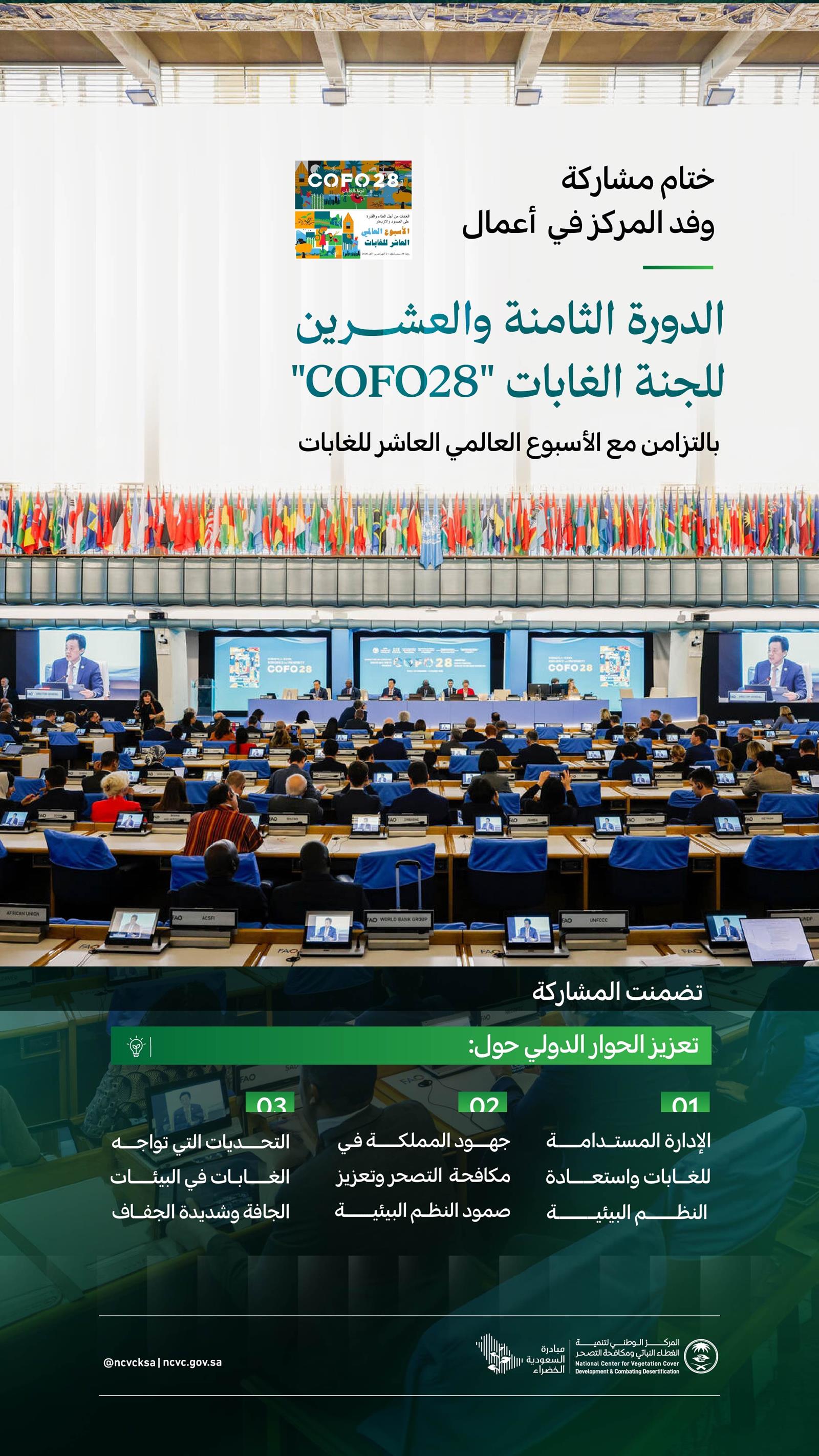
AISaudi Arabia, represented by the National Center for Vegetation Cover Development and Combating Desertification, concluded its participation in the 28th session of the Committee on Forestry (COFO28) of the UN Food and Agriculture Organization (FAO), held in Rome from September 28 to October 2, 2026. The event coincided with the 10th World Forest Week under the theme "Forests for Food, Resilience and Prosperity."
The Kingdom played an active role at the conference, underscoring its leadership as chair of the Near East Forestry and Range Commission. Saudi delegates shared the country’s experience in sustainable forest management and ecosystem restoration, its efforts to combat desertification, and initiatives to boost the resilience of dryland ecosystems. The Kingdom also contributed to international dialogue on the challenges facing forests in arid environments.
Regional priorities and national experiences
Dr. Saud Al-Ruwaili, Executive Vice President for Vegetation Development and Management and Chair of the Near East Forestry and Range Commission, outlined key regional priorities. These included integrating forests, rangelands, and agriculture to enhance food security and climate resilience, the importance of holistic landscape approaches for restoration and sustainable development, strengthening fire prevention and early warning systems, supporting regional cooperation, accelerating green city initiatives, and linking them to the Middle East Green Initiative.
In the same context, Dr. Najib Al-Subhi, Director of the Valleys Department at the Center, said during a session on the State of the World’s Forests 2026 that forests and trees are a strategic investment in people, land, and the future, given their role in protecting biodiversity, enhancing food and water security, and supporting livelihoods. He also highlighted the goals of Saudi Vision 2030, the "Saudi Green" and "Middle East Green" initiatives, the expansion of afforestation projects, and the rehabilitation of degraded lands. Al-Subhi noted that Saudi Arabia recently received an international award for pioneering restoration initiatives and was honored at COP17 in Mongolia.
Integrated fire management and international partnerships
Dr. Amal Al-Daaj, Director of International Cooperation at the Center, presented Saudi Arabia’s efforts to transition to integrated fire management, which relies on systems for prevention, early warning, response, and recovery using artificial intelligence and modern technologies. During Forestry Committee discussions, she emphasized the importance of strengthening the role of regional commissions to ensure regional priorities are reflected in committee work, with continued focus on forests in drylands and rangeland forest ecosystems.
The Saudi delegation held bilateral meetings with several countries and international organizations to enhance cooperation and exchange expertise in restoring drylands and ecosystems, managing forests and rangelands, water harvesting, and leveraging modern technologies for wildfire management. Discussions also covered limiting the spread of invasive plant species, promoting ecotourism, and building capacity.
Active role in international forums
Saudi Arabia’s participation reflects its commitment to strengthening its presence in international forums concerned with forests, and to exchanging expertise in sustainable management and ecosystem restoration. These efforts support global action to address land degradation and climate change, coinciding with the Kingdom’s chairmanship of the 26th session of the Near East Forestry and Range Commission through August 2027, further enhancing its role in conveying the region’s priorities and needs to international dialogue platforms.