

Perseid meteor shower observed over AlUla’s Gharameel Reserve at annual peak
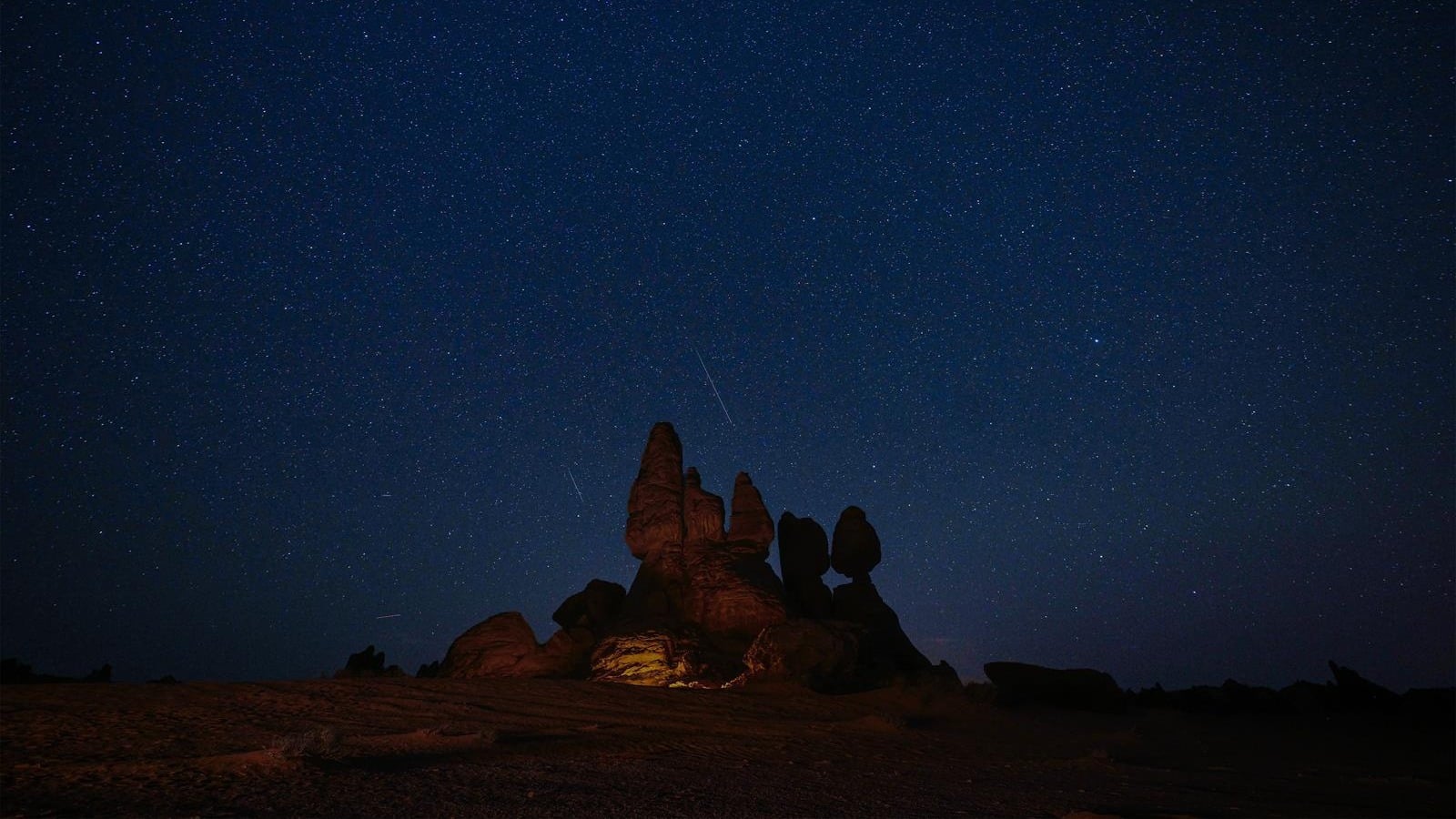
The Perseid meteor shower lit up the skies above Gharameel Reserve in AlUla during its annual peak, amid ideal conditions for astronomical observation.
Key Takeaways
AIThe Perseid meteor shower was observed over the Gharameel Reserve in AlUla as it reached its annual peak, a celestial event that recurs each August.
Photographing of the shower began on Wednesday evening and continued until dawn on Thursday, with meteors streaking across the Gharameel sky under favorable conditions. Low light pollution and dark skies allowed for clear documentation of the phenomenon.
The Perseids are among the most famous annual meteor showers, known for their high activity and the appearance of bright meteors and fireballs. At peak activity and under dark skies, the shower can produce between 75 and 100 meteors per hour.
Origin of the shower and observation conditions
The Perseid shower originates from dust and debris left by the Swift-Tuttle comet along its orbit. As Earth orbits the sun, it passes through this trail of particles, which enter the atmosphere at high speeds and glow as they interact with the air, appearing as fast-moving streaks of light in the sky.
The shower is named after the constellation Perseus, as the meteors appear to radiate from a point in front of it, known as the "radiant," although meteors can be seen across a wide area of the sky.
Gharameel Reserve: an ideal destination for stargazing
Gharameel Reserve is distinguished by its dark night skies and natural environment suitable for astronomical observation. Its location within AlUla’s designated dark sky sites makes it an excellent spot for viewing and photographing celestial events.
Additionally, AlUla’s network of certified dark sky sites has expanded to include Sharaan and Wadi Al-Nakhla reserves, further establishing the region as a prime destination for stargazing and the development of astronomy and astrophotography activities.
Sources indicated that protecting dark skies helps reduce light pollution, preserve the nocturnal environment and wildlife, and provide better conditions for astronomical observation, allowing for clearer views of stars, celestial bodies, and astronomical phenomena.
The observation of the Perseid meteor shower from AlUla highlights the region’s natural and environmental advantages, including low light pollution and wide horizons, making it an ideal location for monitoring and documenting astronomical events and boosting its profile in astro-tourism.