
Saudi waste management center unveils $533m investment opportunities
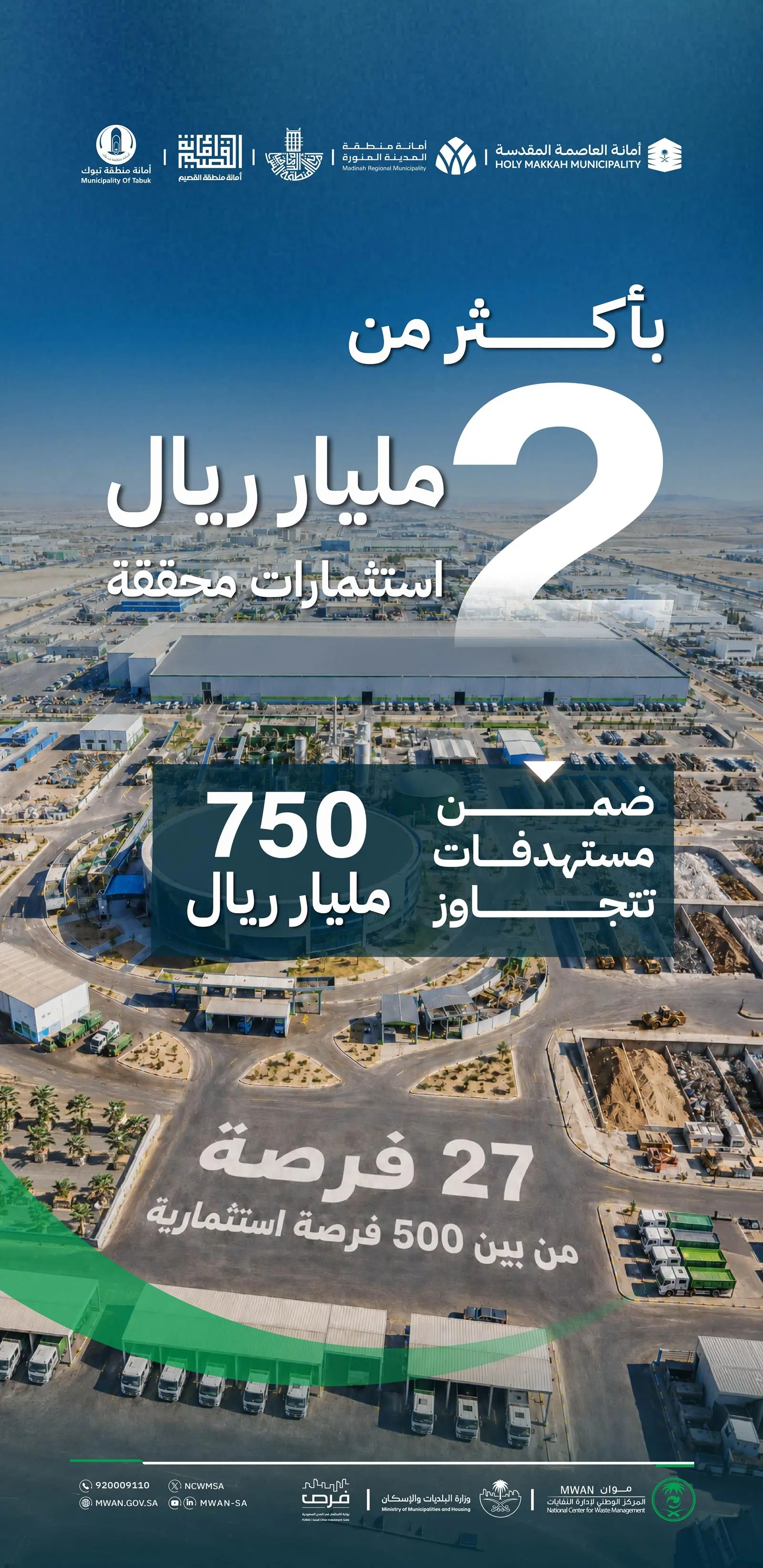
The National Center for Waste Management has launched 27 investment opportunities worth over 2 billion riyals to develop and operate modern waste facilities across Saudi Arabia.
Key Takeaways
AIThe National Center for Waste Management (Mawan) has announced the launch of 27 investment opportunities to develop and operate 33 facilities in the waste management sector, with total investments exceeding 2 billion riyals (SAR), in partnership with five municipal authorities across the Kingdom.
Mawan explained that this initiative follows five years of efforts focused on developing the sector’s regulatory and legislative environment, advancing digital transformation, and implementing the comprehensive strategic waste management plan. These steps have created a more attractive investment climate and supported the shift toward integrated and sustainable waste management.
The center noted that the rate of waste diverted from landfills has risen from 5% to 18%, which has led to a wider range of investment opportunities. These include the establishment and operation of facilities for processing construction and demolition waste, specialized facilities for medical and slaughterhouse waste, as well as plants for sorting municipal solid waste. These projects aim to improve operational efficiency and maximize the use of waste resources.
Investment and project distribution
The investment opportunities are distributed across several regions: seven in Madinah valued at up to 780 million riyals, two in Makkah worth 96.8 million riyals, 13 in Dammam totaling 973 million riyals, one in Tabuk at 34 million riyals, and four in the Qassim region valued at up to 235 million riyals.
The designated areas for these projects exceed 1.8 million square meters, with a combined capacity of up to 7 million tons of waste. This represents the volume of waste expected to be diverted from landfills and redirected to treatment and recovery, enhancing both the environmental and economic impact of these investments.
Environmental and economic impact
Abdullah Al-Subaie, CEO of the center, stated that these projects aim to strengthen the investment environment and empower the private sector to develop the waste management system, turning opportunities into projects that help build an integrated and sustainable infrastructure.
He added that the projects will help reduce carbon emissions, protect soil and groundwater, limit pollution and visual blight, and conserve natural resources, thereby supporting improved quality of life and achieving environmental sustainability goals.
The center also invited investors and interested parties to explore the available opportunities on its website and take advantage of the sector’s potential amid ongoing growth and development.