

Sahara scorpion sighting highlights biodiversity in Northern Borders
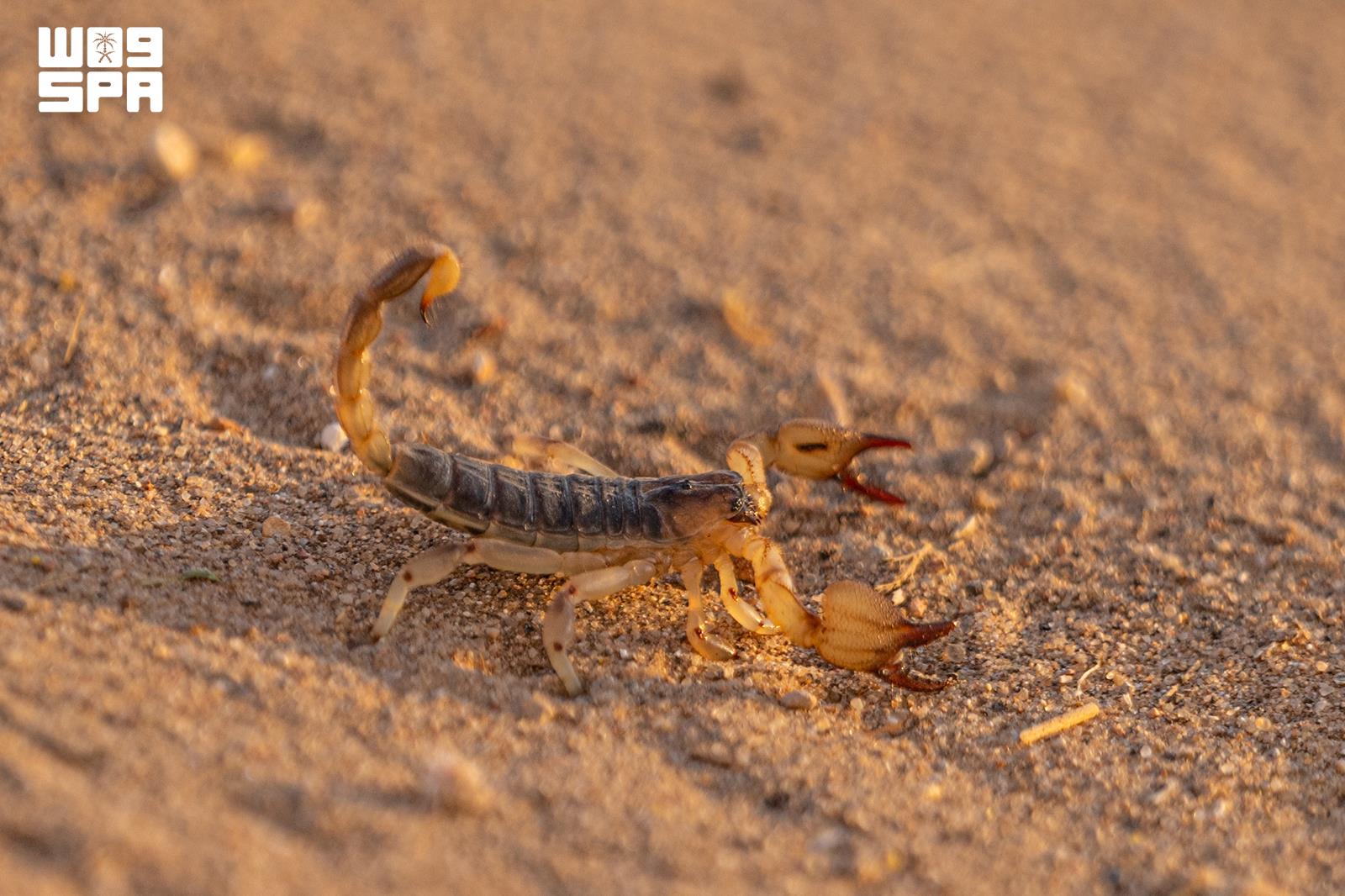
Documenting the large-clawed Sahara scorpion in Saudi Arabia’s Northern Borders region underscores the area’s rich biodiversity and species adaptation.
Key Takeaways
AISpecialist teams have documented the presence of the large-clawed Sahara scorpion, known for its prominent pincers and robust build, in the expansive desert environments of the Northern Borders region, highlighting the area’s unique biodiversity.
The Sahara scorpion, or large-clawed scorpion (Scorpio maurus), belongs to the Scorpionidae family and inhabits arid and semi-arid environments. Its range includes parts of North Africa and the Middle East, including Saudi Arabia.
Adnan Khalifa, a member of the Aman Environmental Association and a wildlife documentation enthusiast, explained that this species is a burrowing scorpion, spending much of its life in tunnels it digs in the soil. These burrows protect it from harsh environmental conditions and aid in hunting for food.
Khalifa noted that the Sahara scorpion is distinguished by its strong body and large, prominent pincers, with coloration that varies depending on its habitat. Its burrowing ability and underground lifestyle help it adapt to its environment.
Role in ecological balance and importance of documentation
Khalifa added that scorpions play a vital role in maintaining natural balance within ecosystems, feeding on insects and small invertebrates, while also serving as prey for other animals. This reflects the interconnectedness of desert wildlife.
The Northern Borders region’s geography—featuring plains, valleys, ravines, sandy, and rocky areas—offers diverse habitats for wildlife. Field monitoring and documentation help identify species, their characteristics, and habitats, enriching knowledge of the region’s biodiversity.
Khalifa emphasized the importance of preserving natural habitats and avoiding harm or disturbance to wildlife. He urged caution when encountering scorpions in the wild and advised against touching or attempting to capture them for safety reasons.