

Summer Triangle dazzles skies over Northern Borders, draws stargazers
The Summer Triangle, a prominent celestial formation, has appeared over the Northern Borders region, attracting astronomy enthusiasts thanks to clear, dark skies.
Key Takeaways
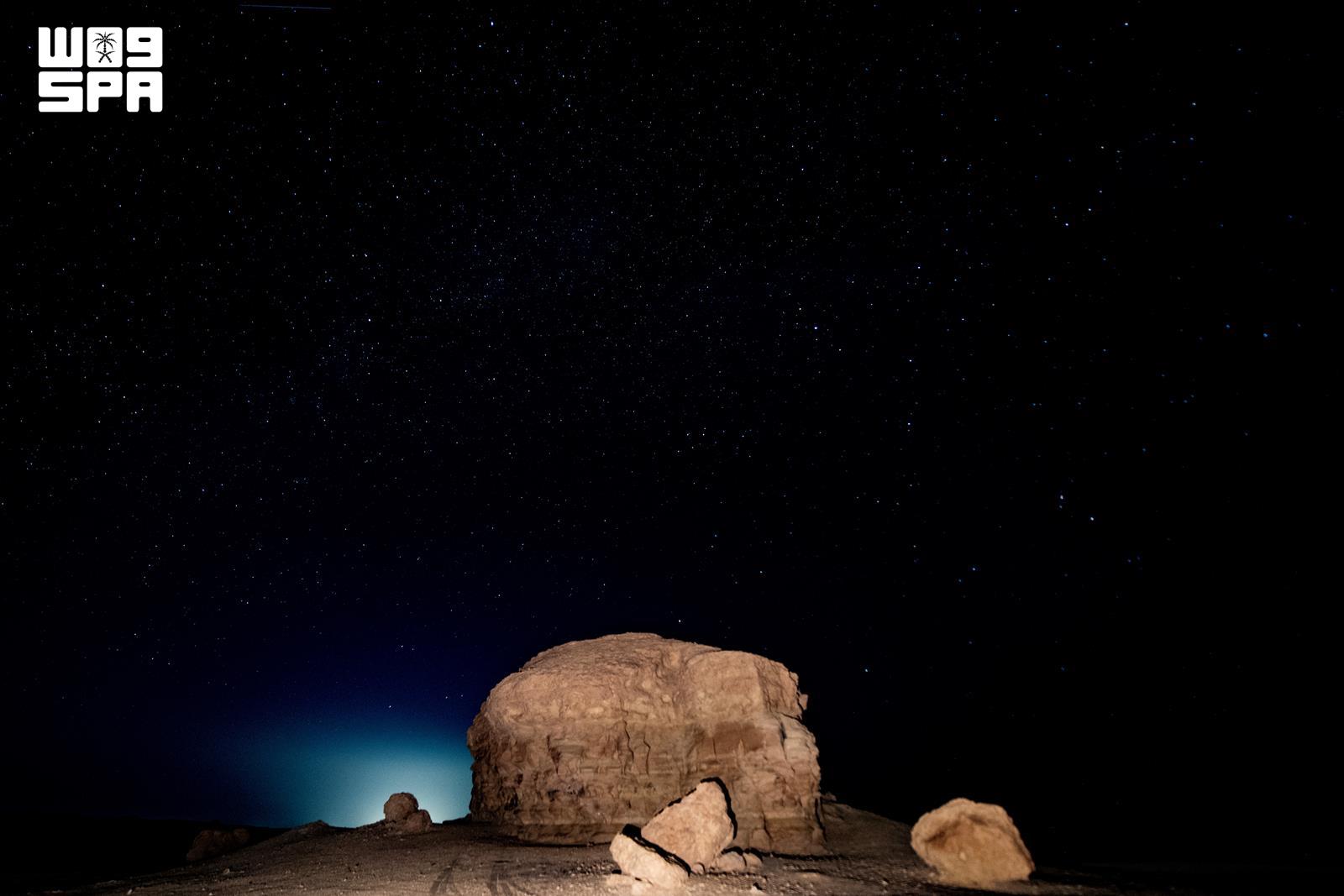
AIThe skies over the Northern Borders region have recently witnessed the appearance of the Summer Triangle, one of the most famous astronomical features in the northern hemisphere. The spectacle has attracted astronomy observers and astrophotographers, who have benefited from clear conditions and low light pollution in the region’s open desert areas.
Adnan Khalifa, a member of the Astronomy and Space Club, explained that the Summer Triangle is not an independent constellation, but rather a celestial formation made up of three of the brightest stars in the sky: Vega in the constellation Lyra, Altair in Aquila, and Deneb in Cygnus. He noted that these stars appear widely spaced, forming a large triangle that is easily recognizable to the naked eye after nightfall.
Khalifa added that the Summer Triangle is among the most prominent astronomical markers of summer nights and has long been used to determine directions and seasons. It also helps observers identify several surrounding constellations and bright stars.
He pointed out that the region offers ideal conditions for observing this phenomenon, thanks to its vast open spaces and clear skies. The luminous band of the Milky Way can also be seen stretching near the triangle in areas far from artificial light, offering stargazers a distinctive visual experience during summer nights.
The Summer Triangle is considered one of the most famous star formations among astronomy enthusiasts, remaining clearly visible throughout the summer months and serving as a prominent celestial landmark that can be identified without specialized equipment.