

Epidemiological surveillance key to disease prevention, says health official
Saudi health official stresses the vital role of epidemiological surveillance and proactive public health in safeguarding national health security.
Key Takeaways
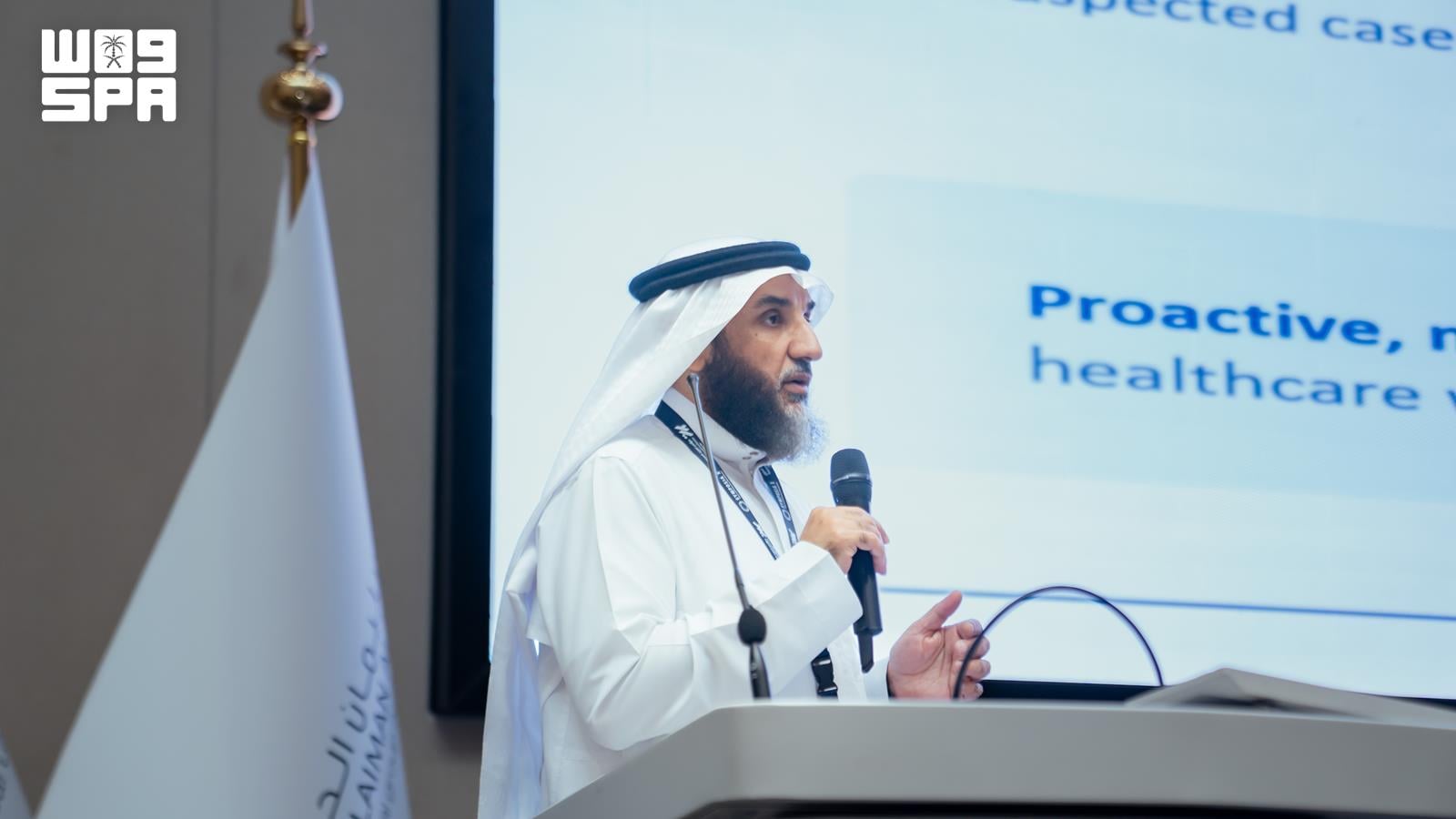
AIAbdullah Asiri, Deputy Minister of Health for Population Health, emphasized that around-the-clock epidemiological surveillance systems serve as the first line of defense against infectious diseases. He highlighted that the most crucial role of public health begins before outbreaks occur, through prevention, anticipation, and monitoring changes in epidemiological patterns or the emergence of new diseases.
Asiri made these remarks during the annual conference organized by the Saudi Society for Health Promotion and Education at King Saud University, held under the theme "Health Without Borders" and attended by a number of public health and health policy experts.
He explained that public health is a fundamental pillar of health security, noting that immunization programs and infection control in healthcare facilities are among the most important components of prevention. He also stressed the importance of effective communication during crises and delivering balanced information to the public to encourage adherence to preventive measures and limit panic.
Asiri reviewed Saudi Arabia's experience with Middle East Respiratory Syndrome (MERS) since its emergence in 2012, which led to the development of surveillance, screening, and infection control systems. He affirmed that infectious diseases know no borders, and confronting them requires early case detection, isolation, contact tracing, and risk assessment.
Future public health challenges
Asiri pointed to the "One Health" concept as a key future challenge, emphasizing the interconnectedness of human, animal, and environmental health, as well as antimicrobial resistance. He stressed that addressing these issues requires integrated efforts at the local, regional, and international levels.
For her part, Dr. Lamia Mahmoud, Regional Advisor for Noncommunicable Diseases at the World Health Organization, said the organization bases its updated guidelines for diabetes, hypertension, and cancer on scientific evidence and research, and works to help countries develop health policies and train personnel.
Mahmoud explained that preventing noncommunicable diseases requires the involvement of multiple sectors, including education, social care, and trade, not just health ministries.
Cross-sector collaboration to promote health
In a panel discussion on health policies across sectors, Dr. Fadia bint Saleh Al-Hajran, Director General of National Health Economics and Policies at the Saudi Health Council, stated that improving community health is a shared responsibility, highlighting the importance of integration in policy-making and evaluation.
Meanwhile, Dr. Ibrahim Al-Jefali, Assistant Secretary for Empowerment and Compliance at the Council of Health Insurance, revealed that the number of health insurance beneficiaries in the Kingdom has reached about 15 million, in addition to millions of pilgrims, visitors, and tourists. He noted that preventive services are a core part of insurance benefits, with a focus on strengthening primary healthcare centers and shifting toward prevention to reduce hospital demand.
Similarly, Dr. Naif bin Abdullah Al-Amri, Family Medicine and Medical Education Consultant and Medical Director of Al-Narjis Center at Dr. Sulaiman Al Habib Medical Group, affirmed the private sector's role in health transformation. He noted that the "Health in All Policies" approach includes sectors such as education, food, urban planning, and housing.
Al-Amri pointed out that life expectancy in Saudi Arabia has risen from 74 to 76.9 years, attributing this to an integrated system aimed at enhancing quality of life and productivity, not just increasing lifespan.