

Repeated sightings of Bryde’s whale highlight Farasan Islands reserve
Frequent Bryde’s whale sightings in the Farasan Islands Protected Area underscore its significance as a key wildlife destination, officials say.
Key Takeaways
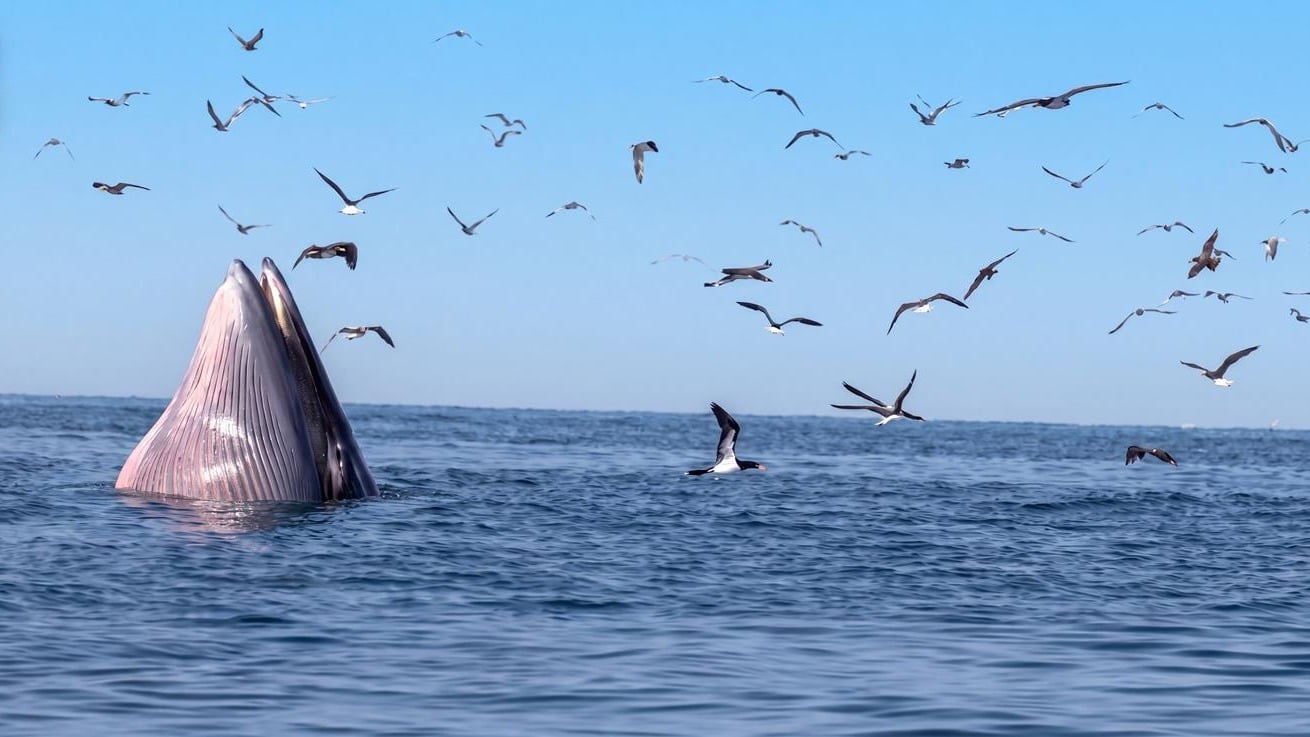
AIThe National Center for Wildlife has documented repeated sightings of Bryde’s whale in the Farasan Islands Protected Area during its routine marine monitoring patrols. These observations are an important indicator for understanding the timing and patterns of the whale’s presence in the reserve, supporting the development of seasonal marine wildlife viewing experiences.
The most recent sighting was recorded on August 18, 2026, when a specialized team observed the whale feeding off Khawr Zafaf on the western side of the reserve. This continues a series of previous sightings at various locations around the Farasan Islands in recent years.
Cumulative monitoring data show numerous Bryde’s whale sightings between May 2023 and August 2026, with repeated appearances in July, August, September, and October, particularly in the southern and western parts of the reserve. This highlights the importance of ongoing monitoring and data collection to better understand the whale’s timing and spatial distribution.
Importance of field data and tourism experiences
Mohammed Ali Qurban, CEO of the National Center for Wildlife, said that repeated sightings provide valuable field data for understanding the whale’s presence in the reserve. This helps identify locations and periods where sightings are most frequent, supporting data-driven monitoring and management efforts.
Qurban added that these observations enhance the Farasan Islands reserve’s status as a leading wildlife destination, especially in developing seasonal whale-watching experiences in their natural habitat. He noted that building such experiences relies on scientific knowledge of species distribution and appearance timing, allowing for organized tourism that supports habitat sustainability.
Similarly, sightings of Bryde’s whale reflect the rich marine biodiversity of the Farasan Islands Protected Area and its potential for wildlife viewing in natural settings. The center continues its monitoring, documentation, and species mapping efforts, which strengthen scientific understanding and support the development of high-quality, sustainable wildlife tourism across the Kingdom.