

Lunar terrain observed in Rafha reveals moon’s geological history
Astronomers in Rafha observed the moon’s last quarter phase, revealing geological features that document its early history and the solar system’s evolution.
Key Takeaways
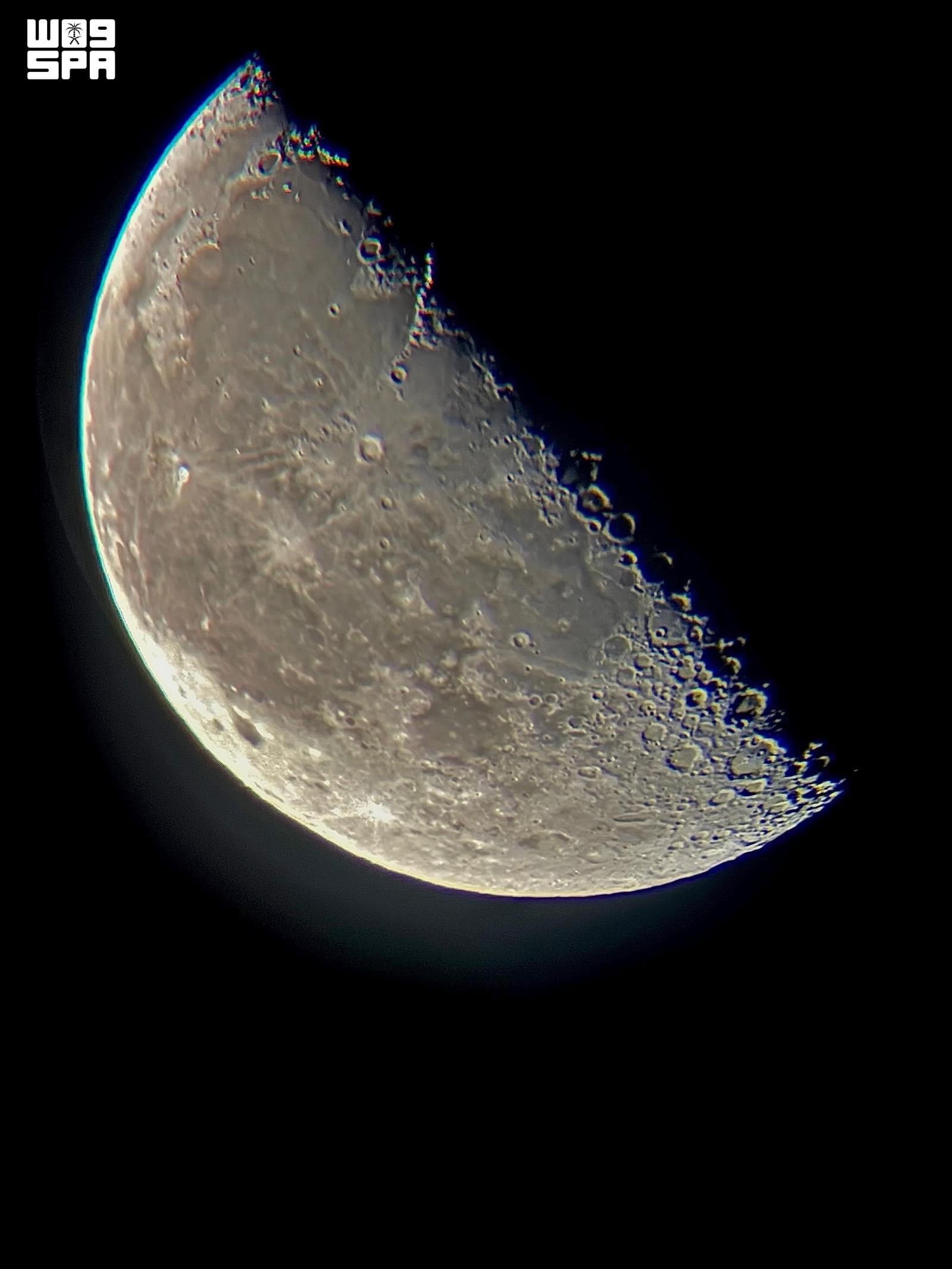
AIThe skies over Rafha in Saudi Arabia’s Northern Borders Province witnessed an astronomical observation of the moon’s terrain during its last quarter phase yesterday, giving enthusiasts a chance to view prominent surface features. These included impact craters, highlands, and dark lowlands, which serve as a natural record documenting a significant part of the moon’s geological history and the early development of the solar system.
Burgis Al-Falih, a member of the Afaq Astronomy Association, explained that the observation revealed a variety of lunar surface details, including impact craters, highlands, and dark regions. He noted that the clarity of these features depends on the moon’s phase, the timing of observation, atmospheric conditions, and the quality of astronomical instruments used.
Al-Falih added that the moon’s terrain was primarily shaped by widespread meteorite impacts and ancient volcanic activity. The traces of these processes remain largely preserved due to the limited erosion on the moon compared to Earth, making lunar terrain studies an important source for understanding its geological history.
Impact craters and lunar maria
Impact craters are among the most widespread features on the moon’s surface, formed by collisions with asteroids, meteors, and comets over billions of years. These craters vary in size and shape, with some exposing material from deeper lunar layers and providing clues about the impacts that shaped the moon’s surface.
Al-Falih explained that lunar craters are most clearly visible as the moon approaches its quarter phases, when shadows along their rims and slopes highlight their details, in contrast to the full moon period when shadows are minimal and surface contrast is reduced.
The lunar maria also stand out—vast dark regions that are not bodies of water, but volcanic plains formed when basaltic lava flooded large basins and depressions created by major impacts. These maria are darker than the brighter lunar highlands and are distinguished by differences in mineral composition and geological age.
Mountain ranges and towering highlands
The moon’s terrain also reveals mountain ranges and towering highlands, which differ in origin from Earth’s mountains. Many formed as a result of massive impacts that created large basins, with the force of the collisions and the rebound of the lunar surface forming complex, elevated rims around them.
The Afaq Astronomy Association member emphasized that observing the moon is not only an aesthetic experience but also a simple way to learn about its geological history. He explained that tracking changes in lighting and shadows on the lunar surface helps distinguish craters, mountains, and volcanic plains, and contributes to spreading astronomical awareness in the community.
Studying these features allows scientists to reconstruct key stages of the moon’s geological past, understand the nature of impacts and volcanic activity it has experienced, and helps identify suitable sites for future lunar landing and exploration missions.