

Makkah Gate welcomes visitors with Quran-inspired architecture
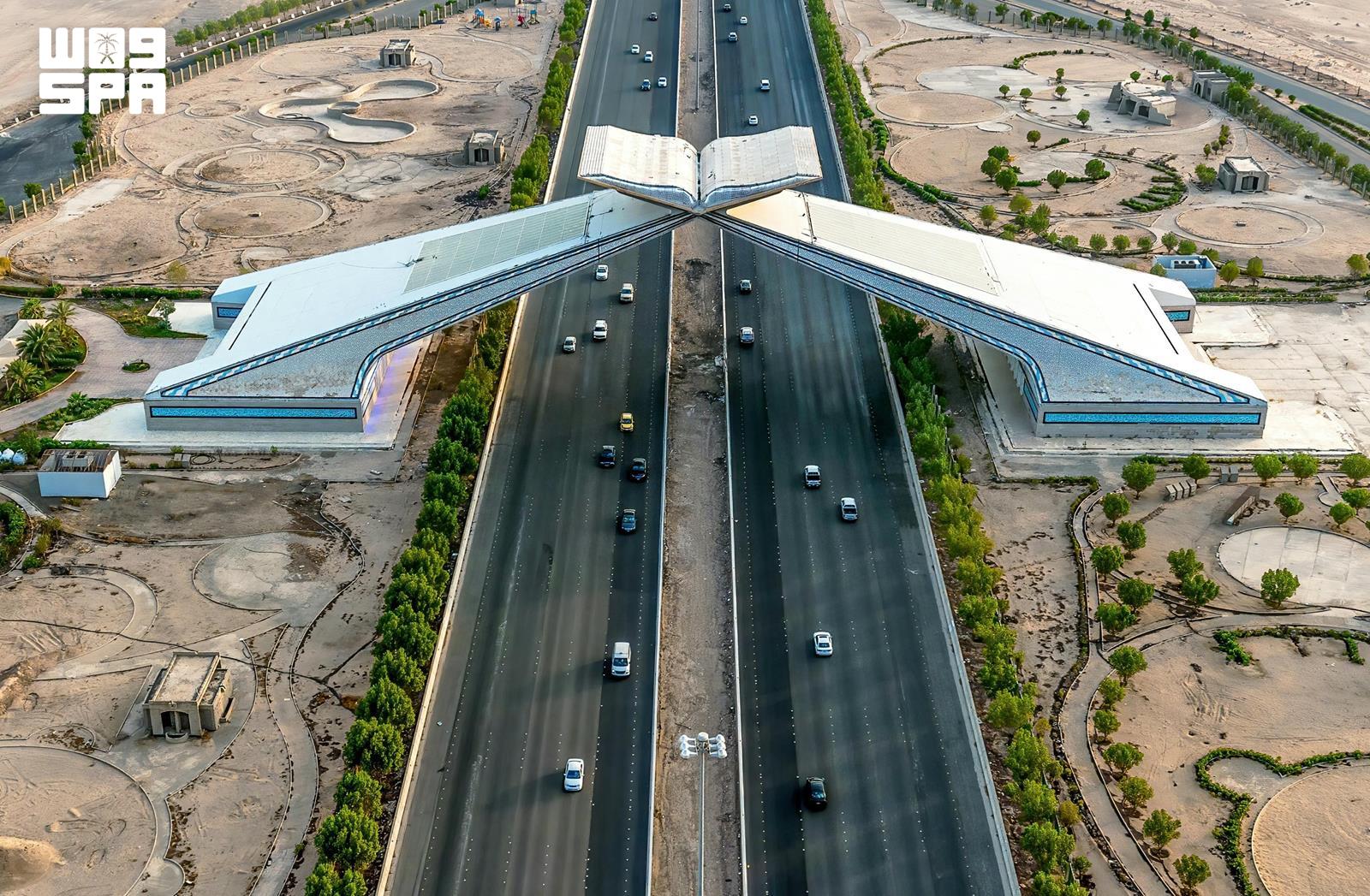
The Makkah Gate greets arrivals to the holy city with a striking design inspired by the Quran, highlighting the city’s Islamic identity and spiritual status.
Key Takeaways
AIThe Makkah Gate stands as one of the most prominent landmarks of the holy city, welcoming travelers arriving from the Makkah–Jeddah highway with an exceptional architectural design inspired by the Holy Quran. This makes it a visual symbol reflecting the city’s Islamic identity and spiritual significance.
Also known as the “Quran Gate,” the structure features a unique design depicting an open Quran resting on a wooden stand. The monumental gateway consists of an arch spanning the road, comprising three main components: two side bases serving as supporting pillars, and two wings that meet at a height of around 23 meters above the road to form the base of the open book.
The open book consists of two pages, each approximately 16.5 meters long and 26 meters wide, extending from a height of 23 meters up to 31 meters. This gives the structure a striking visual presence that distinguishes the entrance to Makkah.
The landmark was designed by Saudi artist Aziz Dia, who drew inspiration from the traditional wooden Quran stand. The construction features reinforced concrete, glass, wood, and illuminated Islamic mosaics, adorned with Islamic motifs and Arabic calligraphy that harmonize with the holy city’s identity.
The gate is located on Prince Mohammed bin Salman Road (the Makkah–Jeddah Expressway), about five kilometers west of Makkah. It measures approximately 152 meters in length and 31 meters in width, surrounded by palm trees, gardens, and parking areas. Its architectural details are accentuated at night with various lighting systems.
The Makkah Municipality has emphasized its commitment to developing the city’s entrances and enhancing the urban landscape through the Prince Mohammed bin Salman corridor project, which includes landscaping, public space design, and integration of architectural landmarks with surrounding facilities to highlight Makkah’s identity and improve the experience for visitors and residents.
The gate’s significance goes beyond its architectural beauty, as its Quranic symbolism reflects the importance of the Holy Quran to Muslims and showcases the region’s urban development. It stands as a landmark that blends tradition with modernity, reinforcing Makkah’s presence in the memories of visitors from around the world.