Saudi homes required to sort waste into three color-coded bins
New regulations mandate all Saudi households to separate waste into three standardized bins, as part of a national push to boost recycling rates.
Key Takeaways
AIHouseholds across Saudi Arabia are now required to separate their waste into three standardized color-coded bins, following the approval of new regulations by Minister of Environment, Water and Agriculture and Chairman of the National Center for Waste Management, Abdulrahman Al-Fadley. The technical guidelines for waste separation at source, published in the official Umm Al-Qura Gazette on Monday, take effect immediately.
The rules cover four waste categories: municipal solid waste, agricultural, industrial, and special waste.
Household and commercial waste: three colors
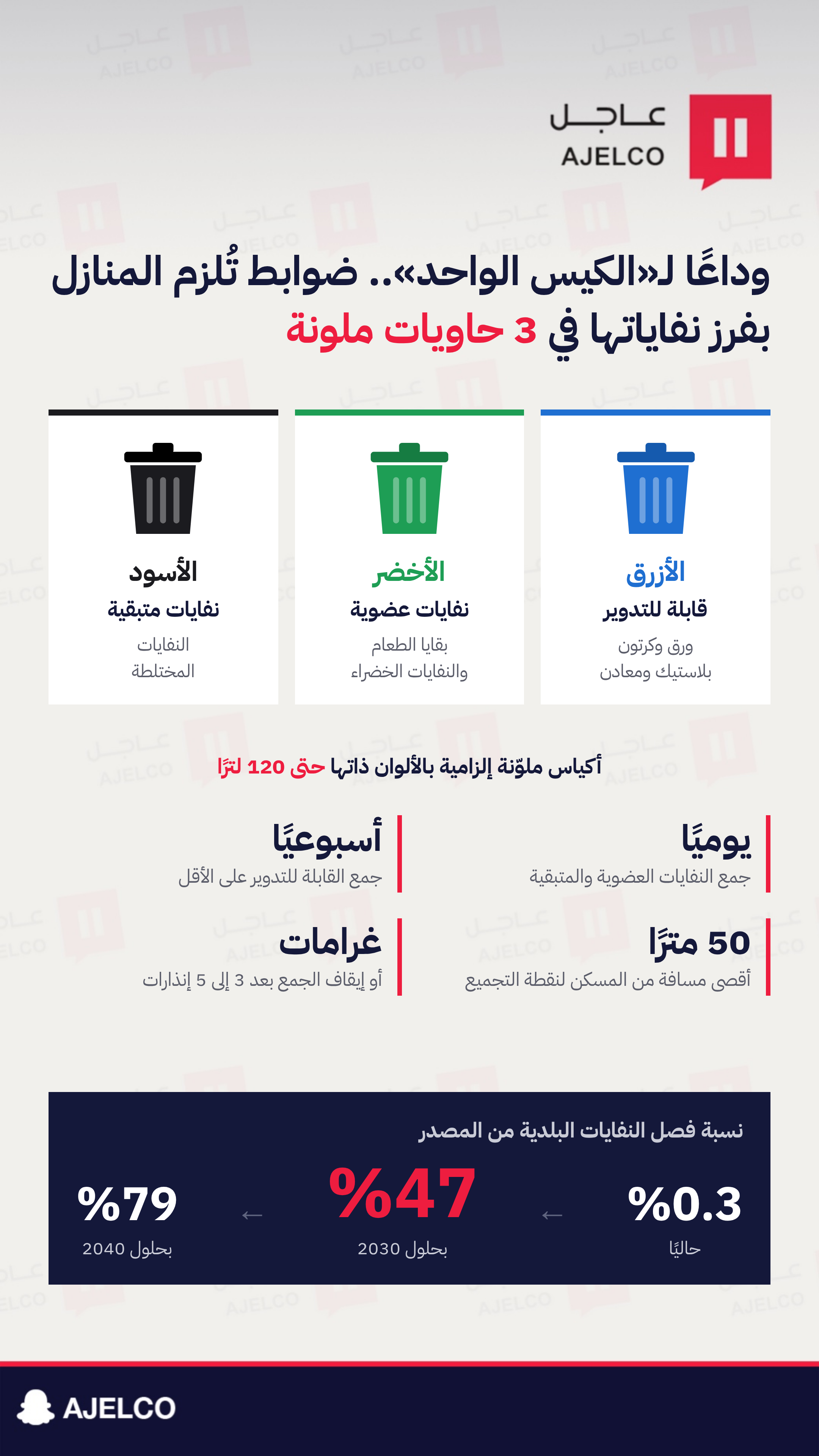
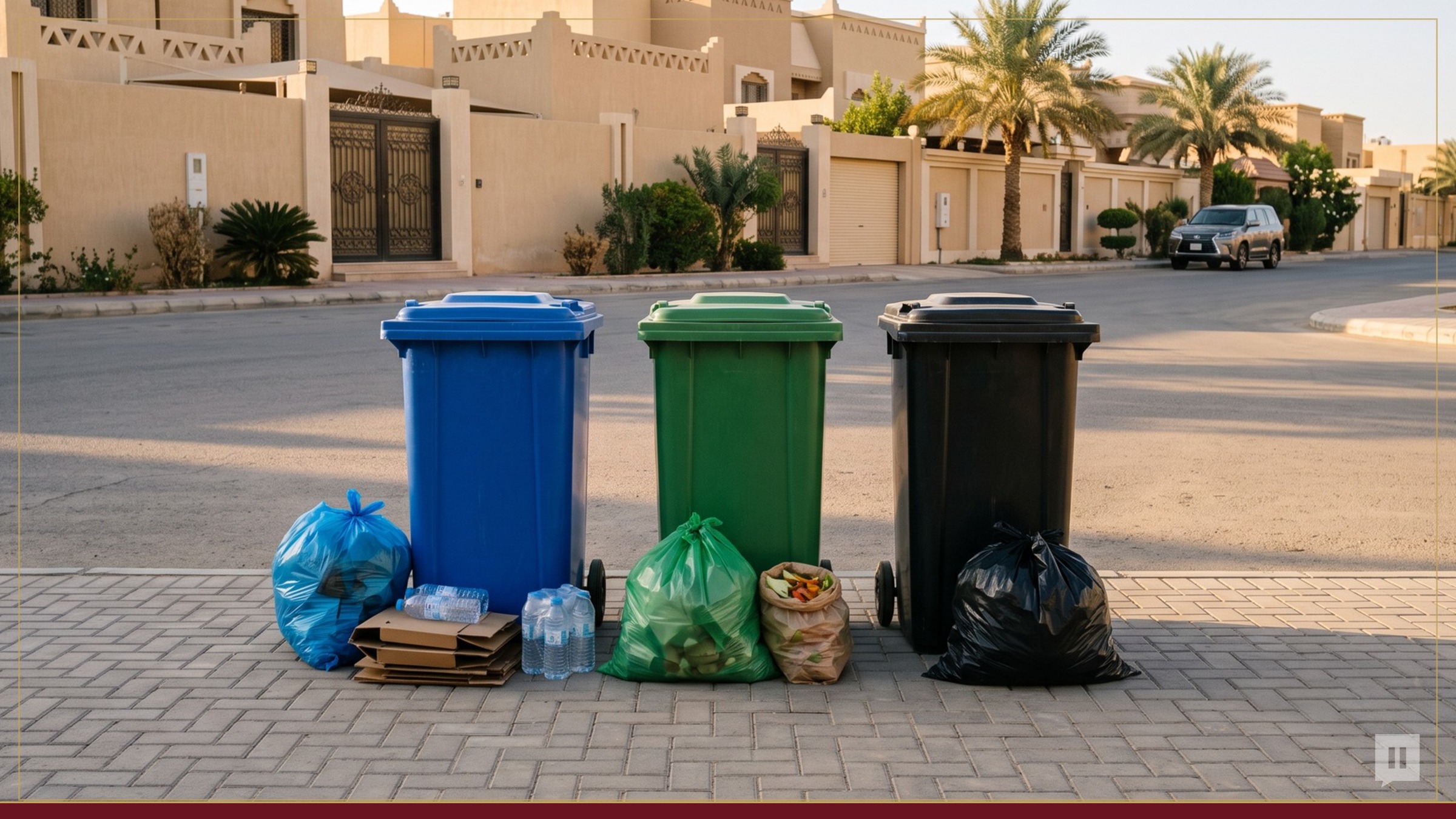
The regulations require municipal waste producers—including households, commercial establishments, and institutions—to sort their waste into three bins with unified colors: blue for dry recyclables (paper, cardboard, plastics, and metals), green for organic waste (food scraps and green waste), and black for mixed residual waste. Matching colored bags, each no larger than 120 liters, are also mandatory.
Organic and residual waste must be collected daily, while recyclables are to be collected at least once a week, preferably every two days. The distance from a residence to a shared collection point must not exceed 50 meters, or up to 100 meters on certain side streets in commercial areas.
The guidelines require rinsing and emptying containers before disposal, flattening cardboard, and keeping batteries and hazardous materials separate from regular waste. Electronics, furniture, textiles, and glass must be taken to designated collection or recycling centers.
Waste collectors are responsible for supplying bins and bags to homes as per their contracts with municipalities.
New buildings
Developers of new buildings must allocate space for sorting bins, incorporate separation facilities into building designs, and install waste chutes with three separate channels in multi-story buildings. Sorting bins may also be integrated into kitchen cabinets.
Monitoring and incentives
The regulations allow for the use of electronic tracking tags (RFID) on bins linked to the national address, and surveillance cameras at shared collection points. A 'pay-as-you-throw' system may be introduced, tying fees to the amount of waste generated.
Incentives include reward points for compliant households, collection fee discounts for companies, and neighborhood competitions.
Violators face penalties according to a five-tier classification of waste management offenses, with escalating consequences for repeat violations. Fines or suspension of waste collection may be imposed after three to five warnings. Waste producers must pay for bin replacement if damaged due to negligence.
Agricultural, industrial, and special waste
In agriculture, the rules require separation of animal and slaughterhouse waste into three risk categories, cooling slaughterhouse waste to 0–4°C before daily collection.
Industrial waste must be strictly separated into hazardous and non-hazardous, with incompatible materials such as acids and alkalis or cyanides kept apart.
Special waste—including electrical and electronic devices, batteries, vehicles, and expired tires—must not be disposed of with municipal waste or in unauthorized locations. Damaged vehicles and tires must be delivered to approved centers, under an 'extended producer responsibility' system holding manufacturers and importers accountable for products at end-of-life.
2030 targets
The regulations support the national waste management strategy, aiming to increase municipal waste separation at source from 0.3% currently to 47% by 2030 and 79% by 2040. By 2030, the targets include separating 57% of industrial waste, 42% of agricultural waste, and 60% of both electronic devices and end-of-life vehicles and tires.
According to the guidelines, the average person in Saudi Arabia generates about 1.7 kilograms of municipal waste daily, with food waste accounting for 24%, plastics 21%, and paper and cardboard 18%. Most of this currently ends up in landfills.