

Houbara footprints aid tracking and conservation in Saudi deserts
The houbara bustard leaves a distinctive three-pronged track in Saudi deserts, helping trackers and falconers follow its path and highlighting its cultural value.
Key Takeaways
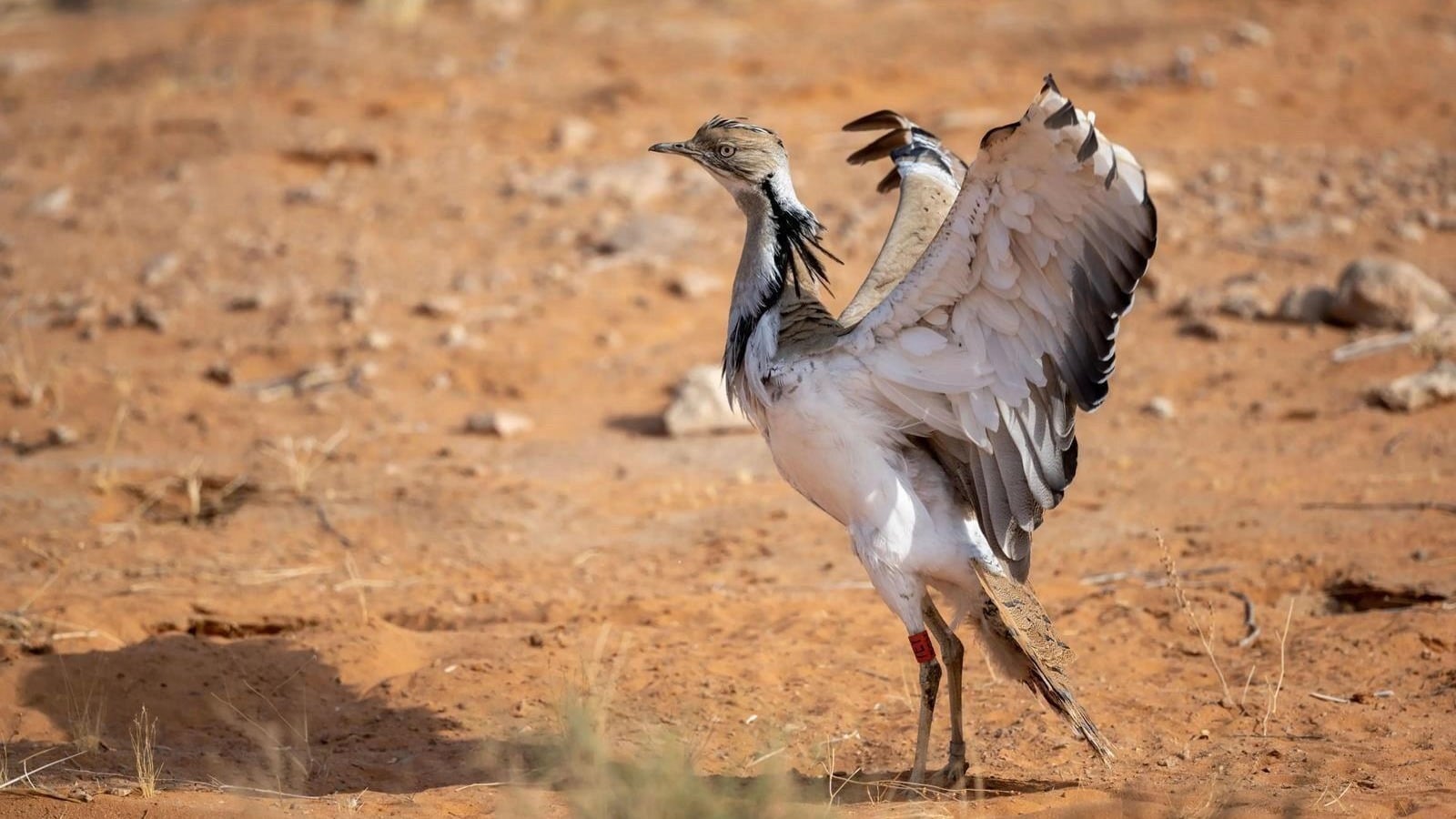
AIThe houbara bustard, a bird closely associated with Saudi Arabia’s desert environment, leaves a distinctive mark on the sand resembling a three-pronged fork. Falconers and trackers use this unique footprint to follow the houbara’s trail and determine its direction, as the bird’s foot has three forward-facing toes and no hind toe, creating a clear imprint on the ground.
Locally, the houbara’s track is known as “al-jurra” or “al-jarayer.” Its steps are evenly spaced in a straight line, with no dragging of the feet, and the softness of the bird’s sole leaves a light impression on sand and soil, enabling specialists to interpret the bird’s movements in detail.
Trackers rely on the shape and sequence of the houbara’s footprints to accurately map its routes, drawing on inherited expertise in reading wildlife signs and monitoring desert fauna.
Houbara: cultural and environmental significance
The houbara is deeply linked to the history of falconry in the Arabian Peninsula and holds significant cultural and environmental value. It also contributes to the ecological balance of Saudi Arabia’s arid and semi-arid regions.
Nature reserves play a vital role in protecting the houbara and reducing pressures on its habitats, supporting efforts to conserve native species and sustain biodiversity in the Kingdom’s deserts.