

Saudi Arabia highlights leadership in humanitarian diplomacy at UN event
Abdullah Al-Rabeeah underscores Saudi Arabia’s leading humanitarian role and the importance of diplomacy in protecting international law and civilians.
Key Takeaways
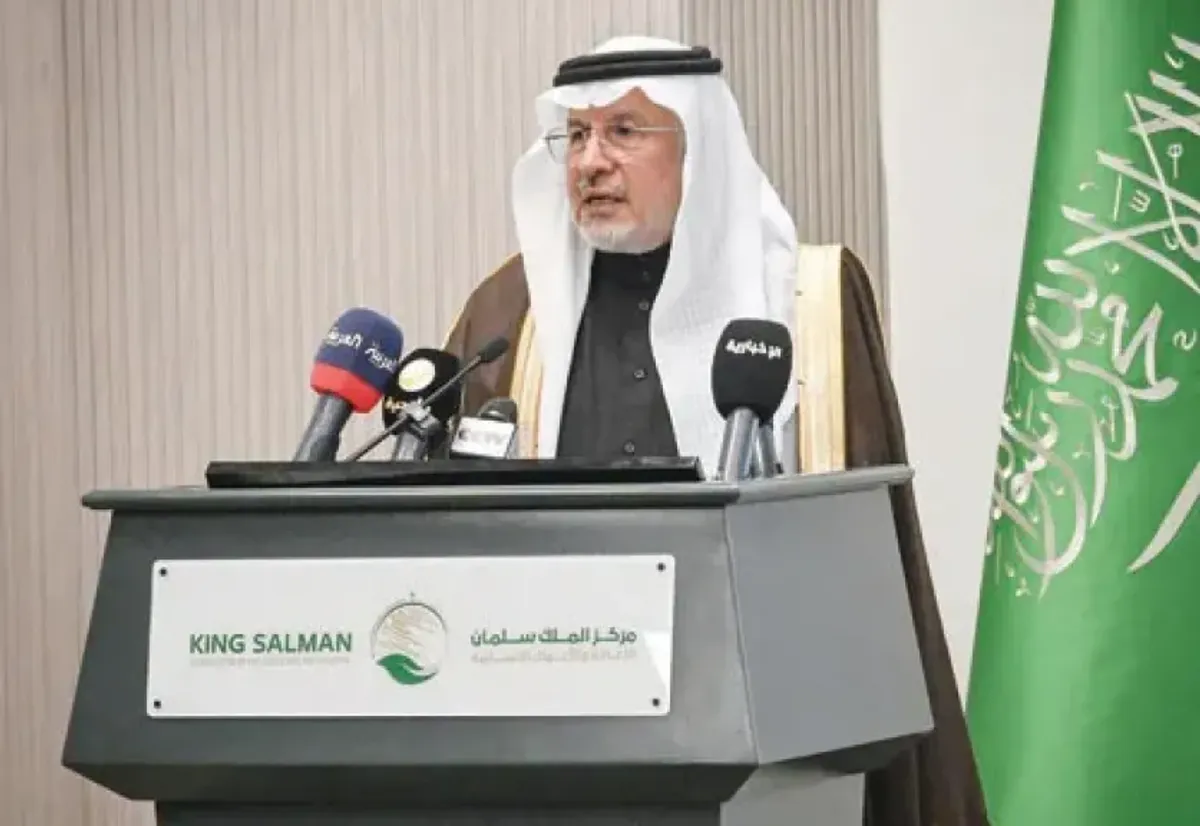
AIAbdullah Al-Rabeeah, Royal Court Advisor and Supervisor General of the King Salman Humanitarian Aid and Relief Center (KSrelief), participated today in a high-level side event titled "Humanitarian Diplomacy that Protects International Humanitarian Law," held on the sidelines of the 81st session of the United Nations General Assembly in New York. The event was organized by the European Union, African Union, Ireland, Brazil, and Jordan, and attended by Queen Mathilde of Belgium.
In his remarks, Al-Rabeeah said the session addressed urgent humanitarian challenges, emphasizing the importance of international humanitarian law and humanitarian diplomacy in shaping effective collective responses, especially in the Middle East and Africa.
He noted that Saudi Arabia has played a pioneering role in humanitarian and development efforts, supporting more than 9,000 projects in 175 countries at a total cost exceeding $145 billion, with a focus on communities affected by crises.
The importance of humanitarian diplomacy and international partnerships
Al-Rabeeah added that humanitarian diplomacy is a cornerstone for protecting international humanitarian law and principled humanitarian action, as it helps prevent escalation, promote dialogue, and facilitate the safe and sustainable delivery of aid. He stressed its role in addressing aid diversion and ensuring assistance does not fuel tensions or worsen conflicts.
He stated that humanitarian diplomacy must be coordinated, neutral, and impartial, calling for joint efforts to protect civilians, ensure aid delivery, uphold core international humanitarian law obligations, and prevent attacks on civilians and civilian infrastructure.
KSrelief’s role in advancing humanitarian work
Al-Rabeeah affirmed that KSrelief is dedicated to building strategic partnerships with UN agencies, international and national organizations, and the private sector to foster innovation and improve humanitarian outcomes. He noted that the center has worked with 112 local organizations on 586 projects worth over $779 million in 34 countries, and has 262 registered partners to strengthen local community resilience.
He added that strong partnerships and coordinated program implementation empower local communities and enable sustainable, evidence-based responses, highlighting the importance of aligning strategic planning with field practices to achieve measurable, lasting impact.
Call to enhance civilian protection and address new challenges
Al-Rabeeah also warned of the risks posed by the misuse of artificial intelligence in conflicts, calling for the revision of international humanitarian law to protect civilians from such threats. He praised UN efforts to advance the "Resetting the Humanitarian Agenda," stressing that reforms must be grounded in accountability, transparency, inclusivity, and the empowerment of local actors.
In closing, Al-Rabeeah emphasized that humanitarian diplomacy bridges principles and practice, and that protecting international humanitarian law and safeguarding civilians is a shared responsibility requiring ongoing dialogue, effective partnerships, and tangible action.