

Imam Turki bin Abdullah Royal Reserve showcases unique biodiversity in northeast Saudi Arabia
Imam Turki bin Abdullah Royal Reserve, Saudi Arabia’s second largest, features diverse landscapes and rich habitats supporting abundant wildlife.
Key Takeaways
AIThe Imam Turki bin Abdullah Royal Reserve stretches across 91,500 square kilometers in northeastern Saudi Arabia, making it the country’s second largest royal reserve. The area is distinguished by its varied terrain, including sand dunes, plains, mountains, plateaus, steppes, valleys, and natural depressions, all of which contribute to its rich plant life and diverse wildlife.
Sand dunes cover the largest portion of the reserve and are home to desert plants such as Haloxylon, Calligonum, Rhanterium, and Lycium. Seasonal valleys and watercourses create suitable environments for the growth of woody plants, while the natural depressions known as 'fayadh' collect rainwater and runoff during wet seasons, further enriching the reserve’s vegetation.
Rich plant diversity and abundant wildlife
The reserve’s plant cover includes hundreds of species from dozens of plant families, notably Acacia, Ziziphus, Calligonum, Haloxylon, Rhanterium, and Lycium. This diversity is closely linked to the varied terrain and the wide range of environmental and climatic conditions found within the reserve’s vast area.
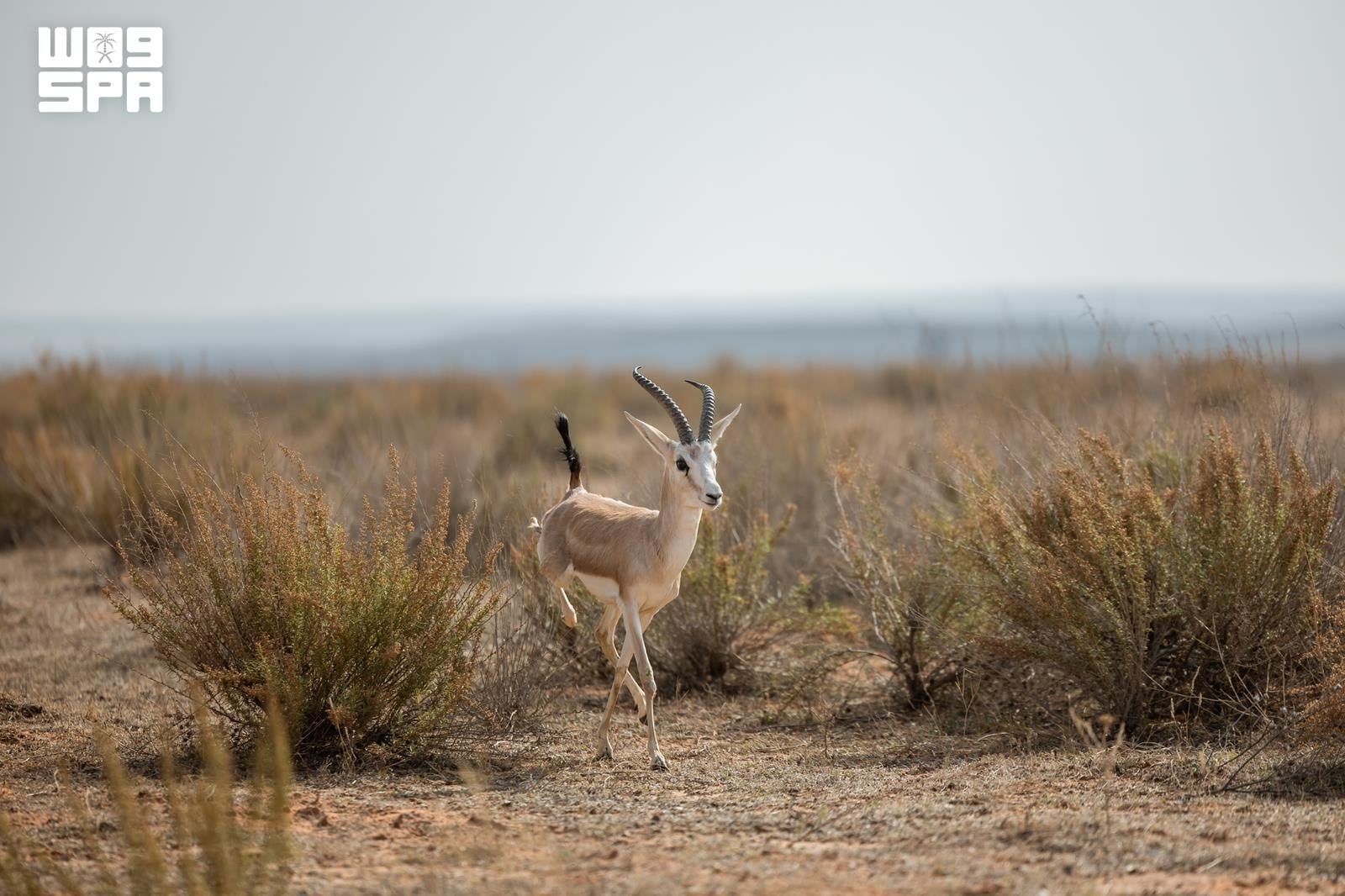
The diverse habitats within the reserve support a wide array of wildlife, including hundreds of species of mammals, birds, and reptiles, as well as numerous invertebrates. This highlights the reserve’s vital role in conserving biodiversity and maintaining the natural balance of its ecosystems.
Conservation and environmental management efforts
The Imam Turki bin Abdullah Royal Reserve Development Authority works to protect and enhance this biodiversity through programs aimed at restoring natural habitats, expanding plant cover, and reintroducing native plant and animal species. The authority also regulates human activities within the reserve to minimize environmental impact and ensure the sustainability of natural resources.
This includes managing grazing as part of the environmental management system, applying regulations that consider pasture conditions and their capacity. These measures support the regeneration of plant cover and help balance the sustainable use and conservation of natural resources.
With its vast area, diverse landscapes, and rich biodiversity, the reserve stands out as an advanced model for large-scale natural ecosystem management. Its environmental assets support habitat restoration and wildlife enhancement, while also offering promising opportunities for environmental research and sustainable ecotourism development.