

Arabian oryx recovery hailed as Saudi conservation success story
Saudi Arabia’s efforts to restore the Arabian oryx from extinction have set a global benchmark for threatened species recovery.
Key Takeaways
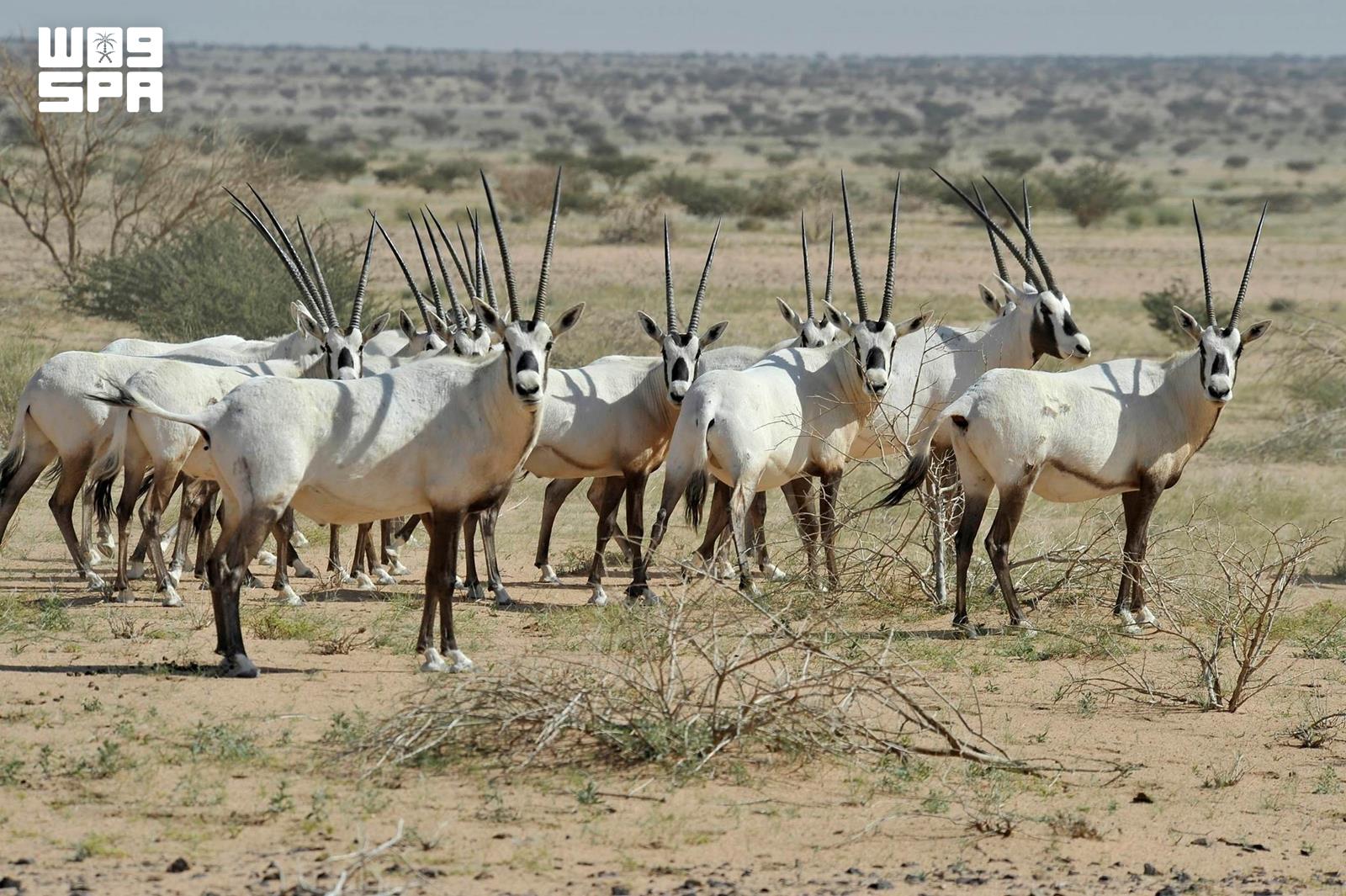
AIFor over four decades, Saudi Arabia has led a successful campaign to restore the Arabian oryx to its native habitats after the species vanished from the wild in the 1970s. The international PANORAMA platform has documented this national achievement, highlighting the National Center for Wildlife’s work in breeding programs, reintroduction, habitat protection, and post-release monitoring and management.
In 2011, the Arabian oryx’s global conservation status marked a turning point when the International Union for Conservation of Nature (IUCN) upgraded it from “Endangered” to “Vulnerable” on its Red List. This made it the first species previously declared extinct in the wild to achieve such an improvement, thanks to the efforts of the National Center for Wildlife and its partners.
Expanding wild populations
Saudi Arabia has continued to boost wild Arabian oryx numbers. According to 2026 data from the National Center for Wildlife, around 3,064 individuals now inhabit 11 sites, with herd sizes on the rise. This reflects a national journey that began with rescuing the species and evolved into building self-sustaining wild populations.
The Arabian oryx is an iconic symbol of the Arabian desert and plays a vital role in maintaining healthy desert ecosystems by dispersing seeds, pruning trees, and supporting vegetation growth. Its recovery has contributed to the stability of other species and habitats.
Scientific approach and collaborative efforts
International efforts to save the Arabian oryx date back to the 1960s, when the IUCN launched the “Oryx” operation in partnership with the World Wildlife Fund. Saudi Arabia joined these efforts and established a comprehensive national program in 1986. The reintroduction program began in Imam Saud bin Abdulaziz Royal Reserve in 1989 and later expanded to other reserves such as Uruq Bani Ma’arid.
The Saudi approach relied on assessing habitat suitability and selecting founder animals based on health, genetics, and behavior, with local community involvement to ensure the formation of healthy, sustainable herds.
Supporting Vision 2030
The pace of Arabian oryx recovery accelerated with the launch of Saudi Vision 2030 and the Saudi Green Initiative, which aim to protect 30% of the Kingdom’s land and sea, enhance ecosystems, and establish the Special Forces for Environmental Security, transforming conservation into an integrated system.
Breeding programs have established new herds, reserves have provided suitable habitats, and ongoing monitoring has enabled better understanding of animal movements and early risk detection. The recovery process has become a comprehensive model for managing the species in the wild.
National expertise and environmental sustainability
The Arabian oryx recovery program’s impact extends beyond the species itself, helping to build national expertise in breeding, protected area management, veterinary care, applied research, and technical capacity—paving the way for a more sustainable future for Saudi Arabia’s biodiversity.