

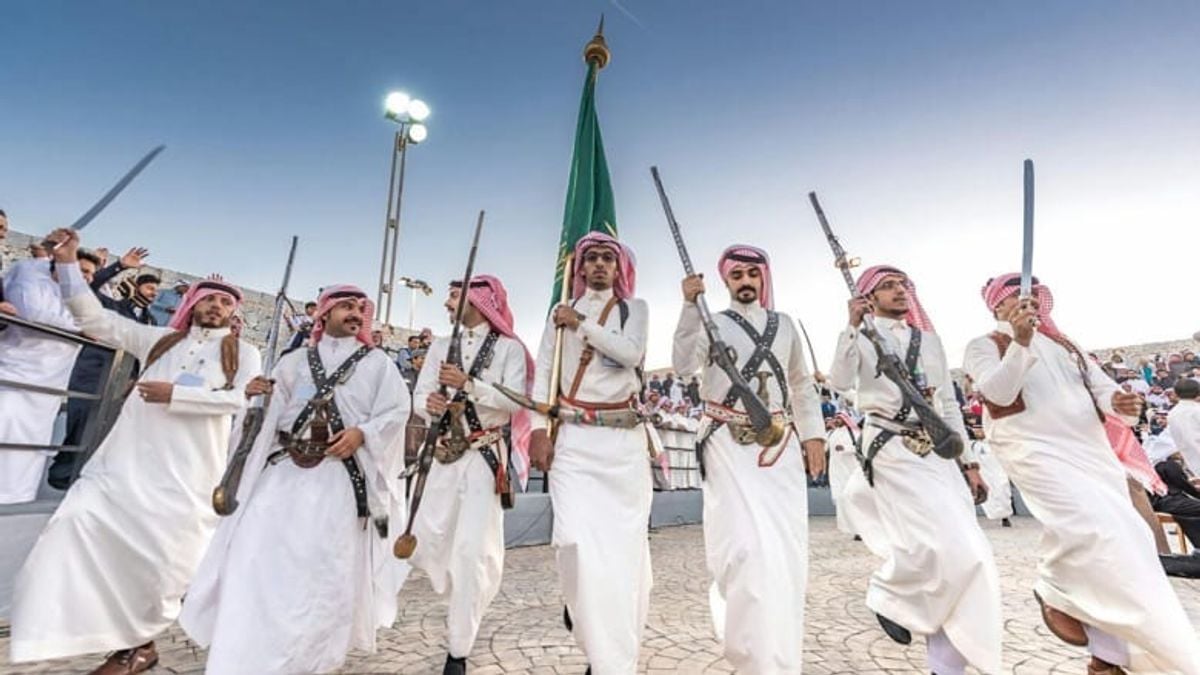
Saudi National Day marked by traditional Ardah dance celebrating unity
Saudi Arabia marks its 96th National Day, recalling the nation’s unification and heritage, with the Ardah dance symbolizing unity and pride.
Key Takeaways
AISaudi Arabia’s leadership and people celebrate the 96th Saudi National Day today, Wednesday, September 23, 2026, under the theme “Our Pride by Nature,” recalling the unification journey led by King Abdulaziz bin Abdulrahman Al Saud. Since then, the Kingdom has witnessed a path that strengthened its unity and reinforced its national identity.
This national occasion comes as the Kingdom continues its development journey under the leadership of King Salman bin Abdulaziz Al Saud and Crown Prince and Prime Minister Mohammed bin Salman. Building on a deep-rooted historical legacy, Saudi Arabia is advancing the goals of Vision 2030 to enhance national capabilities and solidify its presence on the international stage.
Ardah: a legacy of pride and unity
At the heart of this heritage stands the Saudi Ardah, one of the most prominent symbols of national identity. Once performed on battlefields, Ardah has evolved into a celebratory dance, with its rhythms and steps embodying courage, pride, unity, and victory.
From the battlefield to festive occasions
The Saudi Ardah originated in a military context, performed to express strength, boost morale, and showcase bravery. Over time, it became a cherished national tradition associated with celebrations and special occasions, maintaining its place in popular memory across generations.
During the reign of King Abdulaziz bin Abdulrahman Al Saud, the Ardah was firmly established as a key feature of national and social celebrations. King Abdulaziz was known for organizing and participating in Ardah performances alongside his people.
The King Abdulaziz Foundation for Research and Archives documents several historical instances of Ardah at major events, including a performance in front of the royal palace in Makkah on the second day of Eid Al-Fitr in 1349 AH (1931 CE) to mark the holiday.
View the post on X
Over time, Ardah became an integral part of official celebrations, with princes and dignitaries leading the dance, carrying swords and rifles to the rhythm of poetry and patriotic chants—a scene reflecting values of pride and belonging.
The movements and rhythms of Ardah carry multiple meanings: a celebration of victory, pride, and honor, and a symbol recalling the Kingdom’s history and achievements. Once performed in wartime to display strength, Ardah is now a joyful expression at national events and festivities.
Thus, the Saudi Ardah has endured as a living heritage passed down through generations, blending historical memory with national identity and evoking unity, pride, and belonging at every occasion.