

GCC chief: Gulf-EU partnership vital for security and shared prosperity
GCC Secretary-General Jasem Albudaiwi says the Gulf-EU partnership is key to regional security, stability, and prosperity, urging deeper parliamentary cooperation.
Key Takeaways
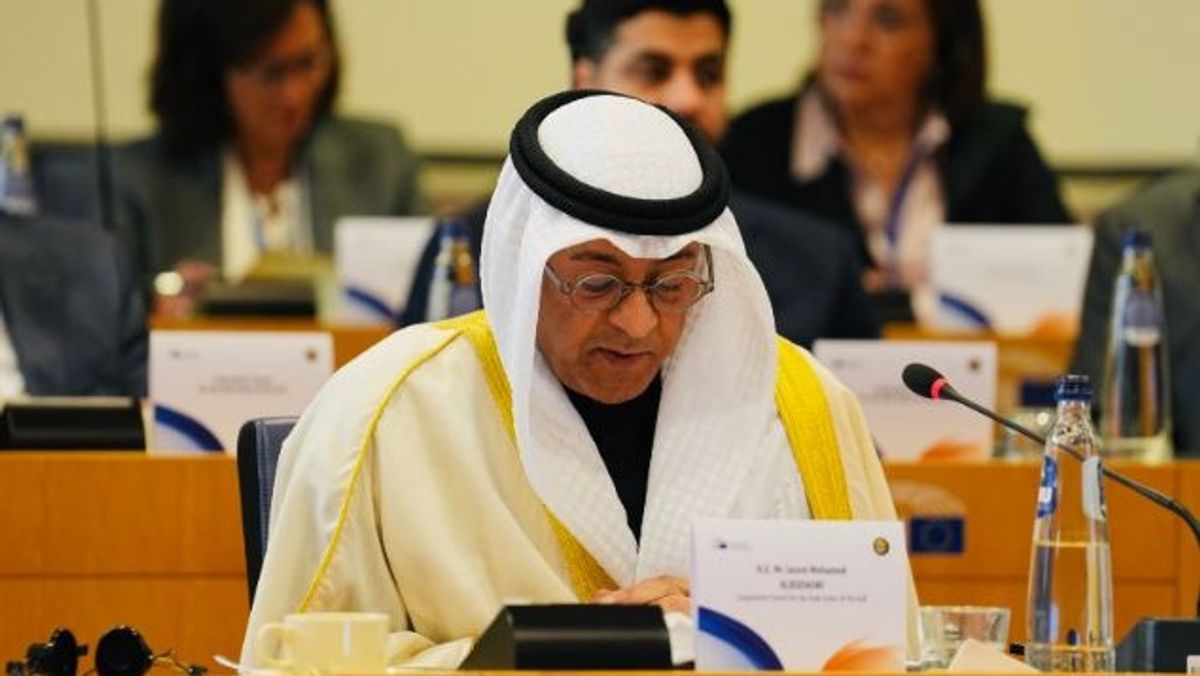
AIGulf Cooperation Council Secretary-General Jasem Albudaiwi has emphasized that the strategic partnership between GCC states and the European Union is a cornerstone for enhancing security, stability, development, and shared prosperity. He stressed the importance of advancing Gulf-European parliamentary dialogue from exploring opportunities to achieving tangible outcomes that benefit both peoples and strengthen their ability to address regional and international challenges.
At the opening of the second meeting of GCC parliamentary councils and the European Parliament on Friday, Albudaiwi expressed his gratitude to European Parliament President Roberta Metsola for her invitation and commitment to maintaining regular Gulf-European parliamentary dialogue. He noted that this dialogue has been ongoing since its first meeting in Abu Dhabi in June 2023, hosted by the UAE Federal National Council.
On regional security developments, Albudaiwi stated that GCC countries have faced hostile Iranian attacks targeting their sovereignty and security, threatening navigation in the Strait of Hormuz and negatively impacting the global economy and energy supplies. Despite these attacks, the GCC has consistently pursued diplomacy and dialogue, making significant efforts to de-escalate tensions and calling for full implementation of UN Security Council Resolution 2817.
He praised the European Union's condemnation of these attacks and its swift response through several Gulf-European meetings to exchange views on the escalation, as well as providing necessary technical and defensive support. Albudaiwi said these positions reflect the shared vision of both sides on the importance of multilateral action and respect for international law.
Albudaiwi also commended the European Parliament's clear stance in condemning Iranian attacks and expressing solidarity with GCC states. He noted the supportive positions he observed during his briefing to the European Parliament's Foreign Affairs Committee in April 2024 and meetings with European officials, affirming that these positions are highly valued by the GCC.
Regarding Gulf-European relations, Albudaiwi referred to the joint statement from the first meeting of GCC parliamentary leaders with the European Parliament president, which affirmed the strength of relations and the strategic partnership based on mutual respect, cooperation, and shared interests, contributing to security, stability, development, and prosperity for both sides.
He said the commitment to holding a second Gulf-European summit demonstrates the shared determination to consolidate, enhance, and expand this partnership. Albudaiwi highlighted the pivotal role of parliaments in translating government agreements into legislation and decisions that directly affect citizens' lives and interests. He also noted the institutional importance of the European Parliament within the EU's decision-making structure, alongside the European Council and European Commission, giving special significance to Gulf-European parliamentary cooperation in supporting strategic partnership pathways.
On the economic front, Albudaiwi explained that the GCC's experience in economic integration—from the customs union and common market to electricity interconnection and other areas of cooperation—was built on the same conviction as the European project: that intertwined economic and developmental interests are the strongest guarantee of stability and sustainability. He said GCC-EU economic relations are based on a solid and evolving foundation, with bilateral trade in goods reaching about $189 billion in 2023, making the EU the GCC's second-largest trading partner.
Despite the importance of this trade volume, Albudaiwi noted it still falls short of the two sides' ambitions and economic potential. He reiterated the GCC's desire to enter free trade negotiations with the EU as soon as possible to open broader horizons for trade, investment, and economic integration.
Albudaiwi said Gulf legislative councils and the European Parliament can play a direct and influential role in three main areas. The first is economic legislation and implementation, as many partnership tracks—from trade negotiations to sectoral cooperation—are linked to legislative and regulatory frameworks. Parliamentary support for these frameworks could shorten years of waiting and accelerate the implementation of joint initiatives and projects.
In the energy sector, Albudaiwi noted that GCC states have proven themselves reliable energy suppliers even in the most challenging circumstances, while also investing in renewable energy and clean hydrogen. This strengthens their role as strategic partners for Europe in ensuring current energy security and supporting the sector's future transformation. He also highlighted the importance of interconnection projects and economic corridors, which offer both sides significant opportunities to enhance economic and trade links and transform the region into a bridge connecting Asia and Europe.
The GCC chief expressed hope that European sustainability tools, still under review, would align with the nature of the existing economic partnership and not impose additional burdens on trusted partners or global supply chains facing growing pressures and challenges.
On people-to-people ties, Albudaiwi said the GCC has taken important steps to facilitate entry for European citizens, welcoming reciprocal measures by the EU to ease travel for GCC nationals.
He expressed the GCC's hope to build on these steps toward full Schengen visa exemption for all GCC citizens, which would enhance human, social, and economic exchanges and expand cooperation opportunities. Albudaiwi also stressed the importance of boosting cooperation in education, scientific research, culture, and youth, as these are essential for building bridges between societies and embedding the Gulf-European partnership for future generations.
On regional security and stability, Albudaiwi said the GCC's positions on regional and international issues—including developments in Palestine, Lebanon, Syria, and Sudan—are based on principles of respect for sovereignty, non-interference in internal affairs, and good neighborliness. He reaffirmed the GCC's steadfast support for the Palestinian cause, emphasizing that establishing an independent Palestinian state along 1967 borders with East Jerusalem as its capital, within a two-state solution, is key to lasting regional security and stability.
Regarding the Russia-Ukraine crisis, Albudaiwi said the GCC supports peaceful solutions through dialogue and diplomacy and rejects the use of force to resolve disputes. He pointed to ongoing humanitarian efforts by GCC states, which have resulted in prisoner exchanges and family reunifications between Russian and Ukrainian sides.
On Yemen, Albudaiwi reiterated GCC support for the legitimate Yemeni government and its efforts to strengthen the unity, sovereignty, and security of Yemen. He stressed that Gulf security is directly linked to the security of the Red Sea and Bab Al-Mandab Strait, and any threat to these vital waterways affects European ports, markets, and global trade. He commended the EU's efforts through Operation Aspides and its role in supporting maritime security in the region.
Addressing Houthi attacks on Saudi Arabia, Albudaiwi strongly condemned the recent repeated attacks targeting airports, civilian facilities, and populated areas, which have resulted in civilian deaths and injuries. He said the extension of these attacks to Makkah and Madinah is a blatant provocation to Muslims worldwide and a violation of all red lines and humanitarian, religious, and legal principles.
He pointed to successive attacks on Riyadh in recent days, including the Houthi strike on King Khalid International Airport's passenger terminal on October 10, which killed dozens and injured hundreds, including citizens, residents, and pilgrims of various nationalities.
Albudaiwi explained that these attacks were not limited to King Khalid International Airport but extended to other airports in the Kingdom, leading to the suspension of operations in the capital's airport and disrupting travel for hundreds of thousands of passengers. He said these terrorist acts pose a serious threat to the safety of international civil aviation, stressing that the repeated targeting of civilian facilities reveals a criminal and terrorist approach. Attacks on civilian airports, he added, threaten not only Saudi Arabia but every traveler and the global civil aviation system. He described these attacks as a dangerous escalation and a flagrant violation of international law and humanitarian law, insisting that targeting civilians, civilian infrastructure, and holy sites is an act of terrorism that cannot be justified under any circumstances.
Albudaiwi concluded that the ties between the GCC and the EU go beyond geography, rooted in shared interests, values, and aspirations. He said the security of each side is intertwined, requiring continued coordination, cooperation, and joint action to face challenges and achieve a more secure, stable, and prosperous future.
View the post on X