

Rehabilitated Saudi vultures settle in Armenia and Iraq
Tracking data from the Prince Mohammed bin Salman Reserve shows two rehabilitated griffon vultures have settled in Armenia and Iraq after crossing eight countries.
Key Takeaways
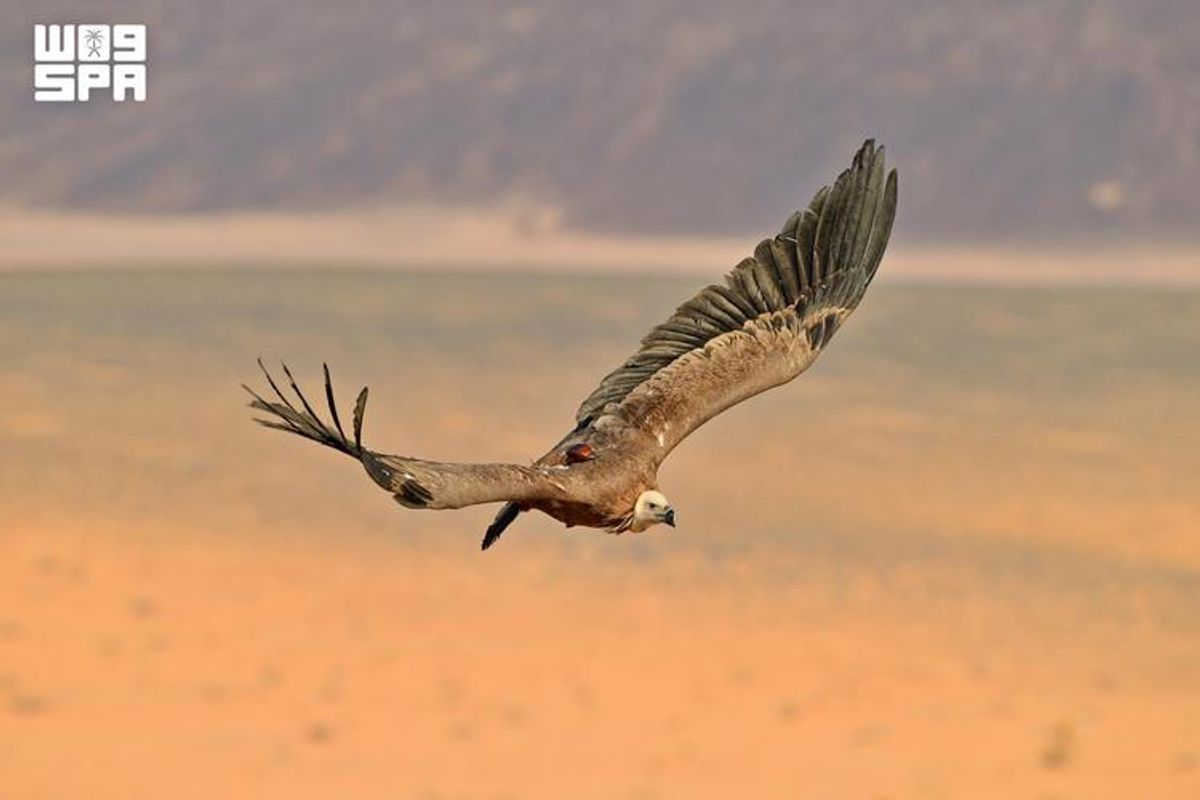
AITracking data released by the Prince Mohammed bin Salman Royal Reserve on International Vulture Awareness Day has revealed that two rehabilitated griffon vultures (Gyps fulvus) have settled in Armenia and Iraq, after their release from the reserve in April 2023 and after crossing eight Middle Eastern countries.
The reserve reported that vulture number 536 has settled in Armenia, while vulture number 535 is now in Iraq. After spending 17 months in flight searching for food across eight countries, the data shows that neither bird has strayed more than 100 kilometers from its current location since settling there.
Flight patterns indicate that both birds have joined wild griffon vulture populations at their respective sites. The reserve noted that settling within a chosen breeding colony is a common behavior for griffon vultures, which typically shift from being long-distance migrants in their youth to resident birds within limited local ranges as they mature, driven by resource availability and environmental changes.
According to the reserve, vulture number 536, released in April 2023 from the reserve in northwest Saudi Arabia, traveled through Jordan, Syria, Iraq, Turkey, Armenia, Azerbaijan, and Iran. Vulture number 535 crossed Saudi Arabia, Jordan, Iraq, Turkey, and Iran. The journey covered by the two birds is equivalent to circling the globe six times before they settled in relatively small areas for nearly two years.
Andrew Zaloumis, CEO of the Prince Mohammed bin Salman Royal Reserve, said, "Using technology in the reserve allows us to track wide-ranging migratory species such as griffon vultures, hawksbill turtles, and green turtles in real time. This supports management and protection plans in ways not previously possible, and this tracking data highlights the importance of cross-border conservation solutions."
The griffon vulture is classified as "Least Concern" by the International Union for Conservation of Nature, but around 70% of vulture species worldwide are threatened with extinction. The tracking devices fitted to the two birds use biodegradable harnesses designed to detach naturally over time. The reserve will continue to monitor the vultures as long as the tracking devices remain active.