

Crown prince chairs cabinet session, approves 11 decisions
Crown Prince Mohammed bin Salman led the cabinet meeting in Riyadh, where 11 key decisions were approved, including international agreements and domestic reforms.
Key Takeaways
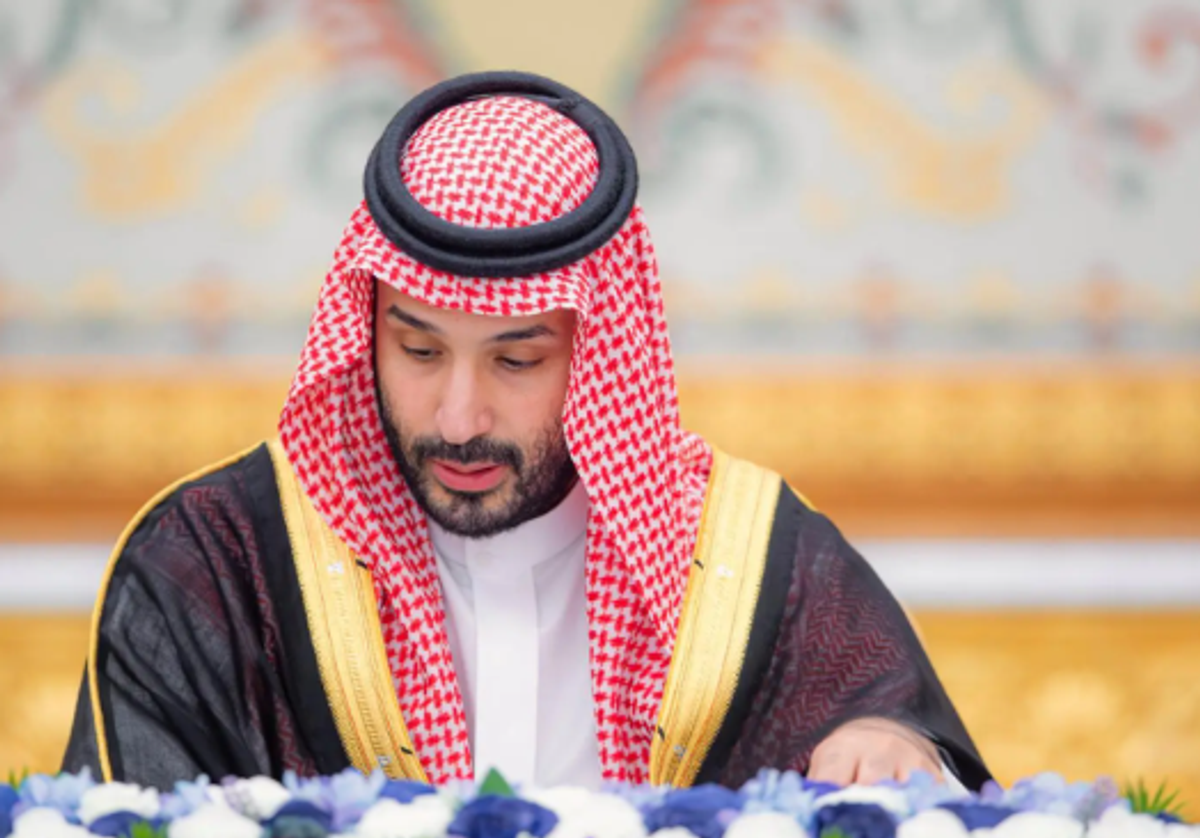
AICrown Prince Mohammed bin Salman, who also serves as Prime Minister, chaired the cabinet session held today in Riyadh.
At the start of the meeting, the crown prince briefed the cabinet on his recent phone calls with Russian President Vladimir Putin, Qatari Emir Sheikh Tamim bin Hamad Al Thani, and Sudan’s Transitional Sovereign Council President Abdel Fattah Al-Burhan. He also discussed his meeting with UAE Vice President and Deputy Prime Minister Sheikh Mansour bin Zayed Al Nahyan. The talks focused on strengthening relations between Saudi Arabia and these countries, exploring ways to enhance cooperation across various fields, and reviewing regional developments and efforts to promote security and stability both regionally and internationally.
Minister of Media Salman bin Yousef Al-Dosari stated to the Saudi Press Agency after the session that the cabinet reviewed the outcomes of Saudi Arabia’s participation in the 81st session of the UN General Assembly’s high-level week. He praised the Kingdom’s leadership in multilateral initiatives, supporting international peace and security, fostering dialogue and diplomacy, and contributing to global crisis response and humanitarian needs.
The cabinet highlighted Saudi Arabia’s continued financial support for UN Counter-Terrorism Centre programs, reaffirming the Kingdom’s commitment to combating terrorism in all its forms and the importance of the center’s role in building national capacities, unifying global efforts, and strengthening international cooperation in this field.
The cabinet noted progress in establishing the General Secretariat for the Mecca Joint Defense Agreement, the formation of related committees and working groups, and the steps taken at meetings of foreign ministers and chiefs of staff from Saudi Arabia, Pakistan, and Turkey to advance coordination and integration. These efforts aim to fulfill the agreement’s commitments through military cooperation that enhances collective deterrence and defense.
The cabinet followed political developments regionally and globally, welcoming the UN Security Council statement condemning ongoing attacks by the Houthi militia against Saudi Arabia and commercial vessels, threats to navigation in the Red Sea and Bab Al-Mandab Strait, and actions undermining peace efforts in Yemen.
The cabinet stressed the importance of safeguarding freedom of navigation in the Straits of Hormuz and Bab Al-Mandab, the Red Sea, and the Gulf of Aden, and called for restoring the status quo in the Strait of Hormuz as of February 28, with no new fees or restrictions imposed. It rejected the use of these vital waterways as tools for pressure, threats, or harm to the interests of states, in line with international law and relevant UN resolutions.
The minister added that the cabinet strongly condemned ongoing violations by Israeli occupation authorities and extremist settlers against the sanctity and historical status of Al-Aqsa Mosque, as well as continued expansionist attempts to infringe on the legitimate rights of the Palestinian people. The cabinet reiterated that a just and lasting peace can only be achieved through a two-state solution and the establishment of an independent Palestinian state along 1967 borders with East Jerusalem as its capital.
The cabinet reviewed several domestic reports, noting international praise for the "Saudi model for quality in education and training," which has developed an integrated system of programs, tools, standards, and a broad data base. These efforts help ensure the adequacy of educational outcomes, prepare globally competitive national talent, and foster a culture of excellence and innovation, in line with the Human Capability Development Program and Saudi Vision 2030.
The cabinet reviewed items on its agenda, including those studied in cooperation with the Shoura Council, and considered the findings of the Political and Security Affairs Council, the Economic and Development Affairs Council, the General Committee of the Cabinet, and the Bureau of Experts. The cabinet then issued the following decisions:
First:
Approval of an agreement between the governments of Saudi Arabia and Turkey for mutual visa exemption for holders of diplomatic and special passports.
Second:
Authorizing the Minister of Culture, or a delegate, to discuss and sign a draft memorandum of understanding for cultural cooperation between Saudi Arabia’s Ministry of Culture and the Smithsonian Institution in the United States.
Third:
Authorizing the Minister of Health, or a delegate, to discuss and sign a draft memorandum of understanding for health cooperation between Saudi Arabia’s Ministry of Health and Djibouti’s Ministry of Health.
Fourth:
Approval of a memorandum of understanding between Saudi Arabia’s Oversight and Anti-Corruption Authority and Syria’s Central Authority for Control and Inspection on preventing and combating corruption.
Fifth:
Extending the membership terms of the Supreme Judicial Council, the Administrative Judicial Council, the Public Prosecution Council, and the Investigation and Public Prosecution Unit at the Oversight and Anti-Corruption Authority until successors are appointed, and amending related regulations.
Sixth:
Approval of governance for reviewing requests by government entities to transition, in accordance with the rules for managing employees and workers in sectors targeted for transformation and privatization.
Seventh:
Mosques and their facilities are to be considered public facilities subject to the Public Facilities Protection Law until the Endowments Law comes into effect.
Eighth:
Authorizing the Minister of Finance, as Chairman of the Zakat, Tax and Customs Authority, to approve lists of prohibited, restricted, and special goods as decided within the Gulf Cooperation Council framework.
Ninth:
Approval of the final account for King Faisal University for a previous fiscal year.
Tenth:
Issuing necessary directives regarding several items on the cabinet’s agenda, including annual reports from the General Authority for Awqaf, the Saudi Red Sea Authority, the National Center for Waste Management, the Center for Supporting Development Authorities and Strategic Offices, and King Abdulaziz University.
Eleventh:
Approval of the promotion of Talal bin Abdullah Al-Ghamdi to Director of Office (Grade 14) at the Ministry of Environment, Water and Agriculture, and Abdulilah bin Khushman Al-Absi to Financial Advisor (Grade 14) at the Ministry of Finance.