

Saudi Arabia hands over UN desertification conference presidency to Mongolia
Saudi Arabia transfers presidency of the UN desertification conference to Mongolia after two years of major initiatives and international partnerships.
Key Takeaways
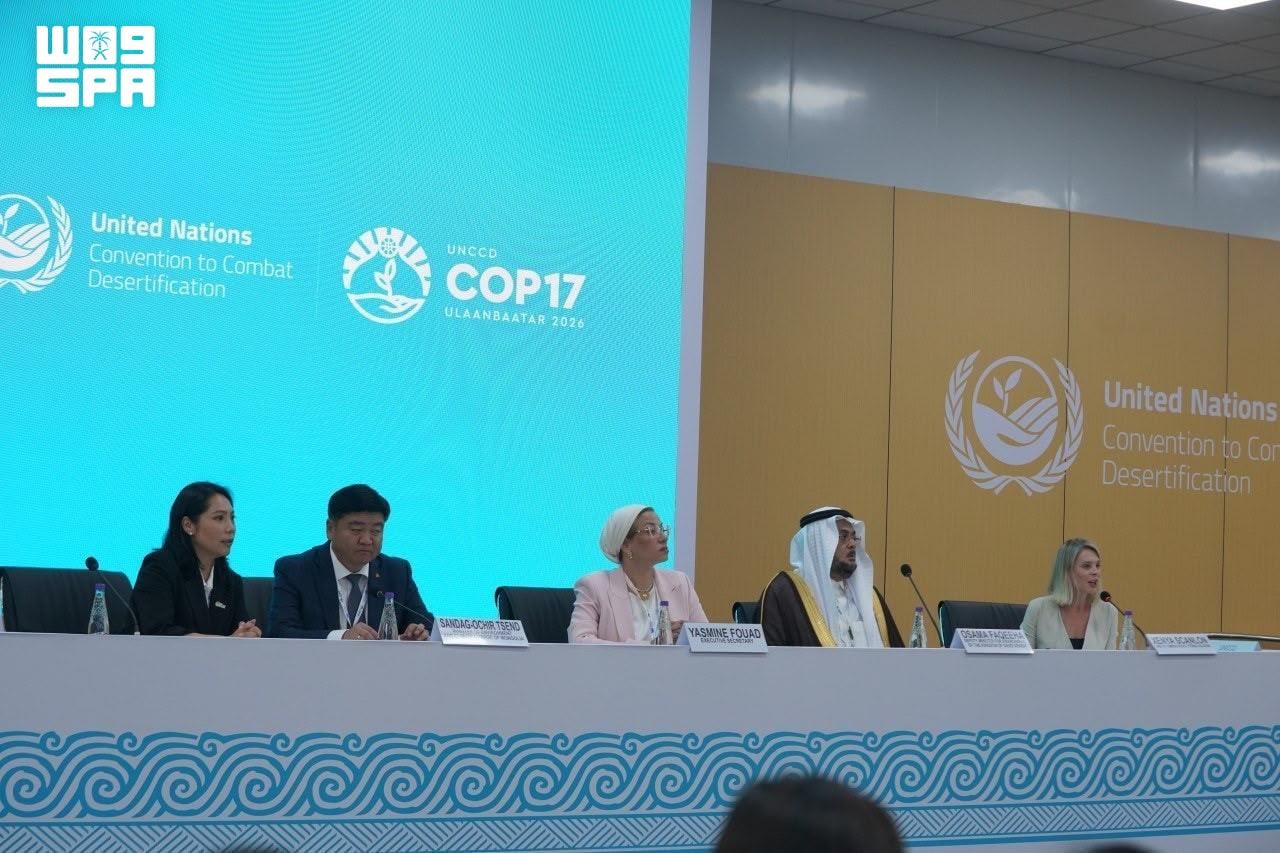
AISaudi Arabia has handed over the presidency of the Conference of the Parties to the United Nations Convention to Combat Desertification (COP16) to Mongolia, which will chair the seventeenth session. The handover took place at the opening of the conference in the Mongolian capital, Ulaanbaatar, which runs from August 17 to 28.
Deputy Minister for Environment Dr. Osama Faqeeha represented Saudi Arabia in the handover on behalf of Minister of Environment, Water and Agriculture Abdulrahman bin Abdulmohsen Al-Fadley. The presidency was transferred to Mongolia’s Minister of Foreign Affairs Batmunkh Battsetseg, underscoring the ongoing collective effort to address the challenges of land degradation, desertification, and drought.
In a speech delivered on his behalf by Dr. Faqeeha, Al-Fadley reaffirmed Saudi Arabia’s commitment to continued multilateral action to address land degradation, drought, and desertification, as well as to enhance food security and preserve ecosystems. He emphasized the importance of building effective partnerships and international solidarity that includes all parties, international organizations, and the private sector.
Achievements of the sixteenth session in Riyadh
Al-Fadley noted that Saudi Arabia hosted the previous session in Riyadh in December 2024, which saw an unprecedented turnout of around 100,000 participants from more than 170 countries, along with hundreds of international organizations, private sector entities, and academic institutions. More than 800 events were held to discuss issues related to land, desertification, and drought, during which the “Riyadh Declaration” and dozens of historic decisions were announced.
During its presidency, Saudi Arabia launched several major initiatives, most notably the Riyadh Global Initiative for Drought Resilience, which involved 64 countries and 30 international organizations and attracted financial commitments exceeding $2 billion. Other key initiatives included the International Early Warning Initiative for Sand and Dust Storms, the “Business for Land” initiative, and the Riyadh Action Agenda, which encompassed more than 100 initiatives.
Ongoing international cooperation
Al-Fadley highlighted that Saudi Arabia’s presidency marked a turning point in international cooperation to combat desertification and drought, stressing the importance of maintaining and strengthening the international momentum generated by the sixteenth session, given its impact on food and water security, biodiversity, and climate change adaptation.
With the presidency now transferred to Mongolia, Saudi Arabia concludes its leadership period, having established a legacy of initiatives, partnerships, and implementation mechanisms, while reaffirming its commitment to ongoing cooperation to achieve the convention’s goals and strengthen global efforts to restore land and build resilience to drought.