

Ancient Najran site reveals human settlement dating back 1.8 million years
Saudi Heritage Commission highlights Najran’s Shuaib Dhadha site, where stone tools up to 1.8 million years old mark early human presence in southern Arabia.
Key Takeaways
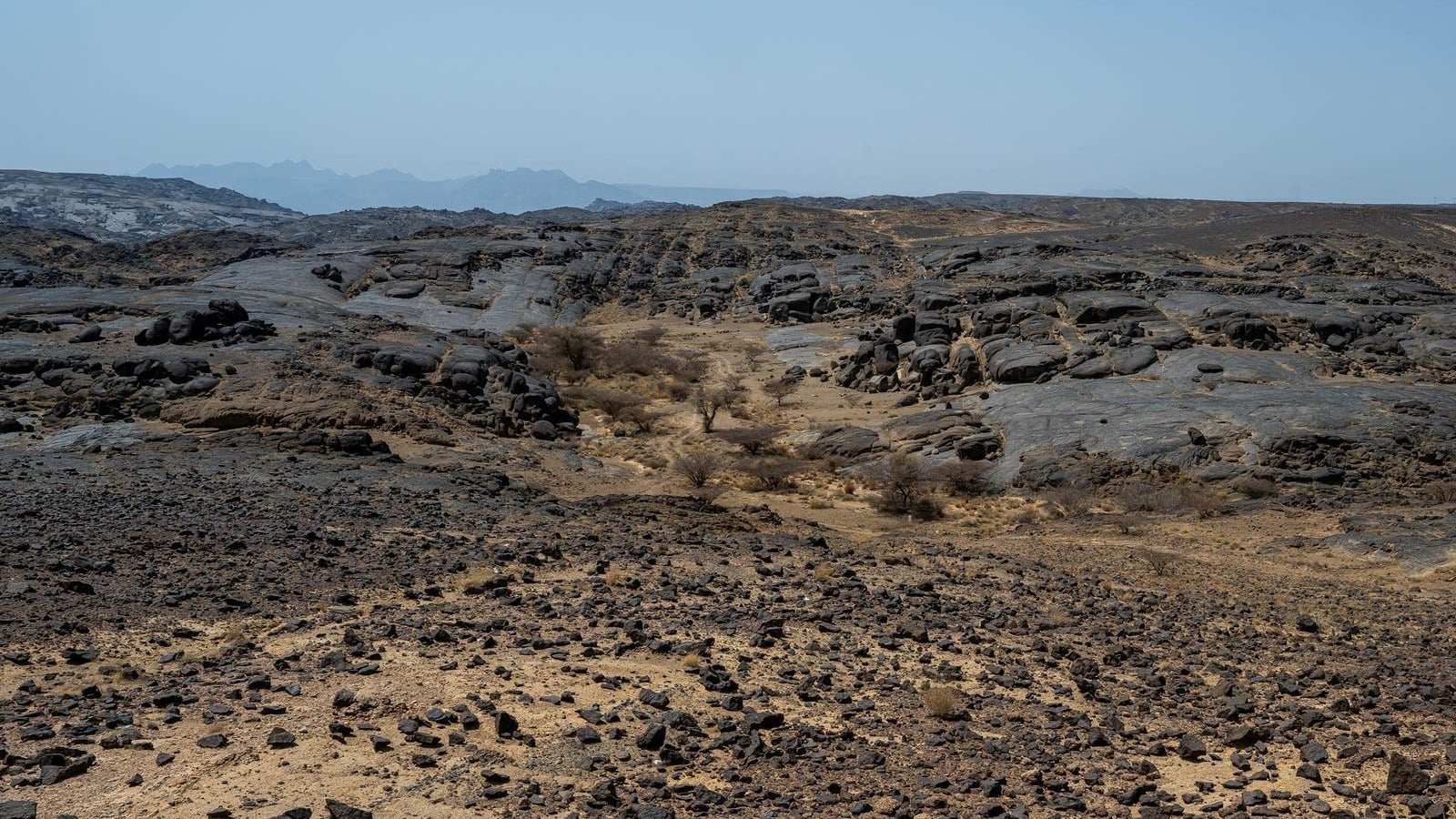
AIThe Saudi Heritage Commission has highlighted the Shuaib Dhadha site in Najran, southwest Saudi Arabia, as one of the most significant archaeological locations documenting the earliest human settlement in the Arabian Peninsula. Stone tools found at the site date back between 1.2 and 1.8 million years.
The site was discovered during a comprehensive archaeological survey in 1400 AH (1980 CE), when tools were found on a gravel terrace overlooking the Najran Valley. Natural soil erosion revealed ancient settlement layers, from which a collection of 34 stone tools from the Lower Paleolithic era was recovered.
Studies show that the tools are linked to the Oldowan stone industry, one of humanity’s earliest tool-making traditions. Early humans at the site used locally available quartzite rocks to craft sharp implements for various tasks, such as cutting meat, breaking bones, and skinning animals.
Evidence of early human settlement
Survey and documentation results revealed that the discovered tools include choppers made from river pebbles, polyhedral tools, scrapers, and flakes produced by striking stone cores. Some tools showed patina layers, indicating their great age and helping to determine the site’s archaeological context.
Ajab Al-Otaibi, Director General of the Antiquities Sector at the Heritage Commission, said the commission continues to inventory, document, and study archaeological sites. He emphasized the importance of Shuaib Dhadha in building comprehensive knowledge about the sequence and scientific value of such sites, underscoring the need to preserve its evidence and support specialized research into Saudi Arabia’s human settlement history.
The natural environment’s role in attracting settlement
Shuaib Dhadha is part of the Najran Valley system, located on the eastern slopes of the Sarawat Mountains. In ancient times, the area provided water, suitable rocks for tool-making, and abundant plant and animal life, making it ideal for early human groups. Climate studies indicate that the Arabian Peninsula experienced wet periods during the Pleistocene, when valleys became more humid and rich in vegetation and wildlife.
Mohammed Al-Hatila, head of the Najran Archaeology and History Association, said recent discoveries at the site offer exceptional evidence of the deep roots of human settlement in Arabia. The finds include a comprehensive set of stone tools from the early Oldowan phase, demonstrating early humans’ ability to innovate and utilize local resources for daily needs.
The tools discovered range from large choppers and scrapers to fine blades, hammers, and multipurpose implements, reflecting the primitive lifestyle of ancient Najran communities and reinforcing the region’s status as one of the world’s oldest centers of human activity.
The Heritage Commission continues its efforts to preserve and study archaeological sites across the Kingdom, enhancing understanding of Saudi Arabia’s deep historical and cultural heritage and safeguarding it for future generations.