

Saudi encyclopedia aims to strengthen national identity among children
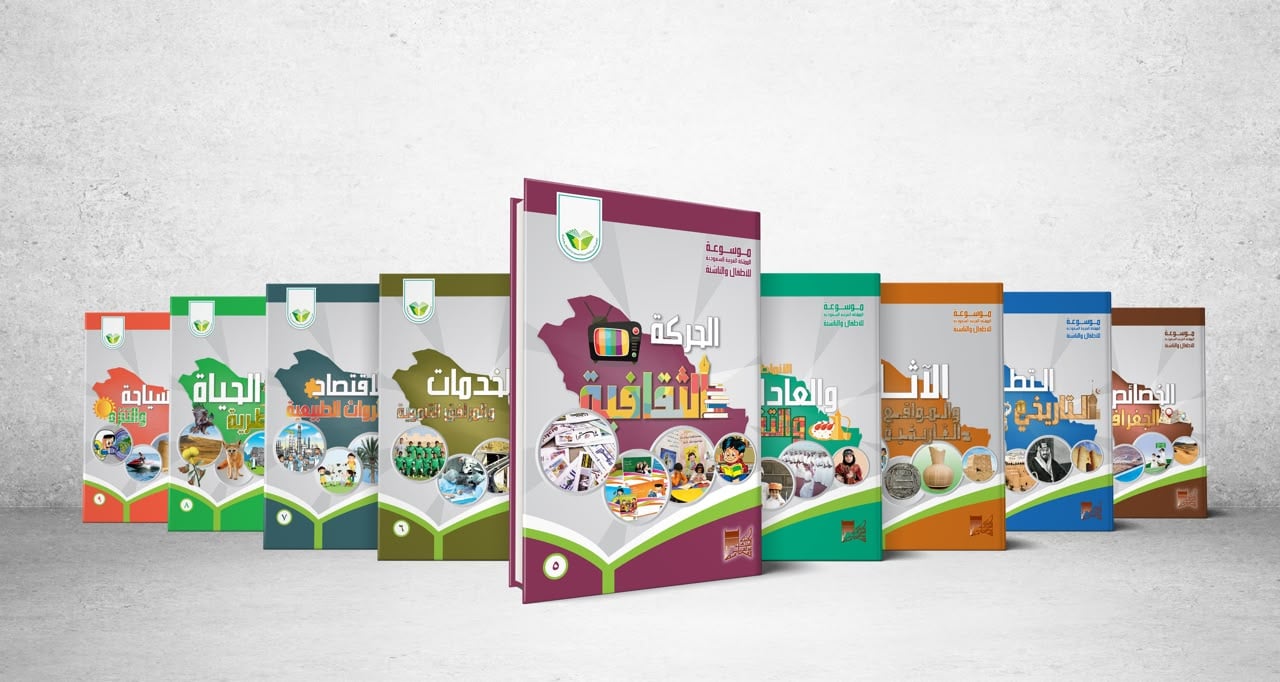
King Abdulaziz Public Library has released an encyclopedia to help children develop a strong national identity and access reliable information.
Key Takeaways
AIThe Kingdom of Saudi Arabia Encyclopedia for Children and Youth, published by the King Abdulaziz Public Library, sets out several important educational goals to strengthen national identity among children. It aims to help them access reliable information from original sources, respect cultural diversity and different customs, and appreciate the role of religious values and human principles in their homeland, which is considered one of the world's greatest and most historically significant civilizations.
Spanning nine volumes, the encyclopedia provides a comprehensive knowledge resource for its target audience, aged 9 to 15. It offers well-documented information about Saudi Arabia’s geography and history, both past and present, covering topics such as the country’s geographical features, historical development, archaeological sites, social patterns, customs and traditions, cultural movements, development services and facilities, economy and natural resources, wildlife, tourism, and recreation.
Anthropological dimensions:
One of the encyclopedia’s valuable aspects is its focus on anthropological dimensions, with content tailored to the targeted age groups. Special attention is given to social patterns, customs, and traditions, reflecting the Kingdom’s vast area and the diversity of its regions, cultures, and traditions. The encyclopedia explains the differences between various social environments: urban areas, where people work in trade, industry, and various professions and lead lifestyles distinct from those in villages and the desert, where social patterns foster cohesion and closeness among residents.
The encyclopedia notes that Saudi cities are experiencing rapid growth and have become models of social and practical advancement and comprehensive urban planning. Villages and hamlets, small communities near cities, traditionally rely on agriculture or livestock. In recent years, migration to cities has led to a decline in the rural and oasis populations, changing village life and diversifying architecture, services, and facilities.
The desert environment is home to people who raise livestock such as camels, sheep, and goats, maintaining traditional lifestyles in the desert. Each environment has its own way of life, culture, customs, and traditions.
Cultural patterns:
The encyclopedia provides children with a comprehensive illustrated overview of Saudi life, its people, architecture, history, terrain, housing and building materials, clothing and adornment, crafts and professions, folk medicine, proverbs and their significance, traditional dances and songs, folk games, celebrations of social and religious occasions, and old educational methods. This aims to give young readers a cultural understanding of the Kingdom’s anthropological, intellectual, geographic, and historical diversity, fostering a sense of belonging and encouraging them to contribute to the nation’s progress and represent Saudi Arabia internationally in scientific and cultural forums.
Regarding housing and building materials, the encyclopedia offers detailed descriptions of urban, rural, and desert homes, mosque construction, materials used, and the roles of builders. For example, in western Saudi Arabia, main entrances are distinguished by ornate solid woodwork and decorative mashrabiyas, while in the Eastern Province, unique architectural touches are seen in the decoration of homes, doors, and windows.
The encyclopedia also describes traditional clothing for men, boys, women, and girls, such as the bisht, thobe, thobe marwadan, dishdasha, taqiyah, agal, ghutra, muthayyal, and daqla for males, and the thobe (dress), ghatwa, abaya, sheila, bukhnag, shalki, isaba, madawara, and burqa, as well as jewelry like bracelets, rings, necklaces, and anklets for females.
Among the crafts highlighted are trade, rose distillation, blacksmithing, coppersmithing, tailoring, dyeing, money exchange, goldsmithing, herbalism, carpentry, mattress making, handicrafts, pottery, sword, dagger and spear making, agriculture, palm weaving and planting, herding, leatherwork, and other professions.
Traditional dances, songs, and celebrations are an integral part of Saudi heritage and culture. The encyclopedia offers focused information on the Saudi ardha, samri, simsimiyya, mizmar, majroor taifi, khatwa, sword dance, dahha, hadri, and various forms of poetry and folk music, including the zamil, maraafi, tanbura, liwa, marine ardha, as well as songs associated with traditional tasks like water-drawing and palm climbing.
The King Abdulaziz Public Library in Riyadh is dedicated to the cultural development of Saudi children, offering a wide range of programs since its establishment, including stories, books, competitions, reading workshops, children’s cinema, theater performances, school visits, national celebrations, and mobile library services across the Kingdom, all tailored for children and youth.
The "Kingdom of Saudi Arabia Encyclopedia for Children and Youth" was prepared and produced by a team of editors and illustrators. To engage its target audience, the encyclopedia features around 1,800 images, with a team of about 12 skilled artists contributing approximately 625 illustrations. It also includes around 100 tables and 40 geographical maps. The entire project was overseen by supervisory, scientific, and technical teams and review committees specializing in child and youth psychology and education.