

Grand Mosque imam condemns King Khalid Airport attack as 'heinous crime'
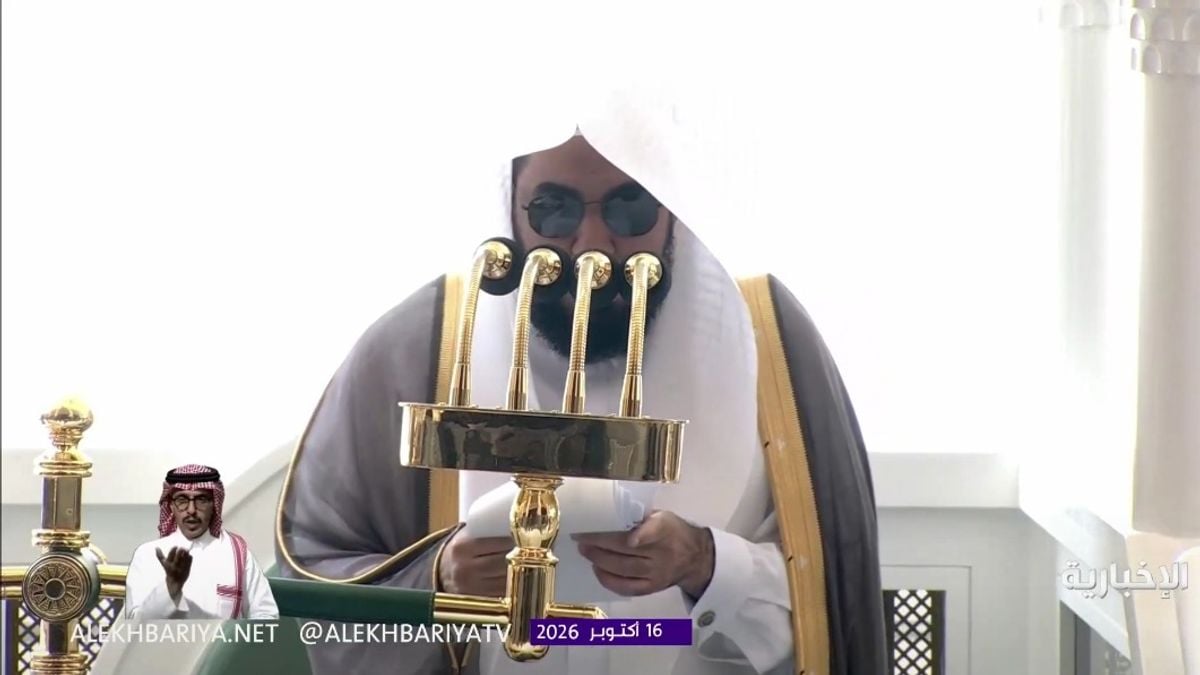
Sheikh Abdullah Al-Juhani, imam of the Grand Mosque, condemned the terrorist attack on King Khalid International Airport and stressed the importance of prayer.
Key Takeaways
AISheikh Dr. Abdullah bin Awad Al-Juhani, imam and preacher of the Grand Mosque in Mecca, urged Muslims to fear God, maintain their obligatory prayers, and perform them on time. He emphasized that prayer is the second pillar of Islam, the foundation of the faith, and the direct link between a servant and his Lord. Al-Juhani stressed that maintaining prayer is among the greatest reasons for righteous deeds, a stable life for Muslims, and attaining God's pleasure in this world and the hereafter.
During his Friday sermon at the Grand Mosque in Mecca, Al-Juhani explained that prayer is the measure of a Muslim's deeds: if the prayer is sound, the rest of one's actions will be sound; if it is corrupt, other deeds are more likely to be corrupt as well. He cited the Prophet Muhammad's saying: "Between a person and disbelief is abandoning prayer." He noted that prayer helps Muslims remain steadfast, adhere to God's commands, avoid prohibitions, and strengthens their hearts to face the temptations of this world.
The importance and virtue of prayer
He pointed out that God has prescribed performing prayers at their appointed times and commanded their observance even in times of illness or fear, while maintaining purity and fulfilling all conditions and pillars, such as covering the body, facing the qiblah, sincerity of intention, and performing the prayer calmly and with tranquility. He added that prayer opens the heart to reflect on the Quran and taste the sweetness of faith. It is a source of strength for Muslims in times of hardship, bolstering their resolve and helping them endure trials.
Sheikh Al-Juhani affirmed that prayer refines the soul, awakens the heart from heedlessness, and prevents immorality and wrongdoing, citing the Quranic verse: "Recite what has been revealed to you of the Book and establish prayer. Indeed, prayer prohibits immorality and wrongdoing." He noted that this effect is achieved when prayer is performed sincerely for God, with a present heart, and in accordance with the guidance of the Prophet Muhammad.
Encouragement to maintain prayer and warning against delay
He highlighted that prayer was made obligatory for the Prophet Muhammad during the night of Isra and Mi'raj, initially as fifty prayers, later reduced to five that are equivalent in reward to fifty. He stressed the necessity of performing prayers on time and not letting work or occasions distract from them. He added that anyone who oversleeps or forgets a prayer must perform it as soon as they remember, citing the relevant hadiths from the Prophet Muhammad.
He called for performing prayer well and with tranquility, urging parents to teach their children to maintain it, and to prepare for the Day of Resurrection with righteous deeds, not being deceived by worldly life. He affirmed that prayer is among the reasons for attaining the bliss of the hereafter.
Condemnation of King Khalid International Airport attack
In his second sermon, Sheikh Abdullah Al-Juhani condemned the attack by the Houthi terrorist group targeting King Khalid International Airport in Riyadh, describing it as a heinous crime, a blatant violation of the sanctity of life, and an act of terrorism that is justified by neither religion nor any cause. He stressed that attacking innocents is corruption on earth and that such acts are reprehensible and unacceptable.
Prayers for the Kingdom and Muslims
The Grand Mosque imam concluded his sermon by praying for God to protect the Kingdom of Saudi Arabia from the schemes of aggressors, to preserve its security and stability, to safeguard the Custodian of the Two Holy Mosques and the Crown Prince, to grant victory to the stationed soldiers, to forgive Muslim men and women, to relieve those in distress, to heal the sick, and to send rain and mercy upon the land and its people.