

Perseid meteor shower to peak over Saudi skies in late August
The Noor Astronomy Association says the Perseid meteor shower will reach its peak over Saudi Arabia and the Northern Hemisphere at the end of August.
Key Takeaways
AIThe Noor Astronomy Association has announced that the skies over Saudi Arabia and the Northern Hemisphere will witness the peak of the Perseid meteor shower this August. The Perseids are among the most famous and prolific annual meteor showers, with peak activity expected on the evening of Wednesday, corresponding to 29 Safar, and continuing until dawn on Thursday, offering a celestial spectacle for astronomy enthusiasts and sky watchers.
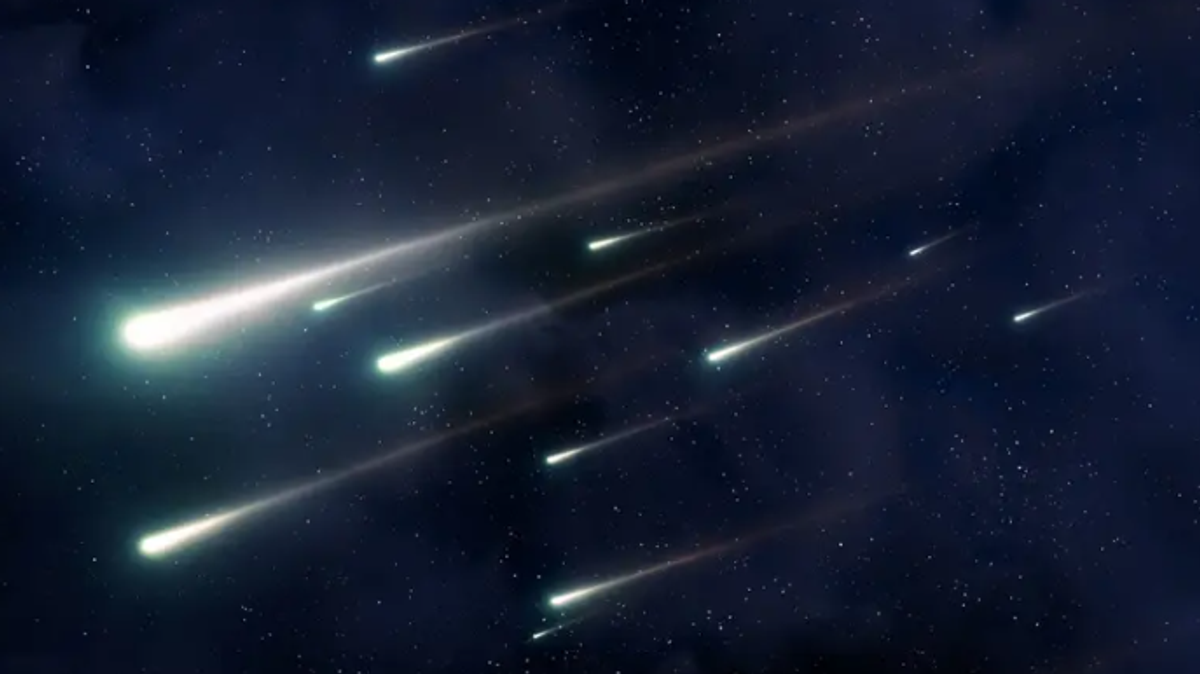
The association explained that the Perseid shower occurs each year when Earth, in its orbit around the sun, passes through a stream of tiny particles left behind by the comet Swift-Tuttle. These particles enter the atmosphere at speeds of around 212,000 kilometers per hour, glowing at high altitudes and creating meteors visible to the naked eye.
Association president Issa Al-Ghufaili stated that most visible meteors are not caused by large rocks, but by tiny particles, many no bigger than a grain of sand. Despite their small size, their high speed is enough to produce bright flashes that can be seen from great distances.
He noted that these particles separated from the comet Swift-Tuttle long ago and have been orbiting in space along its path. Earth encounters them during its annual journey around the sun, and they burn up in the atmosphere in fractions of a second after a long cosmic journey before being seen from Earth.
Al-Ghufaili explained that the shower is called the "Perseids" because the meteors appear to radiate from the constellation Perseus, known in Arabic as the constellation of the Head of the Gorgon, although they can be seen across the sky. He advised that the best way to observe them is to look at a wide area of the sky rather than focusing on a single spot.
He added that viewing conditions this year are favorable, as the peak coincides with the end of the Hijri month, reducing the effect of moonlight during observation hours and providing darker skies, which increases the chances of seeing faint meteors.