

Al-Hijr: how AlUla became a global heritage and tourism hub
Al-Hijr archaeological site in AlUla draws visitors from across Saudi Arabia and abroad, and is the Kingdom’s first UNESCO World Heritage site.
Key Takeaways
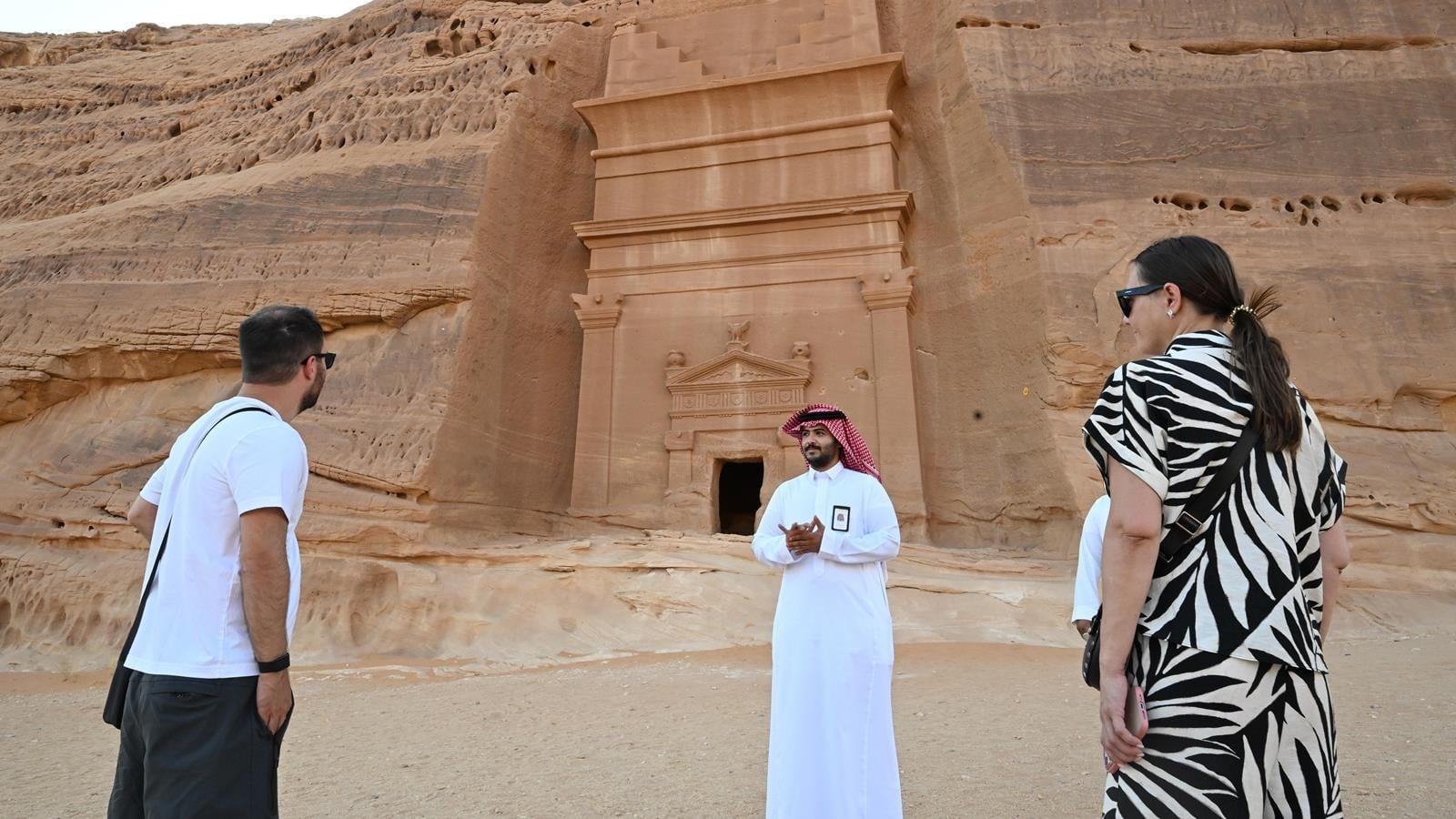
AIThe Al-Hijr archaeological site in AlUla is one of Saudi Arabia’s most prominent cultural and tourist destinations, attracting a steady stream of visitors year-round from both within the Kingdom and overseas. Tourists come to explore its ancient monuments and intricately carved rock formations, which tell the story of a significant historical era in the region.
Al-Hijr gained international recognition after becoming the first Saudi site to be listed as a UNESCO World Heritage Site, thanks to its remarkable archaeological and architectural remains that reflect the deep cultural legacy of the area.
Unique historical and architectural landmarks
Evidence of human presence in Al-Hijr dates back to before the first millennium BCE, and the site later emerged as one of the main cities of the Nabataean Kingdom. Their legacy remains visible in the rock inscriptions and writings that document aspects of social and cultural life during those periods.
The site features around 141 rock locations, with 93 of them adorned with intricately carved facades and detailed geometric decorations. Inscriptions found here provide insights into ancient societies, highlighting the development of architecture, rock carving, and facade design in that era.
Guided tours to explore Al-Hijr
Organized tours offer visitors the chance to discover Al-Hijr’s most significant landmarks and stories, whether by tourist bus or four-wheel drive vehicles, giving them a unique opportunity to experience the site’s archaeological heritage up close.