

Al-Malwaah: Traditional tool key to falcon training in Northern Borders deserts
The 'malwaah' remains vital for falconers in Saudi Arabia’s Northern Borders, helping train birds to respond, return, and hone their flight skills.
Key Takeaways
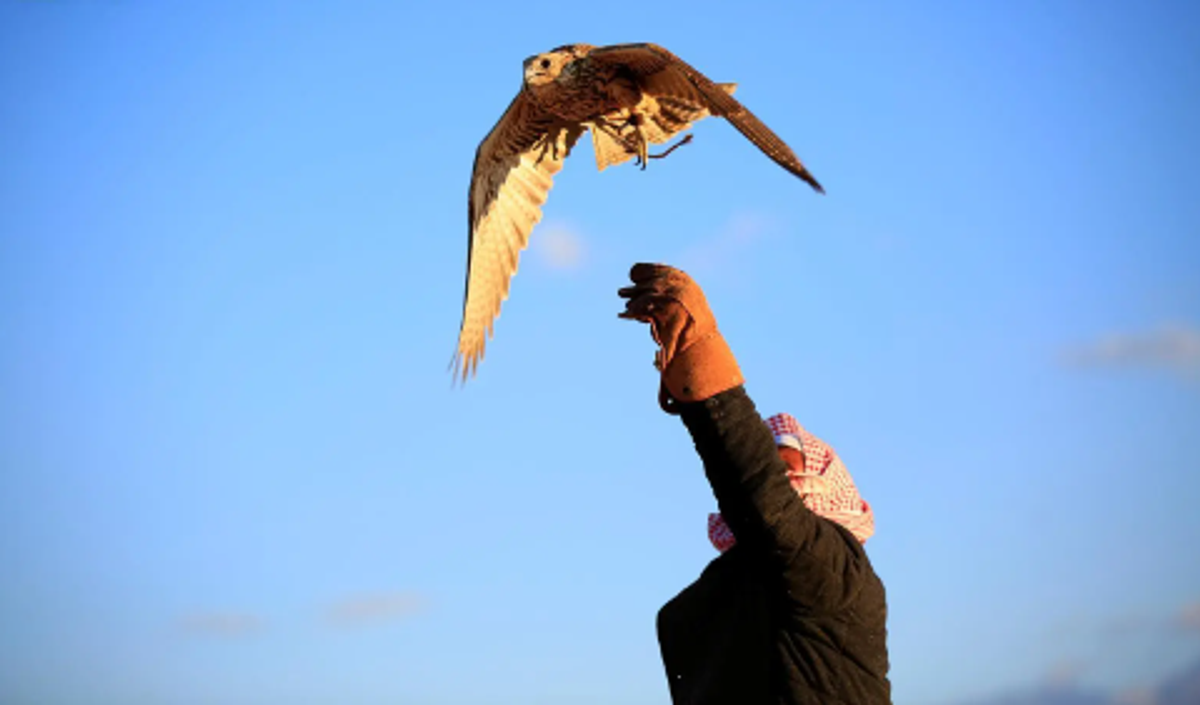
AIThe 'malwaah' holds a prominent place in the world of falconry, serving as one of the traditional tools relied upon by enthusiasts in the deserts of the Northern Borders region to train falcons to respond to calls and return to their owners. It is used to refine their flying and maneuvering skills, forming part of a cultural heritage that combines experience, patience, and techniques passed down through generations.
During the autumn season, the region’s deserts—especially the Hamad area west of Arar—become a destination for falconers from across Saudi Arabia and the Gulf Cooperation Council countries. Preparations intensify to ready and train falcons before hunting trips begin, with the 'malwaah' standing out as an essential tool at this stage.
The 'malwaah' is designed with feathers attached to a piece of leather, connected to a cord that allows the trainer to move it through the air in a way that mimics the movement of prey. This stimulates the falcon’s instinct to strike and helps develop its response speed and precision through gradual exercises tailored to the bird’s physical ability and readiness.
Wielding the 'malwaah' requires skill in controlling its movement and determining suitable distances. The trainer works to attract the falcon’s attention and motivate it to launch toward the tool and attempt to catch it. These exercises reflect the level of understanding and rapport between bird and trainer, highlighting the importance of accuracy and patience in building the falcon’s abilities.
Training stages vary according to the type, age, and responsiveness of the falcon. Sessions typically begin at short distances, which are gradually increased as the bird’s performance improves. Food rewards are used to reinforce the desired response, while trainers also consider weather conditions and the bird’s health and physical state.
The 'malwaah' not only encourages the falcon to strike but also enhances its physical fitness and ability to maneuver and change direction in flight. It is also used to train the bird to respond to calls and return to its owner, maintaining the importance of this traditional tool despite advances in modern training methods.
Scenes of the 'malwaah' in use across desert sites reflect the heritage of falconry, attracting enthusiasts and visitors interested in learning how the tool is prepared and used. They also benefit from the expertise of veteran falconers in handling birds of prey and understanding their behavior, helping to pass these traditional skills on to younger generations.