

Flexible underwater robot inspired by feather starfish unveiled
US researchers have developed a soft aquatic robot, modeled on feather starfish, that maneuvers in 3D using just two motors.
Key Takeaways
AI
A flexible aquatic robot inspired by marine invertebrates known as feather starfish can maneuver in three dimensions using only two motors, according to a study by researchers from North Carolina State University, the University of Virginia, and the University of California, Riverside. The findings were published in the journal Science Advances.
The study noted that potential applications for the robot include underwater exploration with a camera and lifting objects underwater, either alone or in coordination with other robots. Experiments demonstrated the robot's ability to perform three distinct swimming modes: mimicking jellyfish for ascending, descending, and hovering; fish-like movements for forward and backward motion; and spinning to rotate and change direction. This enables navigation in three-dimensional space with a simple operating mechanism.
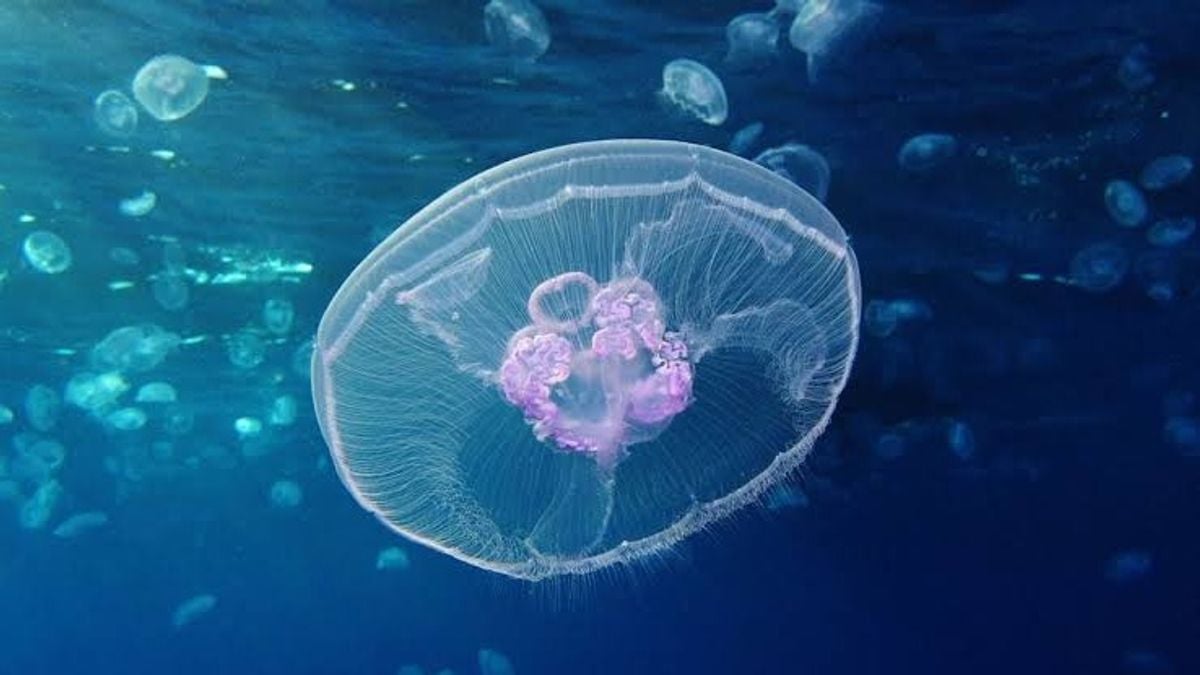
The robot achieved a maximum swimming speed of about 1.64 times its body length per second, with a top rotational speed of 90 degrees per second. It consists of four flexible arms connected to a central disk housing just two motors. The flexibility and rebound of the arms allow coordinated movement by switching the motors on and off. Rapid activation and deactivation cause the arms to flap, helping the robot rise; slower flapping allows it to hover, while stopping the motion causes it to descend—a mode known as the "jellyfish mode."
Activating only one motor moves a single arm in a way that mimics a fish's tail fin, propelling the robot forward or backward in the "fish mode."
This performance relies on the concept of "mechanical intelligence," which uses the robot's flexible structure and its interaction with water to coordinate movement, rather than assigning a separate motor for each function. This reduces the need for additional mechanical components and simplifies control systems.
The innovation offers a vision for robot design that achieves multiple functions through mechanical engineering, rather than increasing the number of motors, sensors, or relying solely on computational controls. This could lead to simpler, lighter, and more energy-efficient robots.
Jay Yin, professor at North Carolina State University and corresponding author of the study, said the team was inspired by feather starfish's ability to coordinate their arms to swim in various directions and hover in place. He noted that the design enables multiple movement capabilities with a limited number of motors.
Lead researcher Haitao Cheng added that the next step is to develop a fully wireless version. He emphasized that the study highlights the potential to enhance robotic capabilities through structural design, operating mechanisms, and the interaction between mechanical structure and water, rather than simply adding more components.