

Northern Saudi Arabia welcomes migratory falcon season amid intensive preparations
Northern regions of Saudi Arabia mark the start of migratory falcon season in October, with hunters preparing and tracking the birds, supported by the National Center for Falcons.
Key Takeaways
AINorthern regions of Saudi Arabia are witnessing the start of the migratory falcon season at the beginning of October each year, as hunters prepare to monitor falcon movements and track their migration routes across the open landscapes that characterize the area.
Al-Hammad, east of Arar, and Al-Owaiqilah governorate are among the most prominent destinations for hunters and falconry enthusiasts. Preparations begin early to follow the falcons’ movements and select the best locations for trapping, coinciding with changing weather and rainfall that add a special atmosphere to the season.
Falconer Nafeh Al-Shammari explained that preparations for the season began on October 1, noting that hunters are spread across several sites, with many concentrated north of Al-Owaiqilah, where a falcon has already been trapped this season. He added that the rain and pleasant weather give the season a unique character, emphasizing that hunters rely on their experience and knowledge of the region to choose suitable sites.
Meanwhile, falconer Mohammed Haza’a Al-Enezi said that Hazm Al-Jalamid is one of his preferred sites for hunting, and that hunters move between locations depending on falcon movements and timing, which requires continuous monitoring of field conditions. He noted that his hunting area covers sites 30 to 60 kilometers from Hazm Al-Jalamid, as well as other locations such as Al-Arqat, Al-Buhayrat, Al-Abyad, Al-Abaytar, Al-Maswasi, Al-Arnabiyat, the western and eastern valleys, Mudhalla to the north, and south of Al-Hazm Al-Aswad.
Al-Enezi pointed out that falcon sightings vary depending on conditions, with increased activity often occurring in the afternoon before sunset, while hunting typically begins early in the morning, requiring hunters to be prepared and monitor sites throughout the day.
The trapping season in northern regions is an opportunity for hunters to renew their field expertise by exchanging information about sites, migration routes, and necessary preparations, as well as moving between open areas.
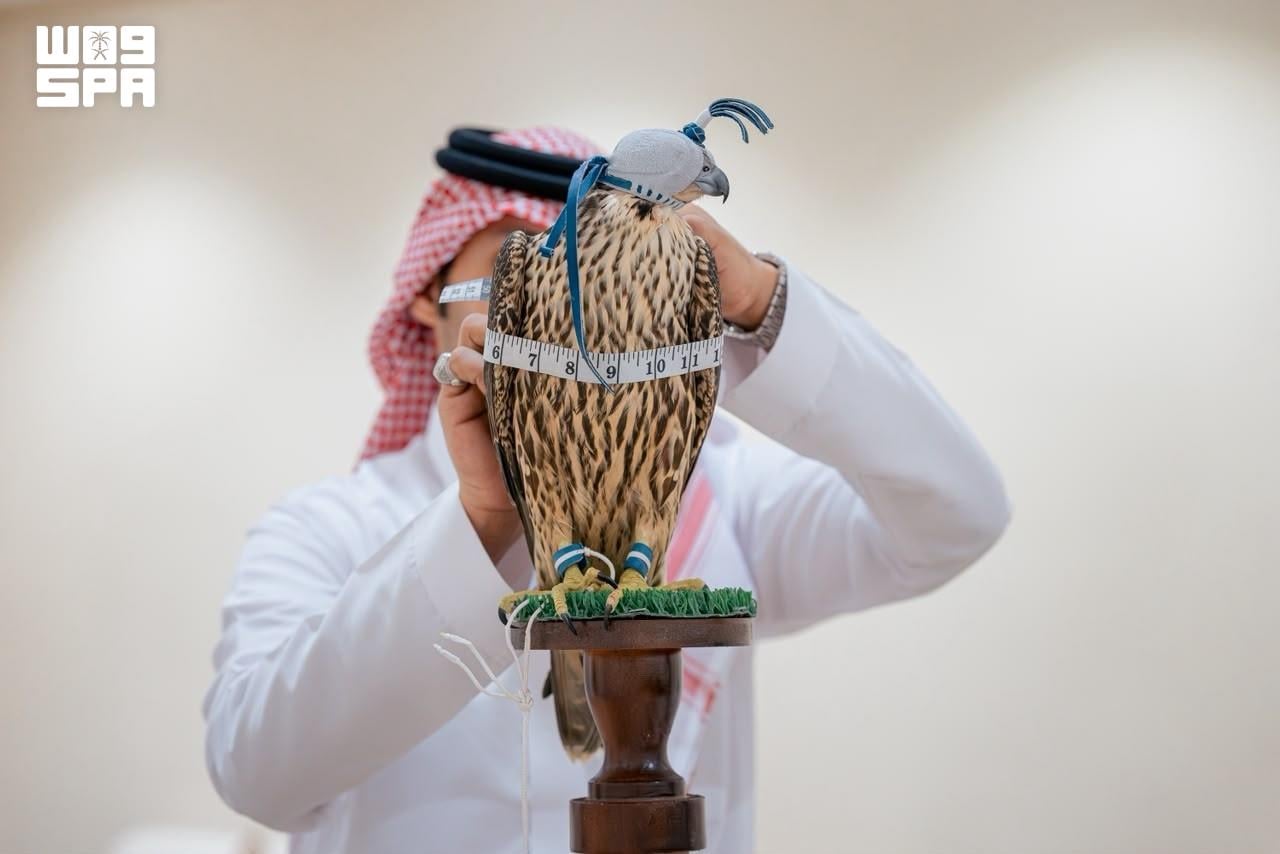
The season also has an economic dimension, as trapped falcons are transferred to the National Center for Falcons’ auction, which runs throughout the season from October 1 to November 30. The auction is accompanied by transport, care, and preparation services, enhancing the economic value of this heritage and supporting falconry-related activities, while emphasizing the importance of adhering to hunting regulations and preserving wildlife.
The National Center for Falcons provides comprehensive services to hunters during the season, with teams in the Northern Borders region and other parts of the Kingdom welcoming falcon owners. The center arranges accommodation and transport for hunters to the auction site, where falcons are offered in a fast-paced, live auction broadcast on television and the center’s social media platforms.