

Najran coffee trees bear fruit as cultivation expands to 100,000 trees
Coffee farms in Najran have begun harvesting as trees mature, marking a promising season and highlighting the region’s growing role in Saudi coffee production.
Key Takeaways
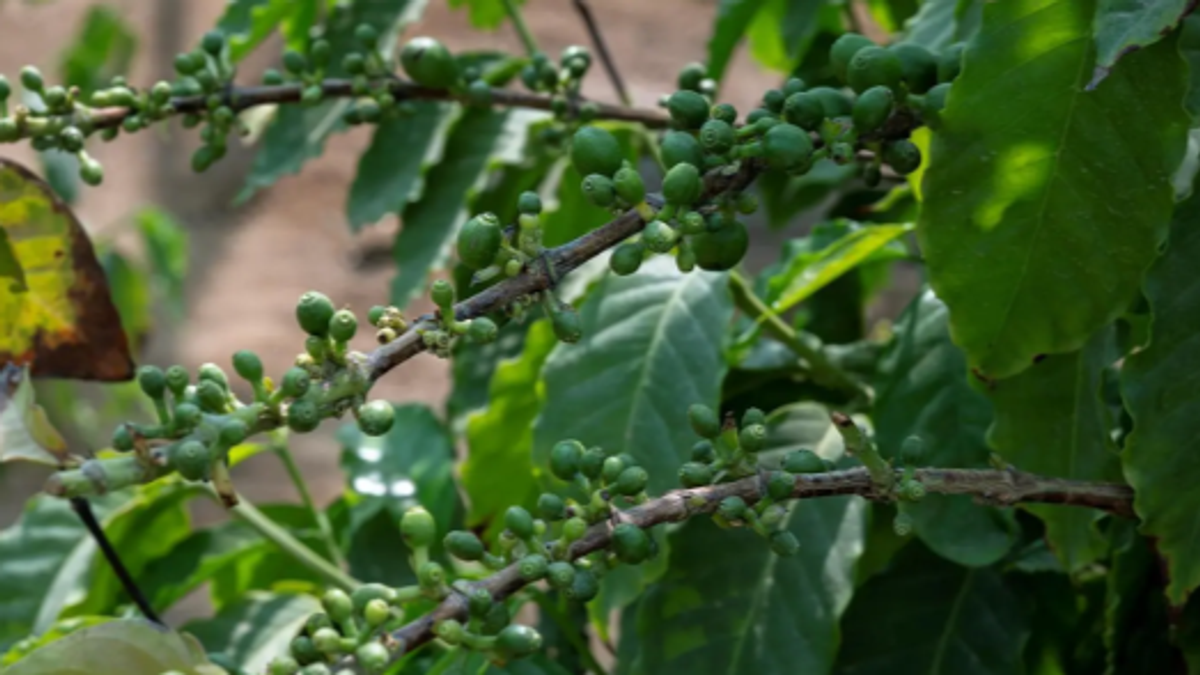
AICoffee farms and fields across Najran and its governorates have begun reaping the rewards of their efforts as coffee trees mature and coffee cherries appear on their branches. This signals the start of a promising agricultural season and further strengthens the status of Saudi coffee as a key national crop with deep cultural and social roots.
This fruiting coincides with a significant expansion in local cultivation, as the number of coffee trees in the region has reached nearly 100,000, distributed across Najran and its governorates. Of these, more than 9,000 trees are currently bearing fruit, producing over 7 tons of pure coffee. This reflects the sector’s rapid growth and increasing attention, positioning Najran as one of the Kingdom’s main producers of high-quality coffee.
Ali Dhafer Al-Hareth, head of the Agricultural Committee at the Najran Chamber of Commerce, stated that these ongoing successes in coffee cultivation are the result of continuous support and strategic plans implemented by the Ministry of Environment, Water and Agriculture, which prioritizes the local coffee sector in its investment and agricultural agenda.
He noted that the ministry is providing comprehensive development programs and initiatives aimed at supplying technical and logistical support, delivering high-quality seedlings and suitable organic fertilizers for Najran’s soil, and adopting modern technologies and innovative irrigation systems to optimize water use and improve both yield and quality. The ministry also organizes workshops and guidance programs to train farmers in global best practices for growing, harvesting, and drying coffee cherries.
The Sustainable Rural Agricultural Development Program (Saudi Reef) plays a pivotal role in this transformation, directly targeting the development of coffee production, processing, and marketing in Najran and its governorates. The program aims to empower farmers, expand cultivated areas, ensure the sustainability of natural resources, and transform the agricultural sector into a promising and sustainable economic contributor.