

Northern Borders region preserves rich intangible cultural heritage
Northern Borders region is home to a diverse intangible heritage, including social customs, folk arts, and desert traditions passed down through generations.
Key Takeaways
AIArar – Jumada Al-Awwal 8, 1448 AH (October 19, 2026) – The Northern Borders region preserves a diverse intangible cultural heritage passed down through generations as part of Saudi Arabia’s national identity, according to the Saudi Press Agency (SPA). This heritage encompasses social customs, folk arts, and knowledge tied to desert life, all of which remain deeply rooted in the local community’s consciousness and daily practices.
Inherited social practices
The region draws on its collective memory and intangible heritage through social practices handed down over time, foremost among them generosity, hospitality, and traditional gatherings where residents would exchange news and opinions.
Saudi coffee is closely linked to these customs, with its preparation and serving reflecting values of welcome and connection. Nabati poetry and oral storytelling have also preserved aspects of the region’s history, events, and way of life.
Al-Dahha, the rababa, al-maniha, and al-ta’ma
Al-dahha, the rababa, al-maniha, and al-ta’ma are among the traditions associated with social life in the region, reflecting its unique desert environment and local customs.
Al-dahha stands out as one of the region’s most prominent folk arts, known for its rhythmic group chants expressing courage, enthusiasm, and social cohesion. The rababa, a traditional string instrument, is closely tied to Nabati poetry and oral storytelling, serving as a means to convey emotions and recall inherited tales and events.
Al-maniha and al-ta’ma are social practices that embody values of solidarity, cooperation, and generosity, highlighting the compassion and connectedness passed down among the region’s people. Their social and cultural significance has helped strengthen community bonds and transmit values from one generation to the next.
Desert environment and folk arts
The desert environment of the Northern Borders region has played a key role in shaping this heritage. In the past, residents relied on knowledge of weather, stars, and the timing of rainfall and spring, making use of natural resources. Outdoor excursions, hunting seasons, and falconry fostered social practices that combined inherited expertise with intergenerational connection.
Folk arts remain a vital expression of the region’s cultural identity, including al-dahha, the Saudi ardha, chants, and poems associated with social and national occasions. These practices are not merely celebratory displays, but also means of expressing joy, belonging, and social ties, while recalling values that have shaped the local community. The rababa has helped preserve the region’s poetic and artistic memory.
Traditional crafts and ancestral knowledge
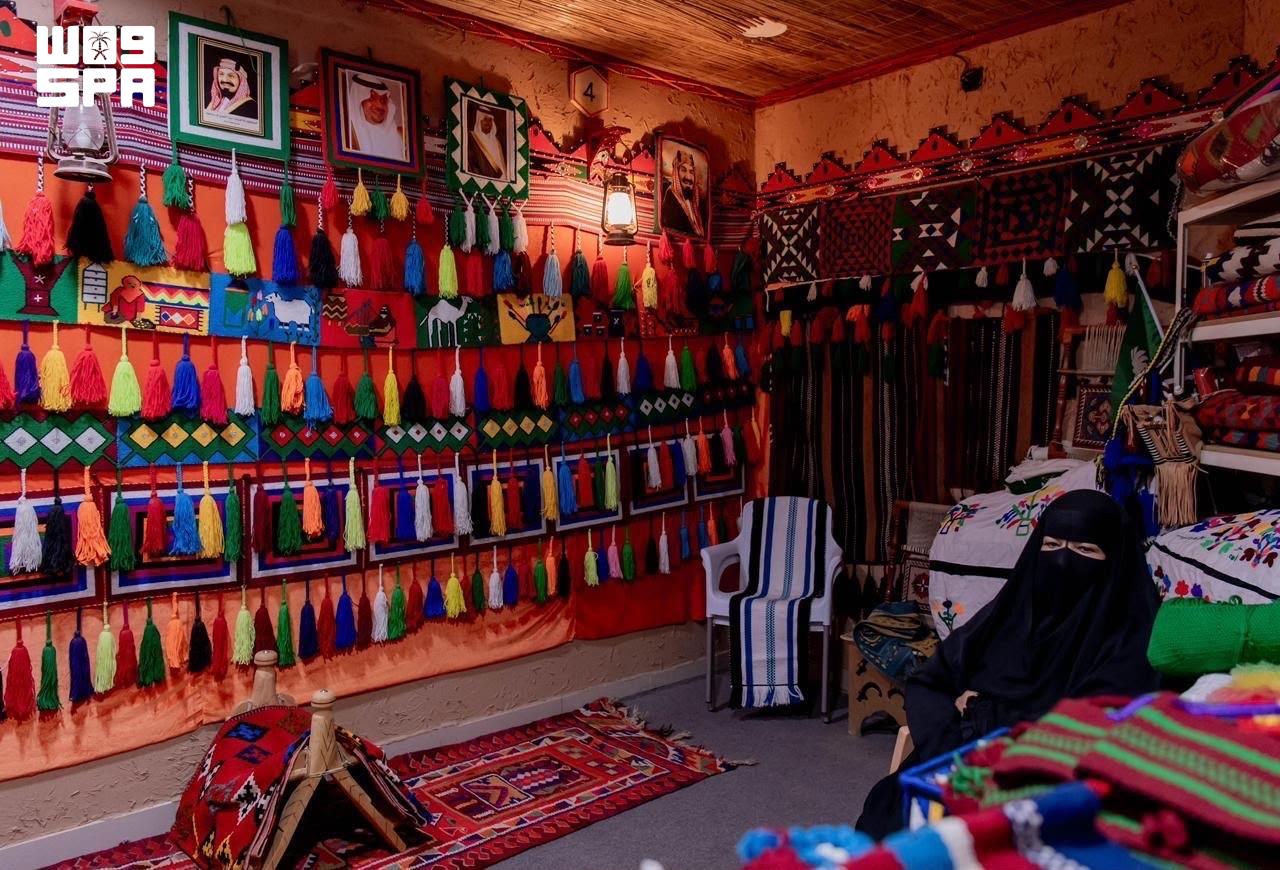
Traditional crafts and manual skills linked to daily needs stand out in the details of old life, alongside knowledge of camels, their equipment, methods of travel and settlement in the desert, and expertise in coping with climatic conditions.
Such knowledge fostered a balanced relationship between people and their environment, passed down through practice, observation, and storytelling from parents and grandparents to younger generations.
According to SPA, al-dahha, the rababa, al-maniha, and al-ta’ma—along with oral memory, customs, arts, and desert knowledge—remain part of the nation’s cultural record, preserving the stories of place and people and illustrating how successive generations have shaped the region’s identity.