

Total solar eclipse and Perseid meteor shower among August 2026 celestial highlights
August 2026 will feature a total solar eclipse, peak Perseid meteor shower, and a deep partial lunar eclipse, alongside other notable astronomical events.
Key Takeaways
AIAugust 2026 will bring a diverse array of notable astronomical phenomena, led by a total solar eclipse, the peak of the Perseid meteor shower, and a deep partial lunar eclipse. The month will also feature the brilliance of several planets, the appearance of summer constellations, and ongoing anticipation of an outburst from a recurrent nova in a star system.
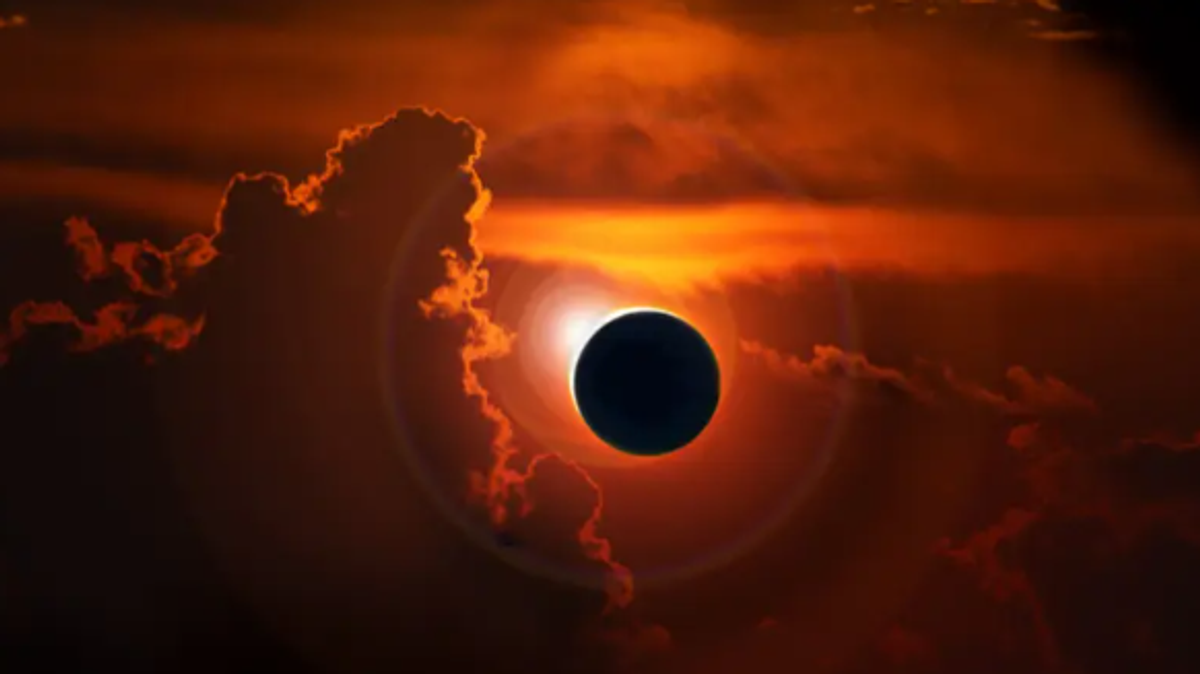
Majed Abu Zahira, President of the Jeddah Astronomical Society, explained that the total solar eclipse will occur on Wednesday, August 12, but will not be visible in Saudi Arabia. The path of totality will cross parts of northern Russia, Greenland, Iceland, Spain, and a small section of Portugal, while a partial eclipse will be observable across much of Europe and northwest Africa.
He noted that the eclipse coincides with the new moon for the month of Rabi Al-Awwal, a natural astronomical alignment, as solar eclipses only occur when the moon is in its new phase and properly aligned between Earth and the sun. Friday, August 14, marks the start of Rabi Al-Awwal 1448 AH, according to the Umm Al-Qura calendar.
He added that several Arab countries, including Saudi Arabia, will witness an exceptional total solar eclipse on August 2, 2027, with the total phase lasting up to 6 minutes and 23 seconds at its longest—making it one of the longest total eclipses of the 21st century.
Abu Zahira said the Perseid meteor shower will peak on the night of August 12 and the early hours of August 13, under ideal viewing conditions thanks to the new moon and absence of moonlight. In dark, unpolluted locations, observers could see up to 100 meteors per hour.
He pointed out that the best time to observe the meteors is after midnight until just before dawn, looking toward the northeastern horizon. No special equipment is needed—just a dark, open location and time for your eyes to adjust to the darkness.
Abu Zahira also noted that Venus will shine low in the western sky after sunset, especially from August 14 to 16, when it reaches its greatest eastern elongation. Saturn will be prominent late at night, while Jupiter and Mars will appear in the pre-dawn sky.
He added that summer constellations will remain visible throughout the month, including Scorpius, Sagittarius, the Milky Way band, and the Summer Triangle. Meanwhile, winter constellations such as Orion, Taurus, and Gemini will gradually appear before dawn, signaling the seasonal shift in the night sky.
He mentioned that astronomers continue to monitor the star system T Coronae Borealis in the constellation Corona Borealis, a recurrent nova that may erupt and become visible to the naked eye for several days. The timing of the outburst is uncertain, with only estimated windows and no confirmed date.
The full moon will occur on August 28 and is named the "Al-Mirzam Moon" this year, as part of the Jeddah Astronomical Society's initiative to revive traditional Arabic names for lunar phases.
The night of August 27 to 28 will see a deep partial lunar eclipse, with about 93% of the moon's diameter entering Earth's shadow. Observers in western Saudi Arabia will be able to view the early stages of the eclipse before moonset, provided the western horizon is clear.
Abu Zahira emphasized that August 2026 offers a unique opportunity for astronomy enthusiasts and astrophotographers to witness a variety of celestial events and appreciate the precise orbital motions that govern the relationships between Earth, the moon, the sun, and other solar system bodies.