

Canopus star’s appearance signals end of peak summer heat
Astronomy enthusiasts in Saudi Arabia await the appearance of Canopus, a star long associated with seasonal change and the easing of summer’s intensity.
Key Takeaways
AIAstronomy enthusiasts are anticipating the upcoming appearance of the Canopus star, one of the most renowned stars in the collective memory of the Arabian Peninsula’s inhabitants, marking the countdown to the end of intense summer heat and the gradual improvement of weather as autumn approaches.
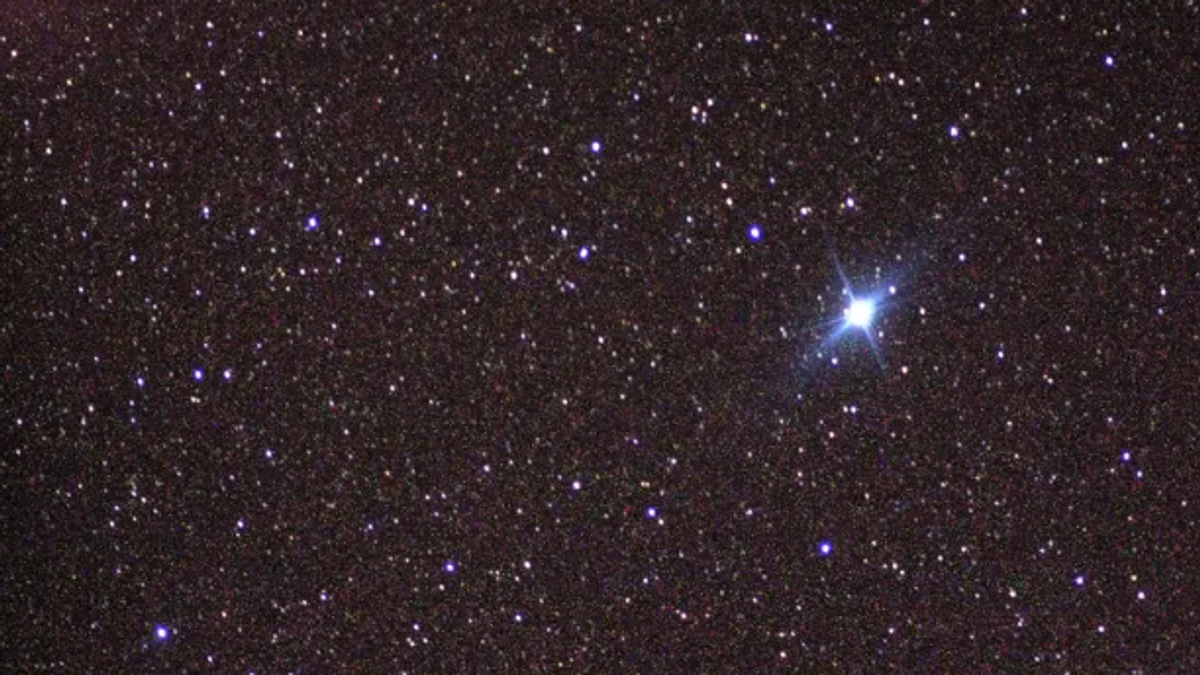
Mohammed Enad Al-Huzaimi, a member of the Astronomy and Space Club, explained that Canopus—known in Arabic as Suhail—is the second brightest star in the night sky after Sirius. It is part of the Carina constellation and is located about 310 light-years from Earth.
He noted that Canopus first appears in the skies over the Northern Borders region on August 26 each year, rising at around 5:51 a.m., just one minute before sunrise at 5:52 a.m. This makes it difficult to observe with the naked eye at first due to dawn’s brightness and its proximity to the horizon.
Al-Huzaimi added that Canopus typically becomes visible to the naked eye in the region during the first third of September, as its rising time gradually shifts earlier and it climbs higher above the southern horizon before sunrise, provided the skies are clear and the horizon unobstructed.
He pointed out that, since ancient times, Arabs have regarded the appearance of Canopus as an important seasonal marker, using it to track gradual weather changes, shorter daylight hours, and the onset of cooler nighttime temperatures. Its appearance also coincides with agricultural, grazing, and migration seasons, making it a key part of the region’s astronomical and cultural heritage.
Al-Huzaimi emphasized that the star’s appearance does not itself cause weather changes, but serves as a celestial indicator coinciding with a period of seasonal transition resulting from Earth’s orbit around the sun and the gradual change in the angle and duration of sunlight. This explains why Canopus is traditionally associated with the breaking of summer’s intensity.
In traditional reckoning, the Canopus season lasts 52 days, divided into four phases of 13 days each: Al-Tarfah, Al-Jabha, Al-Zubra, and Al-Sarfa, the last of which is linked in folklore to the gradual retreat of extreme heat.
Canopus holds a special place in Arab culture, with its appearance eagerly awaited by Bedouins, farmers, and weather observers for generations, symbolizing the gradual shift from the peak of summer heat to more moderate conditions—a phenomenon that blends astronomical observation with enduring popular tradition.