

KAUST opens world's largest coral restoration facility on Red Sea coast
King Abdullah University of Science and Technology has launched the world's largest coral restoration facility on the Red Sea, aiming to plant 2 million corals by 2030.
Key Takeaways
AIKing Abdullah University of Science and Technology (KAUST) has inaugurated an advanced coral restoration facility on the Red Sea coast as part of the KAUST Coral Restoration Initiative (KCRI), one of the world's largest scientific projects of its kind. The move underscores Saudi Arabia's role in developing innovative solutions to protect marine ecosystems and strengthen national capabilities in marine sciences.
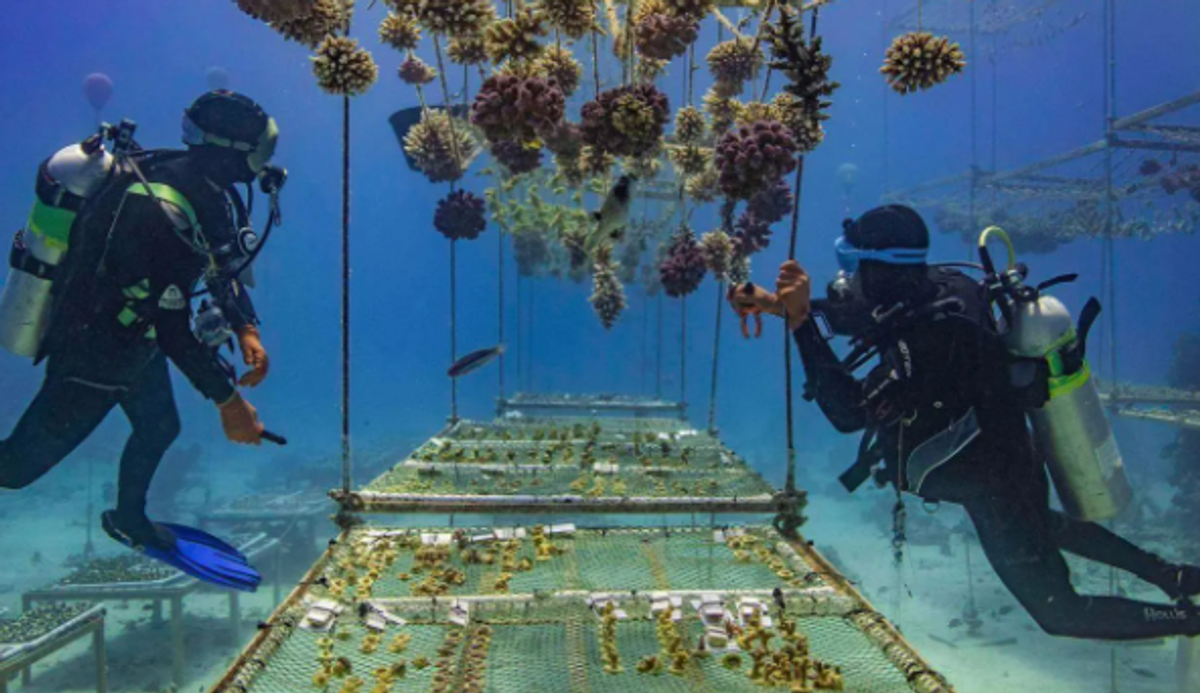
The facility is the largest in the world dedicated to coral propagation and restoration. It features a land-based coral nursery and an advanced research center, with the capacity to produce up to 360,000 coral fragments annually.
The initiative aims to plant more than 2 million coral fragments in their natural habitats across 100 hectares of reefs around Shusha Island in the Red Sea by 2030, supporting the establishment of a climate-resilient coral ecosystem by 2040.
The announcement coincides with the 31st session of the United Nations Framework Convention on Climate Change (COP31) in Antalya, Turkey, and comes amid mounting challenges facing coral reefs worldwide due to rising ocean temperatures. These efforts are particularly significant following an unprecedented global coral bleaching event—the fourth and most severe on record—which saw over 84% of the world's coral reefs exposed to heat stress between 2023 and 2025, according to the US National Oceanic and Atmospheric Administration (NOAA).
The Red Sea provides a unique natural environment for developing research and scientific solutions for coral protection, as its reefs are known for their resilience to high temperatures and salinity.
The initiative seeks to leverage these natural advantages and KAUST's advanced research expertise to develop coral propagation technologies and enhance coral tolerance to high temperatures, contributing to global coral restoration efforts.
The project brings together a comprehensive system of research facilities and advanced technologies, including land and sea-based coral nurseries and more than 50 research programs focused on heat-resistant corals, beneficial bacteria, robotics, and AI-powered modeling.
The initiative also features the eCoral platform, which uses digital twin technology to simulate coral reef ecosystems, helping to identify optimal sites for coral planting, plan restoration operations, and monitor coral growth.
The project further benefits from the international expertise of the Global Coral R&D Accelerator Platform (CORDAP), which develops scientific and technological solutions for coral protection and restoration.
Beyond its environmental and scientific goals, the initiative helps build Saudi national capacity in marine sciences by involving Saudi scientists, divers, and aquaculture specialists in coral propagation and restoration, providing opportunities to gain advanced scientific and technical expertise and strengthening the Kingdom's position in this field over the long term.
These efforts are globally significant given the vital role coral reefs play in maintaining ecological balance, supporting about a quarter of all marine species, protecting coastlines from storms, and providing livelihoods for more than 500 million people worldwide.
KAUST, in collaboration with international partners, continues to develop scientific and technological solutions to protect coral reefs and preserve their biodiversity by applying research findings in the field, helping to ensure the sustainability of these ecosystems for future generations.