

Pleiades and moon conjunction marks start of Wasm season in Saudi Arabia
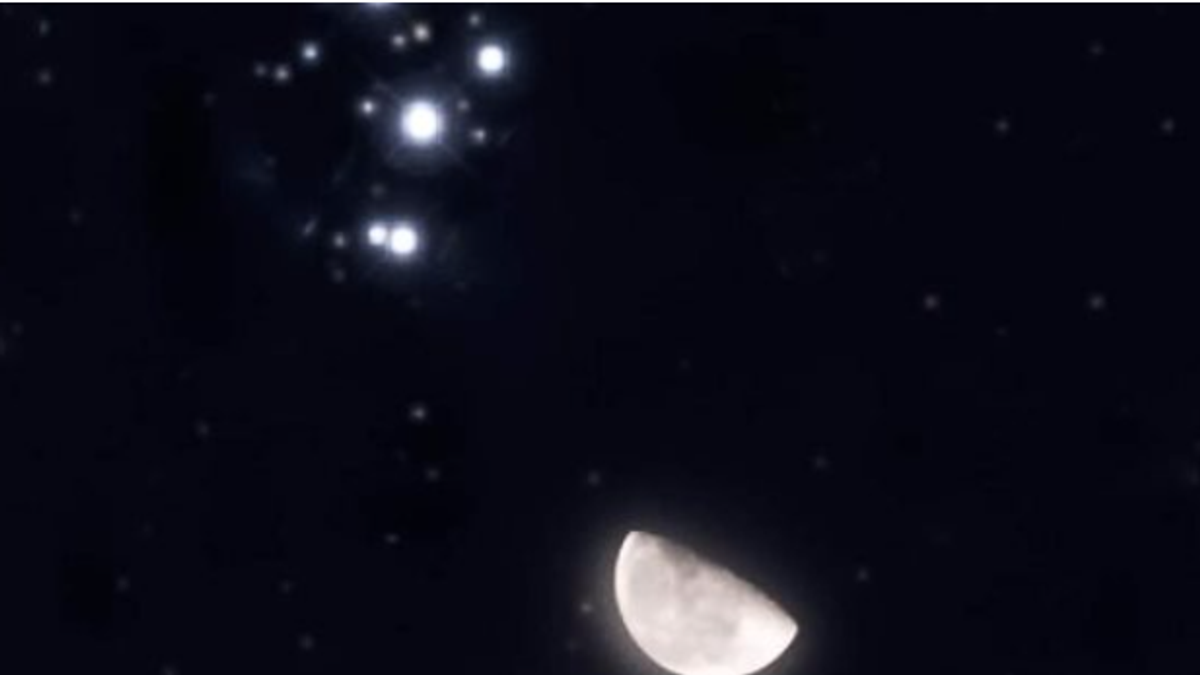
The Pleiades cluster aligned with the moon over Saudi Arabia, signaling the traditional start of the Wasm season, closely watched by farmers and herders.
Key Takeaways
AIThe skies over Saudi Arabia witnessed a conjunction of the Pleiades star cluster and the moon today, a celestial event that, according to local tradition, coincides with what is known as "Qaran 19." Among Bedouins and farmers, this phenomenon marks the beginning of the Wasm season and the start of its first phase, called "Wasm Al-Harif." These seasonal signs have long been used by Arabs to track the changing seasons and weather patterns.
Mohammed Enad Al-Huzaimi, a member of the Astronomy Club, explained that the conjunction of the Pleiades and the moon at this time is traditionally referred to as "Qaran 19." It signals the onset of the Wasm season and the gradual shift toward winter weather, as well as the anticipation of rain clouds forming from the west and southwest. He noted that the Wasm season lasts for 81 days and is divided into several periods.
Al-Huzaimi added that "Wasm Al-Harif" represents the first phase of the Wasm season and lasts about 27 days. According to local tradition, rainfall during this period is considered especially beneficial for the growth of spring plants and for preparing the soil for truffle growth.
He pointed out that the conjunction of the Pleiades and the moon, along with other astronomical observations, has long attracted the attention of Arabs, who used the lunar phases and the rising and setting of stars to organize their seasonal calendars and determine the best times for planting, grazing, and anticipating climate changes.
Al-Huzaimi also noted that "Qaran 19" remains an important marker in local tradition, signaling the start of the Wasm season—a period closely followed by Bedouins, farmers, and heritage enthusiasts for its association with seasonal rains and the emergence of spring vegetation.