

Chinese tourists pay to experience simulated typhoons and floods in Hangzhou
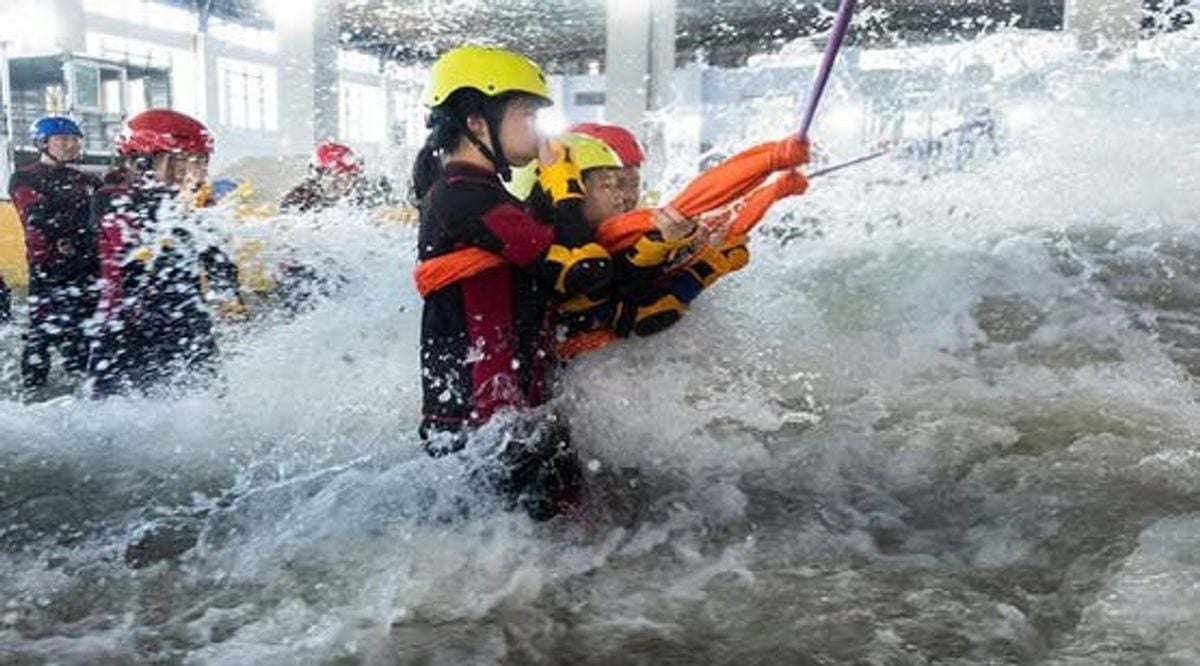
Tourists in China are flocking to a Hangzhou facility for simulated typhoon and flood experiences, seeking both thrills and survival training.
Key Takeaways
AITourists in China are paying to experience a 'virtual typhoon,' with the journey beginning by booking a ticket and ending amid fierce winds and surging waters. These visitors voluntarily immerse themselves in a staged natural disaster, seeking both excitement and practical lessons that could help them survive a real emergency.
As videos of these experiences spread across social media, demand for typhoon and flood simulations has grown, coinciding with a wider interest in dark tourism, which draws visitors to sites of historical disasters and tragedies, according to The Guardian.
Among those seeking out the experience is 28-year-old Leon Love, who was inspired by clips on the Red Note app to travel over 1,300 kilometers from Chongqing to Hangzhou to take part in a simulated typhoon-induced flood. She joined a group of 20 people who were swept toward a safety barrier by hundreds of tons of water.
As the water surged, Love briefly forgot she was in a simulation, focusing instead on keeping her balance and protecting herself. Although she has never experienced a real typhoon, she said the exercise gave her practical knowledge about staying calm and adopting a safe position during a flood.
The company behind these experiences, Luxing Peace, was founded by documentary filmmakers who spent a decade working in extreme environments and have now brought some of that expertise to a facility in Hangzhou. Since opening in 2024 on a 200,000-square-meter site, the center has offered simulations of typhoons and mudslides.
General manager Wang Kuanghan said, "Many visitors come out of curiosity and to test their resilience, with most individual guests aged between 20 and 30."
In response to growing demand, the company plans to open five additional centers over the next three years and to add earthquake and fire simulations.
Public institutions have also launched similar experiences, including a public safety museum in Beijing and a center in Guangzhou that simulates a magnitude 7.2 earthquake.
This trend is gaining importance as extreme weather events become more frequent. According to the Ministry of Emergency Management, around 67 million people in China were affected by disasters in 2025. In 2024, authorities called for the use of simulations to raise public awareness about crisis response.
Alongside artificial experiences, some travelers are visiting the actual sites of past tragedies. Robert Li, director of the School of Hotel and Tourism Management at the Chinese University of Hong Kong, linked this to a new generation's desire for experiences that go beyond sightseeing.
In this context, writer Alice visited towns destroyed by the 2008 Sichuan earthquake, which claimed more than 70,000 lives. Among the collapsed buildings in Beichuan and a clock in Yingxiu stopped at the moment of the quake, she reflected on the fate of the children who did not survive.
Tour guide Samantha Wang has also observed growing interest in the Nanjing Massacre Memorial Hall, where tickets often sell out in August, reflecting a blend of historical curiosity and emotional engagement with past tragedies.
اعرض التغريدة على منصة X