

Saudi Arabia signs four energy cooperation MoUs with Mongolia, Tanzania, Cyprus and Mauritius
Saudi energy minister inks agreements with counterparts from Mongolia, Tanzania, Cyprus and Mauritius to boost collaboration in energy and petroleum sectors at Riyadh’s World Petroleum Congress.
Key Takeaways
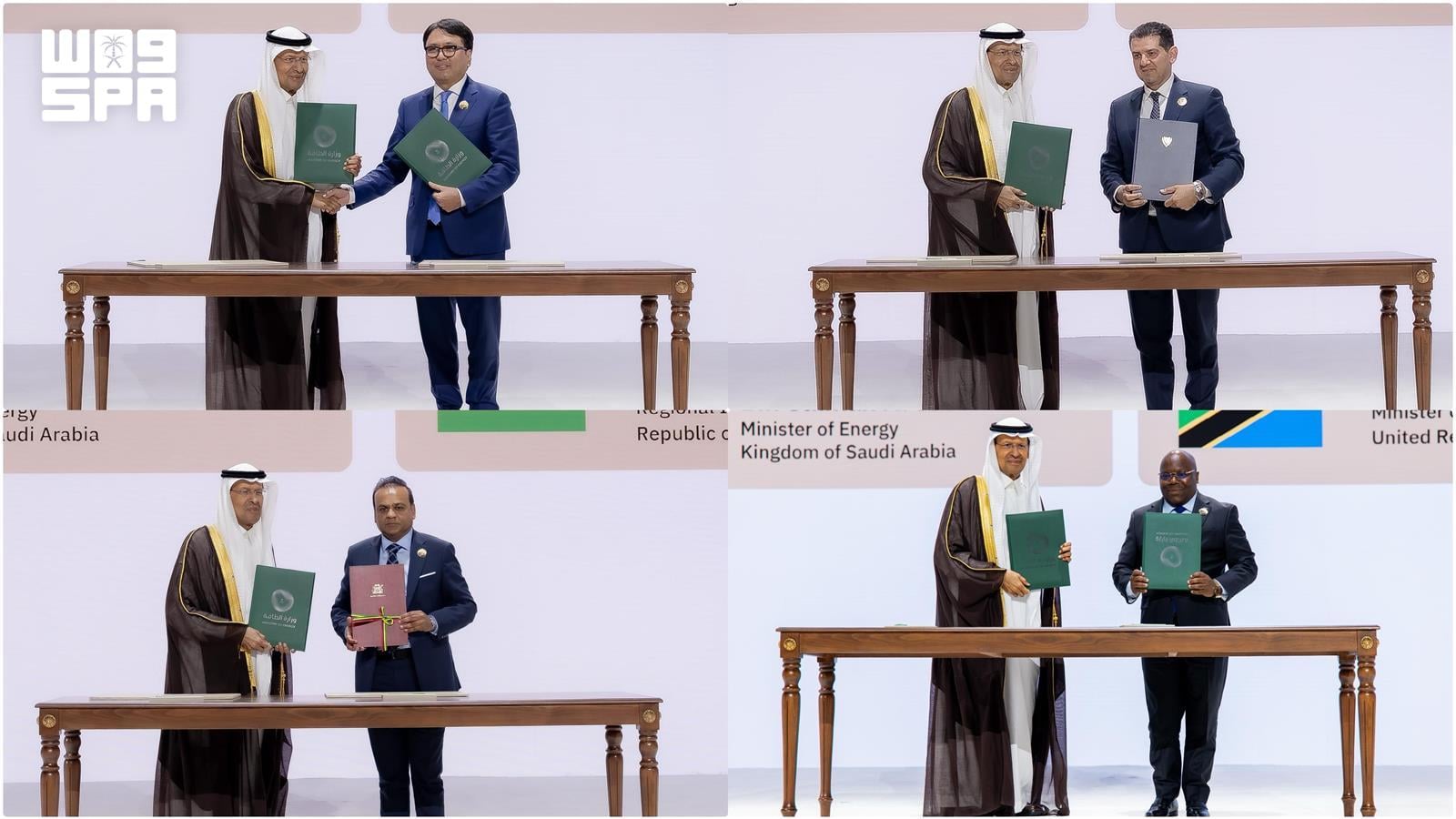
AISaudi Minister of Energy and Minister of Industry and Mineral Resources, Abdulaziz bin Salman bin Abdulaziz, signed four memorandums of understanding with the relevant ministers from Mongolia, Tanzania, Cyprus and Mauritius to strengthen cooperation in the energy sector. The agreements were signed on the sidelines of the 25th World Petroleum Congress (WPC) taking place in Riyadh.
The signing ceremony was held today in Riyadh, where the Kingdom is hosting the congress until October 15, under the theme “Pathways to a Sustainable Energy Future for All.”
Diverse strategic partnerships
The memorandum with Mongolia covers cooperation in petroleum, gas, refining, petrochemicals, electricity, electrical interconnection, renewable energy, energy efficiency and storage. It also includes technology solutions, digital innovation, cybersecurity, artificial intelligence applications, and a focus on circular carbon economy technologies and specialized partnerships between the two countries.
The agreement with Tanzania centers on cooperation in refined petroleum product supplies, exploring liquefied natural gas infrastructure, technical knowledge exchange in exploration, as well as enhancing energy efficiency, renewable energy, supporting clean cooking concepts, the circular carbon economy, and developing the transport and fuel sectors.
Expanded cooperation with Cyprus and Mauritius
The memorandum with Cyprus provides for collaboration in petroleum, gas, clean hydrogen, renewable energy, and energy efficiency, in addition to advancing shared priorities in international policy through multilateral negotiations, cooperation to combat plastic pollution, and the development of sustainable petrochemical materials.
The agreement with Mauritius includes similar provisions, focusing on developing energy infrastructure, exchanging technologies and solutions to address climate change, as well as strengthening international cooperation on climate agreements and supporting the use of sustainable materials across various sectors.