

Jazan jasmine evolves from cultural symbol to promising agricultural investment
Jazan jasmine is gaining economic significance as local efforts boost its cultivation and marketing, supported by the regional association and investment plans.
Key Takeaways
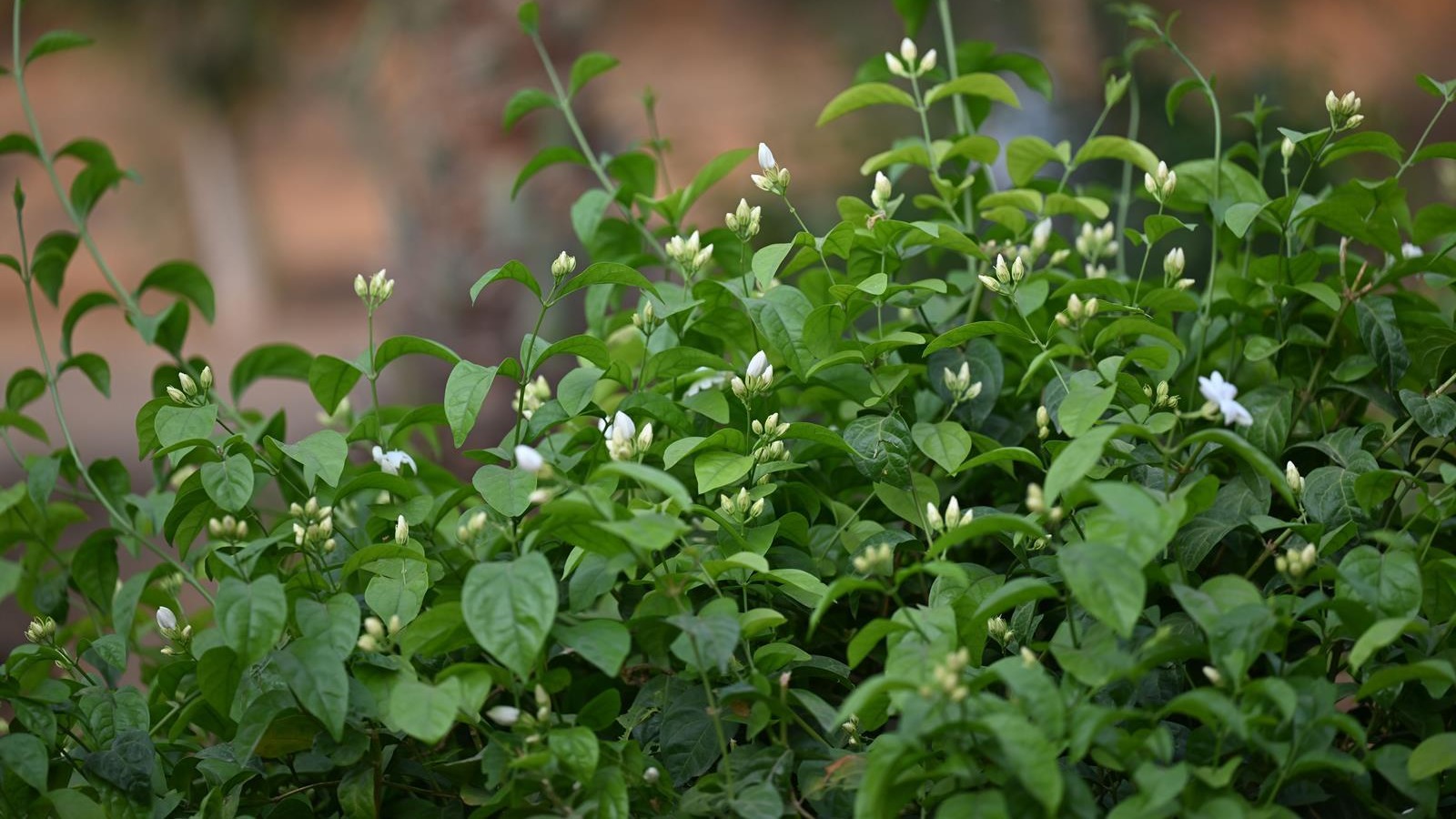
AIJazan jasmine is undergoing a remarkable transformation in the region, moving beyond its traditional role to become an aromatic crop of growing commercial and productive value. The jasmine plant, locally known as "Al-Radimah" and scientifically as Jasminum sambac, is a distinctive evergreen shrub that can reach two to three meters in height. Its fragrant white flowers bloom at sunset, releasing their scent throughout the night and into the morning.
The jasmine harvest involves several stages, from picking to artisanal crafting. The flowers are woven into traditional garlands and necklaces such as "Al-Maharem," "Al-Kabsh," and "Al-Rasas," and used in "Al-Adiyyah" and crowns, preserving the region’s traditional crafts. Jasmine also holds a special place in social life, featuring prominently in weddings, celebrations, and festivals, with cultivation continuing in both home gardens and specialized farms.
Jazan’s climate and high humidity provide ideal conditions for jasmine cultivation, with the crop thriving in summer. Successful growth requires well-drained soil, regular irrigation, and ample sunlight. Jasmine is propagated through cuttings or seedlings, with organic pesticides used to maintain crop quality and protect the environment.
Association support and expanding investment
The Jazan Jasmine and Aromatic Plants Association, established in 2022, plays a key role in supporting farmers by providing seedlings, fertilizers, equipment, and labor, as well as addressing technical and marketing challenges and implementing training programs and development initiatives.
The association’s efforts include launching the "Agricultural Mechanization" project, initiatives to preserve aromatic plants, developing marketing channels, preparing farmers for export, and organizing agricultural festivals to boost investment and expand the economic benefits of jasmine.
Association chairman Tariq Taanoun said current efforts focus on improving jasmine quality and advancing cultivation and marketing methods, aiming to help producers increase their returns and strengthen the crop’s market presence.
Production and marketing statistics
Tariq Taanoun noted that Jazan is home to over 1,000 farms with around 500,000 jasmine plants, producing approximately 600 tons annually. The market is valued at 70 million riyals (SAR). Jasmine is marketed in Jazan and several other cities across the Kingdom, with Sabya and Abu Arish being major trading hubs.
Jasmine-related activities include seedling production, tree care, flower harvesting, crafting garlands and necklaces, and sales, providing income for workers and helping preserve traditional crafts.
Field experience
Farmer Mohammed Hubani explained that jasmine flowers are harvested twice daily: from 7 a.m. to 11 a.m., and from 3 p.m. to 5 p.m. He highlighted the importance of pruning, regulated irrigation, and controlled drought to stimulate growth, renew flowering, and improve crop quality.
Jazan jasmine reflects the region’s agricultural evolution, blending social heritage with economic expansion. The combined efforts of farmers, artisans, and supporting organizations are enhancing the region’s position in the production and marketing of aromatic crops in the Kingdom.