

Saudi Arabia concludes participation in World Bank, IMF annual meetings in Bangkok
Finance Minister Mohammed Al-Jadaan led the Saudi delegation at the 2026 World Bank and IMF annual meetings in Bangkok, highlighting the Kingdom's global economic role.
Key Takeaways
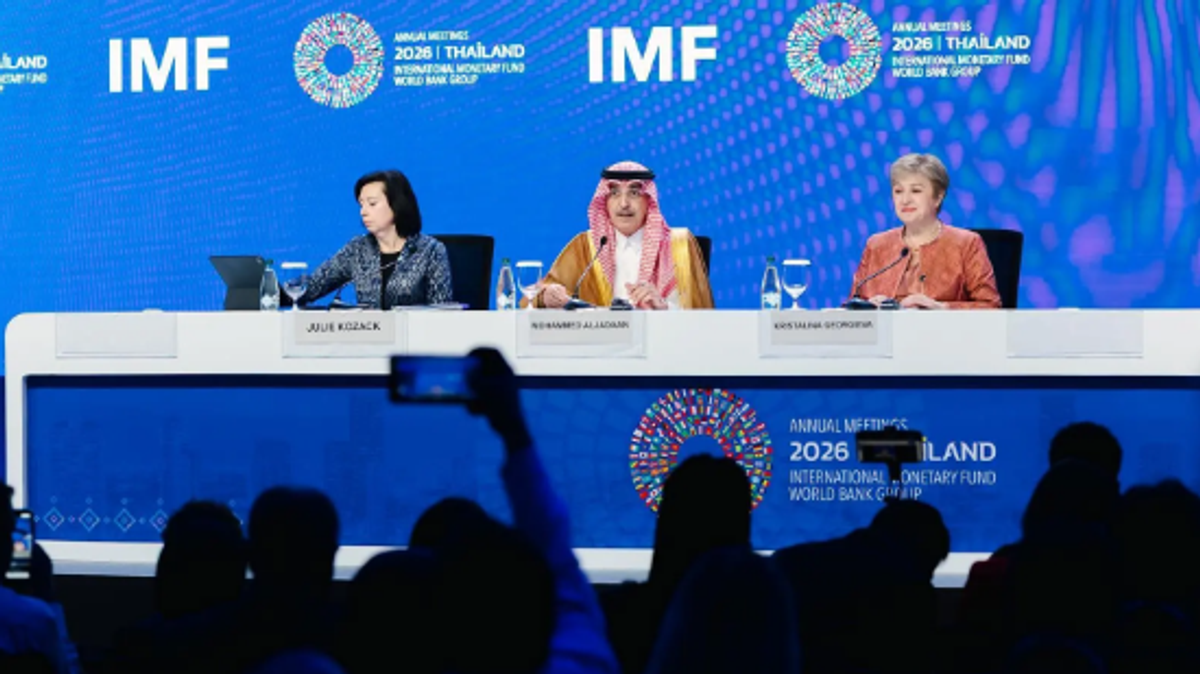
AILed by Finance Minister Mohammed Al-Jadaan, the Saudi delegation concluded its participation in the 2026 annual meetings of the World Bank Group and International Monetary Fund in Bangkok, held from 1 to 6 Jumada Al-Awwal 1448 AH (corresponding to October 12 to 17, 2026).
The meetings coincided with the IMF's announcement of an extension of Al-Jadaan's chairmanship of the International Monetary and Financial Committee for an additional year, through January 2028.
Al-Jadaan also took part in the third meeting of G20 finance ministers and central bank governors, chaired by the United States. During the session on "Current Economic Developments," he stressed that attacks targeting Saudi Arabia pose a threat to the global economy, and highlighted the Kingdom's key role in strengthening the resilience of the world economy against shocks.
The finance minister chaired the meeting of the International Monetary and Financial Committee, where members exchanged views on global economic developments and ways to promote growth and stability amid geopolitical and trade tensions, supply chain disruptions, and rising public debt burdens.
Members underscored the importance of economic policies and structural reforms that support growth led by the private sector, enhanced international cooperation, ensuring energy security and freedom of navigation, and addressing debt and financing challenges, especially in low-income and fragile states.
They reaffirmed their commitment to a strong, well-resourced IMF, and emphasized the importance of using the Diriyah Principles as a guide in future discussions on quota and governance reforms, to enhance the Fund's effectiveness and representation of member countries.
During his participation in the meeting of finance ministers and central bank governors from the Middle East, North Africa, Afghanistan, and Pakistan with IMF Managing Director Kristalina Georgieva, Al-Jadaan highlighted the importance of efficient management of available buffers to address prolonged economic shocks and maintain readiness for future challenges. He pointed to the role of economic diversification, energy and food security, and resilient supply chains in building more robust economies.
At the joint Development Committee session of the World Bank and IMF, Al-Jadaan stressed that both institutions must lead the global economic response and work to ease pressure on public finances amid unprecedented international challenges to peace, development, and prosperity.
In a meeting with Arab governors and World Bank Group President Ajay Banga, Al-Jadaan said crises present opportunities to accelerate progress, and that sound decisions today will lay the foundations for a stronger, more prosperous future for coming generations. He called on the Group to consider the circumstances and needs of countries, help them turn resources into opportunities that support local content and quality jobs, and empower the private sector to develop flexible logistics services and enhance integration into global supply chains.
He praised the World Bank and IMF for supporting countries affected by conflicts in the region, including Yemen and Syria, and called for intensified efforts to meet the scale of existing challenges. He encouraged both organizations to innovate solutions to expand support to Palestine and Sudan, building on successful experiences in this field.
On the sidelines of the annual meetings, Al-Jadaan held several meetings with officials, heads of international financial institutions, and credit rating agencies to discuss global economic developments and policies supporting stability.
Deputy Minister of Finance for International Relations Khalid Bawazeer participated in a roundtable on supporting the World Bank Group's efforts for recovery and reconstruction in Syria, discussing the Syrian government's priorities and the role of the Group and donor countries, including Saudi Arabia, in supporting reforms and reconstruction.