

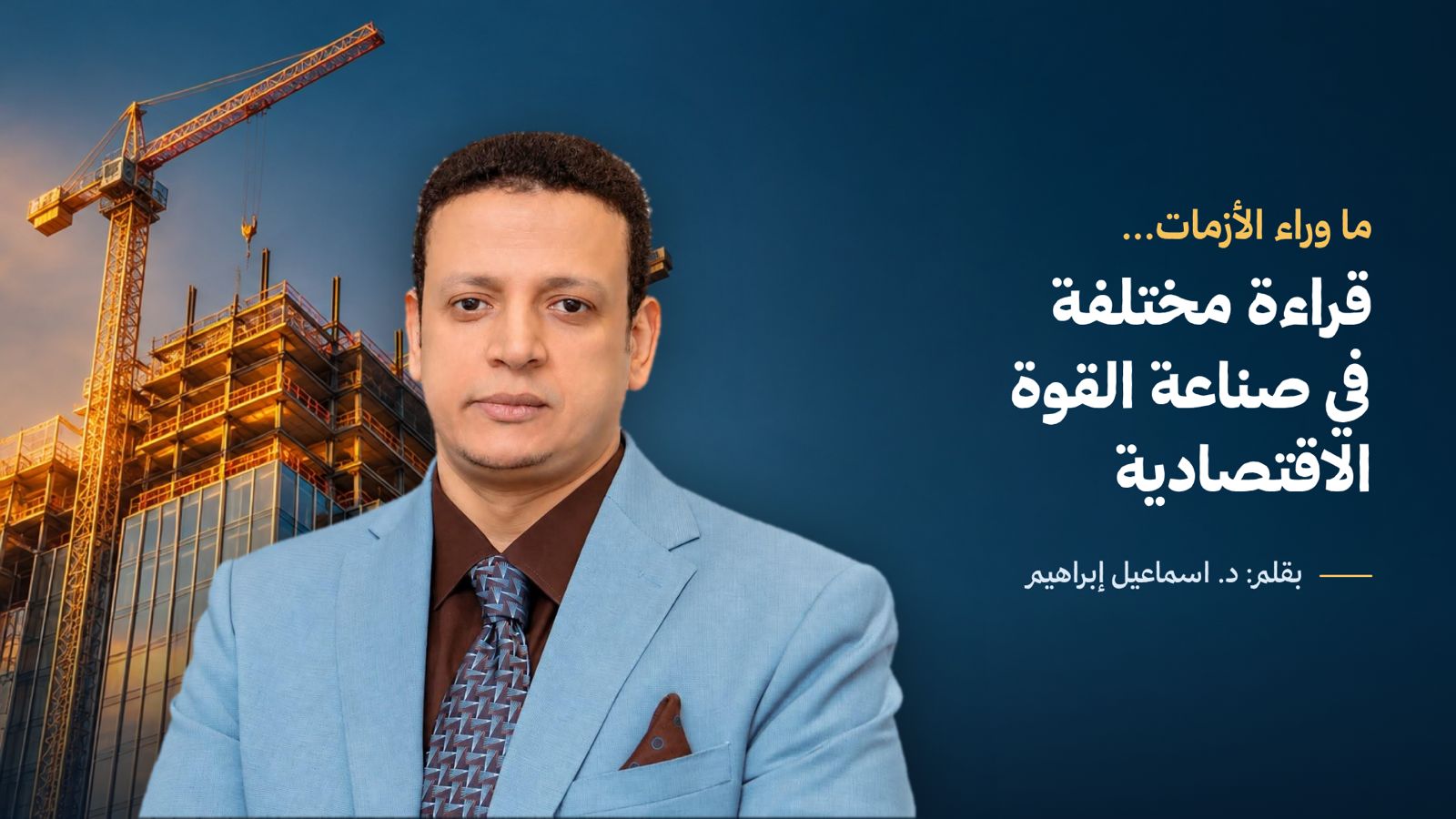
Turning crises into economic strength: Analysis by Ismail Ibrahim
Dr. Ismail Ibrahim analyzes how crises can be transformed into economic strength, citing Saudi Arabia’s experience and the example of Prophet Joseph.
Key Takeaways
AIDr. Ismail Ibrahim, an economic affairs specialist, has provided an analytical perspective on how crises can be transformed into sources of economic strength, drawing parallels from the management of Prophet Joseph to Saudi Arabia’s approach during the current crisis.
Ibrahim stated: “In my view, one of the most common mistakes made by administrations—whether in companies or national economies—is that they only begin to discuss crisis management once a crisis has already occurred, as if strategic management starts when markets are disrupted or resources and operations come under exceptional pressure. In reality, what happens during a crisis is merely a test of decisions made years earlier, of resources that were built up or depleted, and of institutional systems founded on preparedness and flexibility or on the assumption of ongoing stability.”
He referenced the story of Prophet Joseph in the Qur’an, explaining that Joseph’s approach went beyond interpreting dreams or warning of years of famine; it presented a comprehensive economic vision spanning years of abundance, hardship, and beyond, highlighting relevant verses.
Ibrahim noted that institutions are often rewarded during periods of growth for higher profits and rapid expansion, while some aspects of strategic readiness are undervalued. He emphasized the importance of balancing efficiency with adaptability to changing circumstances.
Saudi Arabia’s model in the current crisis
Ibrahim pointed out that Saudi Arabia’s experience during the current crisis offers a model worthy of study from a strategic management perspective. He explained that many elements of the Kingdom’s ability to handle challenging conditions were established before the crisis began. He cited the East–West oil pipeline as an example, which has become a key strategic alternative for exporting oil via Red Sea ports amid disruptions in the Strait of Hormuz, demonstrating the value of long-term strategic planning when options are limited.
He added that this logic extends to defense and industrial capabilities and international partnerships that Saudi Arabia developed prior to the crisis and continued to strengthen during it, mentioning the Mecca Joint Defense Agreement and cooperation with Egypt, the UK, and Ukraine.
Ibrahim also highlighted the importance of Saudi Arabia’s approach of restraint, careful consideration of consequences, and avoiding hasty escalation, while maintaining its right to defend its security, sovereignty, and interests. He argued that combining preparedness, resolve, and wisdom is a key element of strategic strength.
The importance of operational details
Ibrahim stressed the significance of small details in management, such as developing alert tones and distinguishing between danger notifications and their resolution, noting that clear communication with the public affects daily life and economic behavior.
Comparison with the COVID-19 pandemic
Ibrahim compared the current crisis to the COVID-19 pandemic, noting that the common link is the benefit derived from capabilities built before each crisis. He said: “Just look at the experience of Tawakkalna, which began to meet needs imposed by exceptional circumstances and then evolved into a comprehensive national platform offering multiple services to citizens, residents, and visitors.”
He explained that the current crisis has highlighted the importance of capabilities related to energy, defense, international partnerships, civil preparedness, and economic continuity, predicting that it will pave the way for broader transformations in strategic industries, economic policies, and international partnerships.
Turning preparedness into an investment advantage
Ibrahim asserted that Saudi Arabia’s most significant economic opportunity may lie in turning its ability to endure and manage risks into a factor that attracts investment, stressing the importance of translating strategic assets into tangible productive, industrial, and investment opportunities.
Lessons for companies and management
He noted that this logic applies not only to nations but should also guide the decisions of boards and executive leadership in companies. Organizations that invest in diversifying income sources and building strong relationships may incur extra costs during stable times, but they become more reliable when crises arise.
Conclusion and optimism for the future
Ibrahim concluded by expressing optimism about the future of the Saudi economy, based on the potential transformation in the Kingdom’s economic standing, its ability to attract investment, and the development of its industries and partnerships. He argued that the broader lesson is to reconsider the concept of administrative success, stating that true success lies in building greater economic strength and competitiveness after crises, drawing inspiration from Prophet Joseph’s economic management.