

FII Initiative CEO: Sustainable partnerships key to advancing Saudi biotech innovation
Princess Maha bint Mishari, CEO of the FII Institute, highlights the need for sustainable partnerships to turn biotech innovation into investments for Saudi health and economy.
Key Takeaways
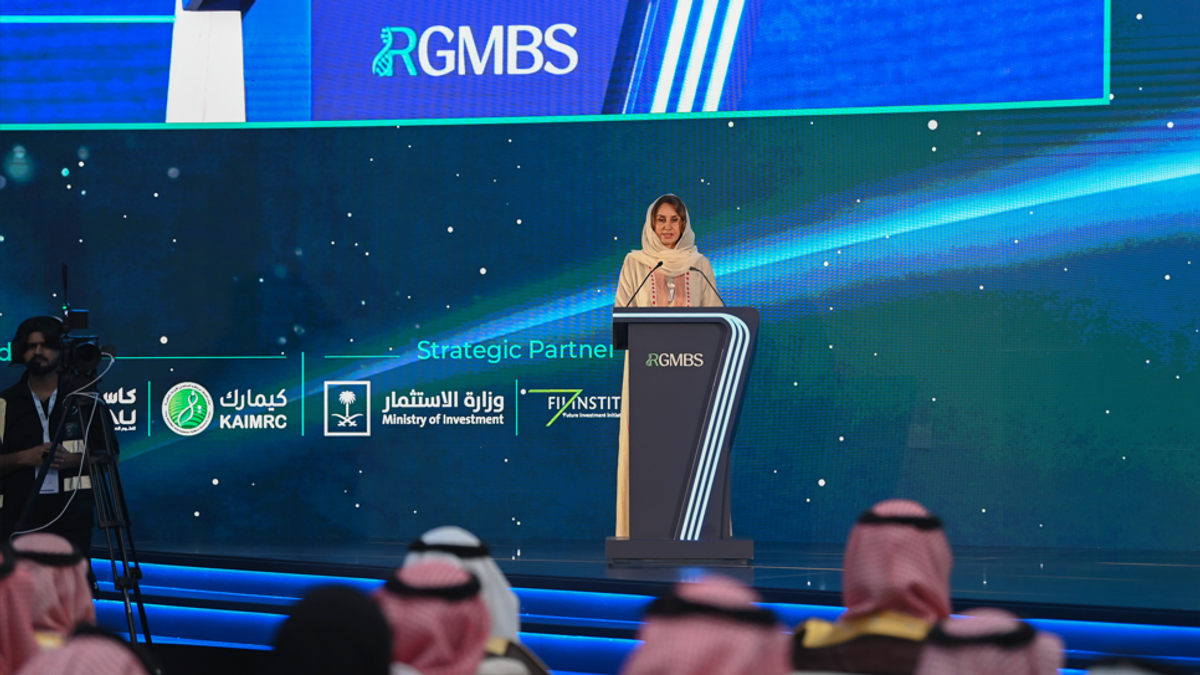
AIPrincess Maha bint Mishari bin Abdulaziz Al Saud, CEO of the Future Investment Initiative (FII) Institute, emphasized the importance of building sustainable economic, investment, and scientific partnerships that contribute to achieving the goals of the National Biotechnology Strategy and transforming scientific innovations and research into applications, products, and investments with significant health and economic impact.
Her remarks came during her participation yesterday at the fourth edition of the Riyadh Global Medical Biotechnology Summit, which opened in the Saudi capital and runs from September 14 to 16, 2026.
The summit is held under the patronage of Crown Prince and Prime Minister Mohammed bin Salman, who is also Chairman of the Board of the Riyadh Biotech Center. The event was inaugurated by Prince Abdullah bin Bandar, Minister of the National Guard and board member of the Riyadh Biotech Center.
The summit brings together leading experts, researchers, innovators, investors, and decision-makers from around the world to discuss the latest developments in the medical biotechnology sector, explore its future prospects, and enhance opportunities for collaboration and partnerships that help develop the sector and turn knowledge and innovation into sustainable economic and health value.
During her participation, Princess Maha bint Mishari focused on the role of international partnerships and alliances in supporting Saudi Arabia's biotechnology ecosystem, linking national scientific capabilities with global capital, expertise, and systems to strengthen the Kingdom's ability to turn scientific research and innovation into investment opportunities and specialized industries with long-term economic and health impact.
She began her speech by highlighting the developmental and economic transformation underway in Saudi Arabia under the leadership of King Salman and Crown Prince Mohammed bin Salman, and how this leadership has boosted the Kingdom's presence in science, innovation, and the life sciences economy.
She expressed her appreciation to Prince Abdullah bin Bandar, Minister of the National Guard, for his role in aligning health resilience with the Kingdom's objectives, and thanked Dr. Bandar Al-Knawy, CEO of Health Affairs at the Ministry of National Guard, for his efforts in supporting innovation and healthcare development.
Princess Maha explained that the National Biotechnology Strategy establishes an integrated system that includes research and local manufacturing of vaccines, localization of the production of pharmaceuticals, biologics, and biosimilars, and strengthening national capabilities in genomics, precision diagnostics, and targeted therapies, as well as developing biotech solutions related to food security and sustainability.
She noted that the strategy aims to contribute over $34 billion to non-oil GDP by 2040, stressing that achieving the targeted health and economic returns requires moving scientific innovations from research and discovery to scalable and investable applications.
She underscored the importance of building a system that connects scientific discoveries with long-term investments, aligning national ambitions with global expertise and execution capabilities to develop a competitive and sustainable biotechnology sector in the Kingdom.
She also highlighted the participation of several leading global institutions and companies in the life sciences and investment ecosystem, including Flagship Pioneering, Novo Holdings, and WuXi AppTec, pointing to the importance of integrating capital, R&D, and manufacturing to build innovation ecosystems and translate them into tangible economic and health outcomes.
Princess Maha stated that rapid advancements in biotechnology are now closely linked to data, computing power, and artificial intelligence, noting that Saudi Arabia has the assets to benefit from this transformation, including digital infrastructure, computing capabilities, energy, data, and strong institutional and strategic support.
She reviewed examples of the impact of investment in health sciences and technologies on human lives, such as the Kingdom's premarital screening program for hereditary blood diseases, and the local manufacturing of CAR-T cells at King Faisal Specialist Hospital and Research Center in Riyadh, reflecting the importance of localizing advanced medical technologies and improving access to modern treatments.
She pointed out that the goal of adding five years to average life expectancy by 2040 reflects the human dimension of investment in health and biotechnology, emphasizing that these targets directly enhance the quality of life for individuals, families, and society.
She stressed that building a world-class biotechnology sector requires cooperation among countries, institutions, investors, and scientists through partnerships that bring together capital, ideas, and scientific and operational capabilities.
Princess Maha explained that the FII Institute supports this direction by connecting investors, scientists, and decision-makers, noting that the upcoming FII10 conference in Riyadh next month will address several transformations related to artificial intelligence, genomics, preventive healthcare, and associated investment opportunities.
She affirmed that the aim of building these partnerships goes beyond dialogue and knowledge exchange to achieving practical results, such as establishing companies, developing technologies and treatments, and expanding access to innovation for patients and communities.
She concluded by stressing that technology should serve humanity, and that linking Saudi scientific capabilities and capital with global ecosystems will support the Kingdom's biotechnology goals, enhance quality of life, and deliver health and economic benefits both locally and globally.